HubSpot vs Salesforce: Which CRM is Right for Philippine Businesses?

The CRM Decision Every Philippine Business Must Make
Choosing the right Customer Relationship Management (CRM) platform is one of the most critical technology decisions a Philippine business can make. The two giants dominating this space—HubSpot vs Salesforce—each offer powerful capabilities but cater to different needs and budgets. This comprehensive comparison will help you determine which CRM is the right fit for your organization.
Both platforms have established strong presences in the Philippine market, with local partnerships and support options. However, their approaches to CRM differ significantly in terms of pricing, complexity, features, and ideal use cases.
Making the wrong choice can result in wasted budget, low user adoption, and missed business opportunities. Making the right choice can transform how your business manages customer relationships and drives growth.
Understanding the HubSpot vs Salesforce Landscape
Before diving into the specifics, it’s important to understand the fundamental philosophies behind each platform. Salesforce was built as an enterprise-grade sales tool and has expanded into a comprehensive business platform. HubSpot started as an inbound marketing platform and evolved into an all-in-one CRM solution.
Salesforce currently holds approximately 19.5% of the global CRM market share, making it the industry leader by that measure. However, HubSpot has grown rapidly, particularly among small to medium-sized businesses looking for user-friendly solutions without enterprise complexity.
Understanding these origins helps explain the design decisions, strengths, and limitations of each platform—and why certain types of businesses gravitate toward one or the other.

HubSpot: The User-Friendly All-in-One Platform
Key Strengths
HubSpot has built its reputation on accessibility and ease of use. For Philippine businesses, especially those without dedicated IT teams, this can be a significant advantage.
Intuitive Interface: HubSpot’s design philosophy prioritizes user experience. New team members can typically become productive within days rather than weeks, reducing training costs and accelerating adoption. The clean, modern interface feels familiar to anyone who has used contemporary web applications.
Free CRM Tier: One of HubSpot’s most compelling features is its genuinely useful free tier. Philippine startups and small businesses can access basic CRM functionality, contact management, and even some marketing tools without any initial investment. This allows businesses to prove value before committing budget.
Integrated Marketing Tools: HubSpot’s marketing suite is seamlessly integrated with its CRM. Email marketing, social media management, content creation, landing page builders, and lead tracking all work together in one platform without requiring complex integrations.
For Startups: HubSpot offers significant discounts for qualifying startups with less than $2 million in funding, making enterprise-level tools accessible to growing Philippine businesses at a fraction of standard pricing.
Ideal Users
- Small to medium-sized businesses with under 500 employees
- Companies new to CRM systems seeking a gentle learning curve
- Marketing-focused organizations prioritizing inbound strategies
- Businesses with limited technical resources or no dedicated IT staff
- Teams prioritizing ease of use over deep customization
- B2B companies with content-driven marketing strategies
Salesforce: The Enterprise Powerhouse
Key Strengths
Salesforce remains the choice for enterprises requiring advanced customization, complex workflows, and industry-specific solutions.
Unmatched Customization: Salesforce’s platform can be tailored to virtually any business process. If you have complex sales cycles, unique industry requirements, or specific workflow needs, Salesforce can accommodate them. The platform’s flexibility is essentially unlimited for organizations with the resources to leverage it.
Advanced Analytics: With Einstein AI built-in, Salesforce offers sophisticated analytics, predictive insights, and automated recommendations that can significantly enhance sales performance. The platform can identify patterns in your data that humans might miss.
Extensive Ecosystem: Salesforce’s AppExchange marketplace offers thousands of integrations and add-ons. Major business tools like Amazon, Shopify, Sage, FedEx, Stripe, and PayPal all have native Salesforce integrations. Whatever system you use, there’s likely a connector available.
Industry Solutions: Salesforce offers specialized versions for healthcare, financial services, retail, manufacturing, and other industries—critical for Philippine enterprises in regulated sectors with specific compliance requirements.
Ideal Users
- Large enterprises with 500+ employees and complex processes
- Companies requiring extensive customization and unique workflows
- Organizations with dedicated Salesforce administrators or budgets to hire them
- Businesses with complex, multi-stage sales processes involving multiple stakeholders
- Industries requiring specific compliance features (banking, healthcare, insurance)
- Companies needing to integrate with many enterprise systems
Feature-by-Feature Comparison
Sales Management
HubSpot: Provides intuitive pipeline management with visual deal tracking. The interface makes it easy to see where each opportunity stands and what actions are needed. Built-in email tracking and sequences help sales teams stay on top of follow-ups automatically.
Salesforce: Offers more advanced forecasting tools, territory management, and quote-to-cash functionality. The Flow builder enables complex automation that can handle sophisticated business rules. However, this power comes with a steeper learning curve and often requires administrative expertise.
Verdict: For straightforward sales processes, HubSpot excels with its simplicity and speed to value. For complex enterprise sales with multiple stakeholders and lengthy cycles, Salesforce provides more depth and flexibility.
Marketing Capabilities
HubSpot: Marketing is HubSpot’s DNA. The platform offers comprehensive email marketing, landing page builders, social media tools, SEO recommendations, and marketing automation—all natively integrated. Content management and blogging tools are also included.
Salesforce: Marketing Cloud (formerly Pardot) provides powerful B2B marketing automation, but it’s a separate product that requires additional licensing and integration effort. The capabilities are strong but add cost and complexity.
Verdict: HubSpot wins for marketing-centric organizations seeking an all-in-one solution. Salesforce Marketing Cloud is powerful but adds significant cost and requires more technical expertise.
Ease of Use
HubSpot: Designed for business users, not just IT professionals. The learning curve is gentle, and most features are discoverable through the intuitive interface. Low-code/no-code customization options empower non-technical team members to make adjustments.
Salesforce: While recent Lightning updates have improved usability, Salesforce remains complex. Full utilization typically requires trained administrators, and many organizations hire consultants for implementation and ongoing customization.
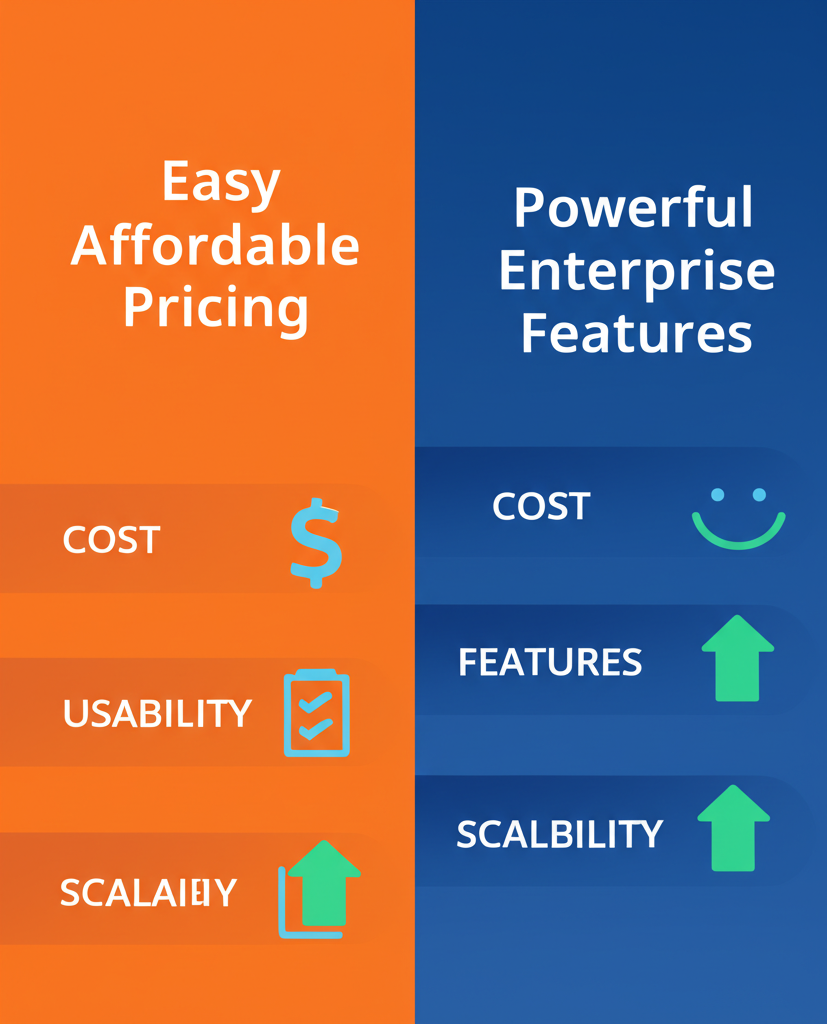
Verdict: HubSpot clearly wins on ease of use. For Philippine businesses without dedicated technical staff, this advantage is significant and can dramatically impact adoption rates.
Integrations
HubSpot: Offers hundreds of integrations through its App Marketplace, covering most popular business tools including Philippine payment gateways and local software. Integration setup is typically straightforward with minimal technical knowledge required.
Salesforce: The AppExchange ecosystem is massive, with thousands of pre-built integrations and the ability to connect to virtually any system through APIs. For enterprises with complex tech stacks, this flexibility is invaluable.
Verdict: Salesforce wins for breadth of integration options and enterprise connectivity, though HubSpot covers most common needs adequately for SMBs.
Pricing Comparison for Philippine Businesses
HubSpot Pricing Structure
HubSpot’s pricing is based on the tools you need (Marketing Hub, Sales Hub, Service Hub, CMS Hub, Operations Hub) and your contact list size for marketing features.
- Free: Basic CRM features for unlimited users
- Starter: Begins around $20/user/month for basic paid features
- Professional: $90-800/month depending on Hub and features
- Enterprise: $1,200-3,600/month for advanced capabilities
Cost Considerations: Marketing contact tiers can add significant cost as your database grows. However, the included automation and CMS often eliminates the need for separate tools, providing better overall value.
Salesforce Pricing Structure
Salesforce uses per-user pricing that scales with feature sets:
- Essentials: Starting around $25/user/month (limited to 10 users)
- Professional: $80/user/month
- Enterprise: $165/user/month
- Unlimited: $330/user/month
Hidden Costs: Salesforce’s published prices are just the beginning. Implementation typically requires consultants ($100-300/hour), many useful features are add-ons requiring additional licensing, and ongoing administration may require dedicated staff or external support.
Three-Year Total Cost of Ownership
For a mid-sized Philippine company (20 sales users, 5 marketing users), typical three-year costs might look like:
HubSpot: Software licensing plus minimal implementation results in a more predictable total cost of ownership, often 20-30% lower than a comparable Salesforce deployment. Maintenance and administration can often be handled by existing staff.
Salesforce: While entry prices may appear competitive, adding Marketing Cloud, implementation services, and ongoing administration significantly increases TCO for most organizations. Budget accordingly.
Making the Right Choice for Your Business
Choose HubSpot If:
- You’re a small to medium-sized business (under 500 employees)
- Marketing automation is a priority alongside sales
- You want an all-in-one platform without complex integrations
- Your team prefers intuitive, user-friendly software
- You don’t have dedicated CRM administrators
- Budget predictability is important to your planning
- You’re new to CRM and want to grow into it
- You prioritize time-to-value over ultimate customization
Choose Salesforce If:
- You’re a large enterprise with complex processes
- Extensive customization is required for unique workflows
- You have dedicated Salesforce administrators or can hire them
- Your industry requires specific compliance features
- You need to integrate with many enterprise systems
- Budget allows for significant implementation investment
- You have highly complex, multi-stakeholder sales cycles
- Your organization already uses other Salesforce products
The Philippine Market Perspective
For most Philippine businesses—particularly SMEs, startups, and growing companies—HubSpot often provides the better value proposition. The combination of lower total cost, easier implementation, and strong marketing capabilities aligns well with the needs of the local market.
However, large Philippine enterprises, particularly those in banking, telecommunications, and other regulated industries, may find Salesforce’s advanced compliance features and industry-specific solutions worth the additional investment.
Both platforms have local support options and can handle Philippine peso transactions and local integrations. The key is honestly assessing your organization’s needs, technical capabilities, and budget before making a decision.
Implementation Best Practices
Regardless of which platform you choose, successful CRM implementation requires:
- Clear objectives: Define what success looks like before implementation
- Data cleanup: Migrate clean, organized data to your new system
- User training: Invest in thorough training for all team members
- Phased rollout: Start with core features and expand gradually
- Executive sponsorship: Ensure leadership champions adoption
- Tracking KPIs: Monitor and track the right KPIs to measure success
- Change management: Plan for the cultural shift CRM requires
Working with a HubSpot Partner
For Philippine businesses choosing HubSpot, working with a certified HubSpot agency partner can accelerate implementation and maximize your investment. Partners bring implementation expertise, ongoing support, and strategic guidance that ensures you extract full value from the platform.
Certified partners have demonstrated proficiency in HubSpot implementation and can help you avoid common pitfalls, customize the platform for your specific needs, and train your team effectively.
Conclusion
The HubSpot vs Salesforce decision ultimately depends on your organization’s specific needs, resources, and growth trajectory. Both are excellent platforms—Salesforce for enterprises requiring maximum customization and power, HubSpot for businesses seeking an accessible, all-in-one solution.
For the majority of Philippine businesses, particularly those under 500 employees or those prioritizing marketing automation alongside sales, HubSpot offers the better combination of value, usability, and capability. However, large enterprises with complex requirements and dedicated IT resources may find Salesforce’s advanced features justify the additional investment.
Take the time to evaluate your requirements honestly, request demos from both platforms, and consider engaging with certified partners who can help you make the most informed decision for your Philippine business. The right CRM can transform your customer relationships and accelerate your growth—but only if it’s the right fit for your specific situation.