Marketing Leaders Face Measurement Gap as AI Search Cites Only 38% of Top-Ranking Pages

Only 38% of pages cited in Google AI Overviews come from URLs ranking in the platform’s traditional top 10 search results, a visibility gap that leaves most marketing teams without the measurement infrastructure to track how their brands appear in AI-generated answers, according to guidance published by Adweek on July 22, 2026.
TL;DR: Marketing leaders managing brands through traditional SEO dashboards cannot see how AI search tools cite their content; 94% plan to increase generative engine optimization investment in 2026 but most lack AI visibility measurement systems.
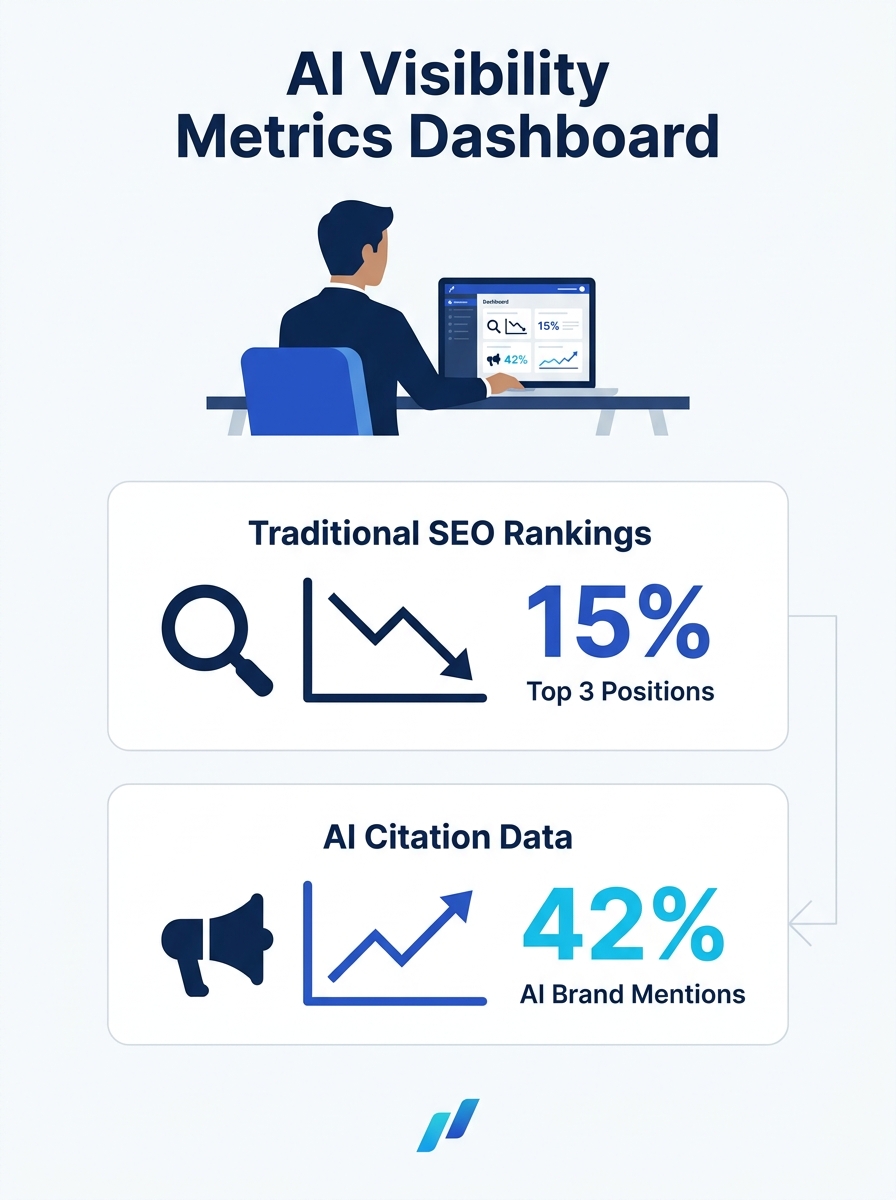
The measurement disconnect arrives as 94% of marketing leaders plan to increase investment in generative engine optimization (GEO) in 2026, yet the majority allocate no budget to tracking whether their content appears in AI-generated search responses. The standard SEO dashboard deployed across enterprise marketing organizations provides visibility into less than one-tenth of the sources large language models reference when describing brands, the guidance shows.
Ranking First No Longer Guarantees AI Visibility
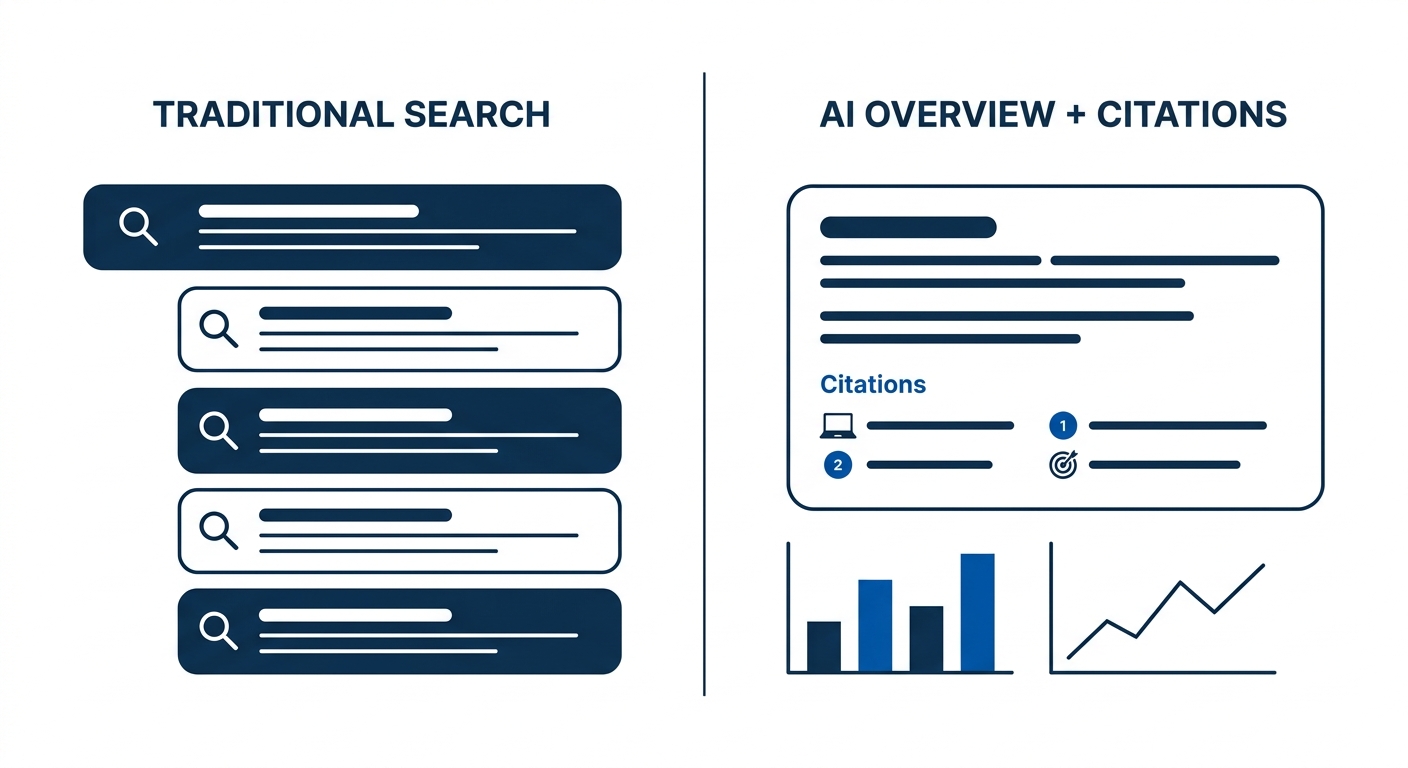
Traditional organic search rankings correlate weakly with which pages AI search tools cite in synthesized answers. A brand holding the number-one position in Google’s conventional blue-link results can still be excluded entirely from the AI Overview panel that increasingly mediates how buyers discover solutions, according to the published analysis.
Marketing leaders briefing AI SEO partners on 2026 programs now specify two parallel KPIs: traditional rank-and-traffic metrics for pages that still drive direct clicks, and AI citation share for queries where the AI Overview or ChatGPT response determines whether the brand enters the consideration set. Teams managing both objectives simultaneously report measurement complexity when legacy analytics platforms flag traffic declines that result from users resolving queries inside the AI interface rather than clicking through to the site.
The visibility gap compounds for enterprise brands managing multiple product lines or regional operations. A research study from IIT Delhi and Princeton found that content optimized for generative engine visibility—structured with authoritative citations, statistics, and direct-answer formats—can increase appearance in AI-generated responses by up to 40%, but realizing that lift requires instrumentation to measure baseline citation share by query category. Philippine enterprises evaluating whether to expand a managed SEO program to include GEO work should first audit whether their analytics stack can distinguish AI-mediated brand exposure from traditional impressions.
Marketing Teams Lack Infrastructure to Track AI-Assisted Conversions
Marketing leaders setting 90-day objectives for GEO programs face a second measurement challenge: attributing conversions that begin inside an AI-generated answer. The customer who asks ChatGPT to compare three SaaS vendors and then visits the cited brand’s demo page represents an AI-assisted conversion, but conventional attribution models assign credit to the referral source (often openai.com or google.com) rather than to the underlying GEO work that earned the citation.
Practitioners overseeing agency partners on GEO execution recommend establishing measurement protocols before launching optimization work. A baseline AI citation audit—mapping which competitor names appear in response to category-defining queries—creates the benchmark against which to measure share gains. Leaders who have run an AI search visibility audit report that the exercise also surfaces brand misrepresentation cases where the AI synthesizes outdated or competitor-conflated information, a correction priority that traditional SEO audits miss.
Brand Discoverability Shifts from Click Volume to Citation Quality
The third strategic shift involves redefining what successful brand discoverability looks like. Decades of SEO practice trained marketing teams to optimize for maximum traffic volume; GEO programs instead optimize for citation in high-value answer contexts. A pharmaceutical brand mentioned as a treatment option in response to 200 condition-related queries delivers more business impact than a ranking that drives 2,000 unqualified clicks to a blog post, yet most marketing dashboards lack the structure to compare the two outcomes.
Marketing executives briefing agencies on GEO work should specify citation-quality thresholds rather than adopting volume metrics from SEO playbooks. The goal is not to appear in the maximum number of AI-generated answers but to be cited accurately and favorably when buyers ask the questions that precede purchase decisions. Leaders managing brand visibility in AI search report that tracking “share of accurate mentions” and “favorable-versus-neutral citation ratio” better aligns agency incentives with business outcomes than raw citation counts.
The measurement gap also affects how marketing leaders allocate budget between SEO and GEO work. Teams operating under constrained budgets face pressure to redirect spend from traditional SEO—where measurement is mature and attribution is clear—to GEO programs where visibility remains opaque. The 94% of leaders planning GEO investment increases in 2026 represent enterprises willing to commit resources before measurement infrastructure fully catches up, a risk posture that requires executive-level air cover when quarterly reviews show falling traditional traffic metrics even as AI citation share climbs.
APAC. Implications
Philippine marketing leaders managing enterprise brands through this search transition should expect agency partners to deliver two distinct measurement frameworks: one tracking traditional organic performance, the other monitoring AI citation share and quality. The 38% overlap between top-ranking pages and AI-cited pages means that winning in both channels simultaneously requires content structured for both crawlability and LLM trust signals—a dual optimization that AI SEO services teams price separately from conventional programs.
Marketing directors briefing 2026 search strategy should audit whether their current analytics infrastructure can distinguish AI-mediated brand exposure from traditional impressions. The IIT Delhi and Princeton finding that GEO-optimized content lifts AI visibility by up to 40% represents a material competitive advantage, but capturing that lift requires measurement systems that most enterprise marketing stacks do not yet deploy. Leaders overseeing APAC operations for multinational brands face the additional complexity of tracking AI citation share across multiple languages and regional LLM variants, a measurement challenge that makes baseline visibility audits the necessary first step before committing to optimization work.
The shift from click volume to citation quality also changes how marketing leaders should evaluate agency performance. Traditional SEO reporting—rank movement, traffic trend, conversion lift—remains relevant for pages that still drive direct visits, but GEO programs require parallel KPIs that measure citation share, mention accuracy, and favorable positioning in AI-generated answers. Philippine enterprises that brief agencies on both traditional SEO and GEO work simultaneously should clarify upfront which metrics govern success in each channel to avoid misaligned expectations when traffic declines even as AI citation share climbs.