Best AI Tools for Marketing
Artificial intelligence isn’t the shiny new toy it was two years ago, marketers now treat artificial intelligence tools as essentials, especially when figuring out what are the best AI tools to support strategy, content, and execution. Whether it’s writing ad copy, building visuals, or automating reports, AI has found its place in the day-to-day flow of marketing teams everywhere.
But here’s the catch: using AI well isn’t about stacking 20 tools into your browser bar. It’s about finding the few that actually make your work easier, sharper, and a little more creative. The right mix of tools doesn’t replace marketers, it amplifies what they do best.
According to HubSpot’s 2025 State of Marketing report, over 60% of marketers already use AI to create or optimize content, but only a fraction use it strategically. That’s the gap we’re closing here.
In this guide, we’ll explore seven AI tools that are shaping how marketers work today, from research to content to automation. Each one earns its spot not for hype, but for practical value: what it does best, where it struggles, and how you can actually use it.
How to Read This List
Think of this less as a ‘ranking’ and more as a workflow. These are the types of AI tools you’ll realistically use day to day—a practical list of AI tools built around how marketers actually work.
We’ll move through the natural stages of marketing:
- Research and ideation
- Writing and strategy
- Design and production
- Automation and distribution
You don’t need all seven. In fact, you’ll get more power pairing two or three that fit your routine than juggling a dozen half-used dashboards.
ChatGPT – For Research, Ideation, and Drafting
Let’s start with the obvious powerhouse. ChatGPT has become a marketer’s Swiss Army knife—and if you’ve ever asked what are other AI tools like ChatGPT, this is the benchmark you measure against. It remains one of the strongest AI tools for writing, especially when paired with lighter AI writing tools for edits or variations.
Use it for early-stage brainstorming, campaign outlines, or copy you can refine later. It’s particularly strong when you guide it with clear context: your audience, tone, and intent. Treat it like a collaborator, not a magic box. The better your prompts, the better your results.
Pros:
Cons:
Best for: Marketers who need a quick-thinking partner for brainstorming, planning, and content prep before human editing.
Perplexity – For Research and Fact-Checking
If ChatGPT is your creative partner, Perplexity is the one with receipts. It blends conversational AI with real-time web search, giving you answers backed by citations you can actually click. For marketers who need up-to-date stats, trend insights, or industry data, it’s an excellent counterbalance to ChatGPT’s closed dataset.
For marketers who depend on data you can trust, Perplexity is one of the most useful AI research tools available today. SEOs, in particular, get value from its sourced answers, making it a quiet hero among SEO AI marketing tools for competitive research, SERP analysis, and trend spotting.
Perplexity also helps keep your content credible. Instead of manually digging through ten tabs, you can ask a question like “current conversion rate benchmarks for eCommerce in Southeast Asia” and get linked results in seconds.
Pros:
Cons:
Best for: Content strategists and SEOs who need factually accurate, link-backed insights fast.
Claude – For Strategy and Long-Form Thinking
Where ChatGPT thrives on agility, Claude excels at depth—a rare artificial intelligence tool that can process long documents while staying coherent. Built by Anthropic, Claude handles longer context inputs, entire briefs, reports, or multi-page strategy documents, with more logical consistency than most LLMs. It’s the “big picture” thinker in your stack.
Claude is especially handy for marketers dealing with research synthesis or structured writing. You can feed it data, customer insights, or even a messy internal doc, and it can produce a clean, reasoned outline or narrative summary. It also has stronger built-in safety filters, which makes it more reliable for sensitive or regulated industries.
Pros:
Cons:
Best for: Marketing leaders and strategists creating plans, proposals, or thought-leadership pieces that need logic and structure more than flair.
Jasper – For Scalable, Brand-Consistent Copy
If ChatGPT is your brainstorm partner, Jasper is the one you bring to team meetings. Built for marketing teams, Jasper lets you generate on-brand copy across multiple formats, emails, product pages, social captions, even long-form blogs—with consistent tone and brand memory. It also fills the gap for teams looking for dependable AI content writing tools that can keep messaging aligned across multiple channels.
Its library of templates makes it especially useful for large-scale content operations or agencies juggling multiple clients. Jasper integrates with tools like Surfer SEO and Grammarly, which helps ensure everything you produce is optimized and polished before it hits publish.
Pros:
Cons:
Best for: Content or growth teams that produce high volumes of branded content and need everyone writing in one unified voice.
Canva – For Visuals and Social Content
Design doesn’t have to be a bottleneck anymore. Canva bridges the gap between marketers and designers with its ever-growing suite of AI-powered tools. You can spin up thumbnails, carousel posts, infographics, or short videos in minutes, and they’ll actually look good.
The “Magic Studio” features like text-to-image, Magic Write, and automatic resizing save hours that would’ve been spent tweaking dimensions or layouts. It’s ideal for small teams that don’t have a full-time designer but still need consistent, visually polished output across channels.
Beyond static visuals, Canva’s newer features double as lightweight AI tools for video editing, letting you trim, format, and stylize short-form content without jumping into a more technical app.
Pros:
Cons:
Best for: Marketers and social media managers who need on-brand visuals fast without pulling a designer off another project.
Adobe Firefly – For Advanced Visual Editing
When your visuals need more than quick polish—when they need to represent your brand—Adobe’s Firefly suite delivers that professional-grade precision and answers the growing need for AI image generation tools built for brand safety. It’s the generative AI built into Photoshop, Illustrator, and Express, offering text-to-image generation, smart background replacements, and detailed creative control.
If you’ve ever wondered what AI tools can generate images at a professional level without copyright risks, Firefly is one of your safest bets. It also stands as one of Adobe’s flagship generative AI tools, giving teams finer creative control than most open models. For marketers exploring what are generative AI tools designed for enterprise workflows, Firefly is a clear example of how this technology actually fits into brand-centric production.
Unlike most image generators, Firefly was trained on licensed, safe-to-use data, which helps brands avoid the copyright gray area that comes with some open AI models. It’s especially powerful for campaign visuals, print materials, and high-resolution ad assets where quality can’t be compromised.
Pros:
Cons:
Best for: Brands or creative teams that need AI-assisted design without sacrificing precision, originality, or compliance.
Building Your Starter AI Stack
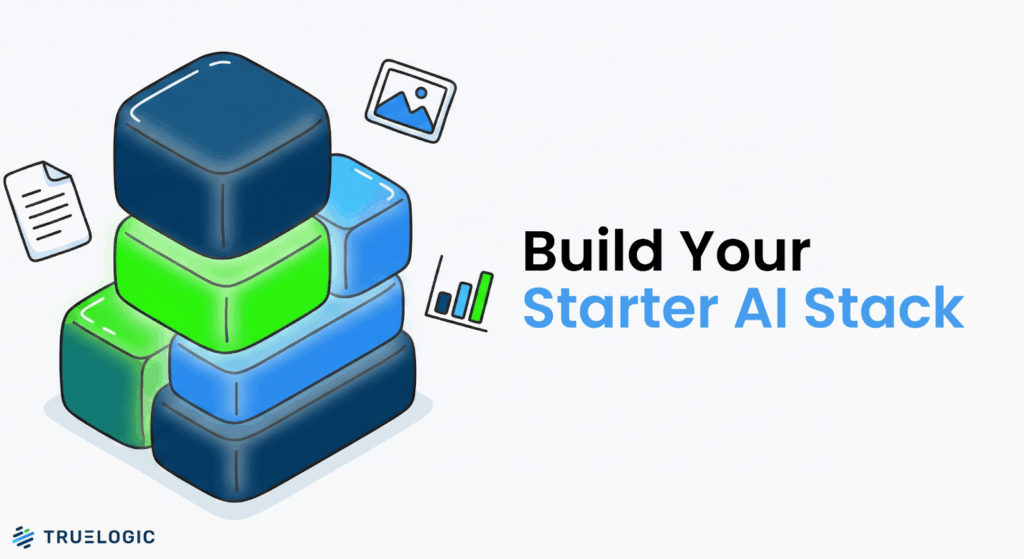
If you’re new to AI marketing, don’t try to use everything at once. Start with one AI tool per stage of your workflow, enough to speed you up, not overwhelm you.
Here’s one simple setup that works for most marketing teams:
This combination covers 90% of what most marketers need day to day, brainstorming, content creation, visuals, and delivery, without adding extra clutter to your process. Most teams only need a small set of AI tools to get real value, instead of juggling a long list of platforms they rarely use.
Reality Check: AI Isn’t Autopilot
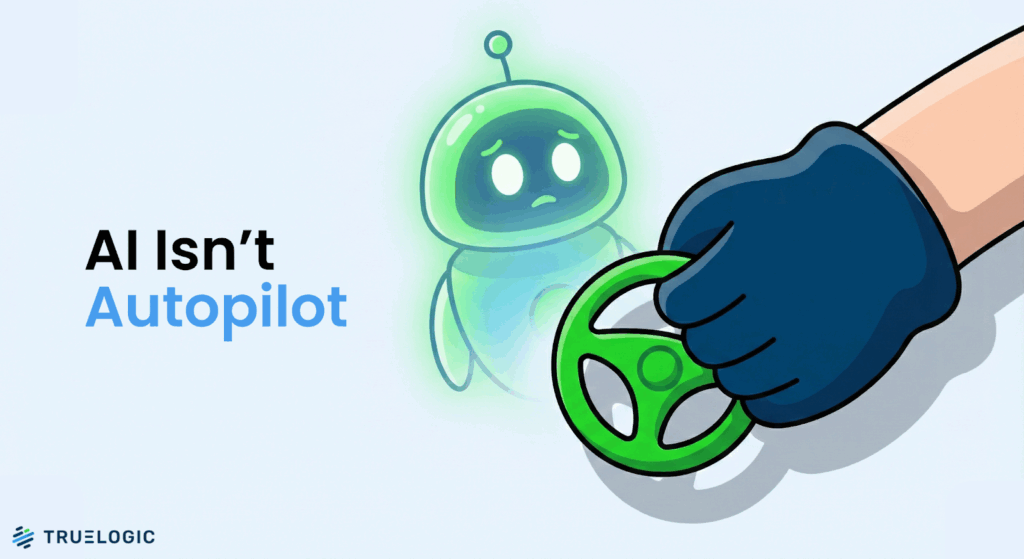
Hey, while these AI tools are no doubt impressive (we couldn’t agree more), don’t bask in their glory alone. Remember, the best marketers don’t use AI to cut corners. They use it to remove friction. A machine can help you write, research, or design, but it can’t understand your customers the way you do.
It’s true: today’s AI tools make our work faster, smarter, and more efficient than ever. But part of mastering them is knowing where to draw the line, when to let AI take over the repetitive, and when to step back in with your own judgment. Keep a human in the loop for tone, accuracy, and empathy. Audit your tools regularly. And remember, no matter how advanced these systems get, none of them can replicate your brand’s lived experience, or the intuition that makes your marketing truly human.
The Takeaway
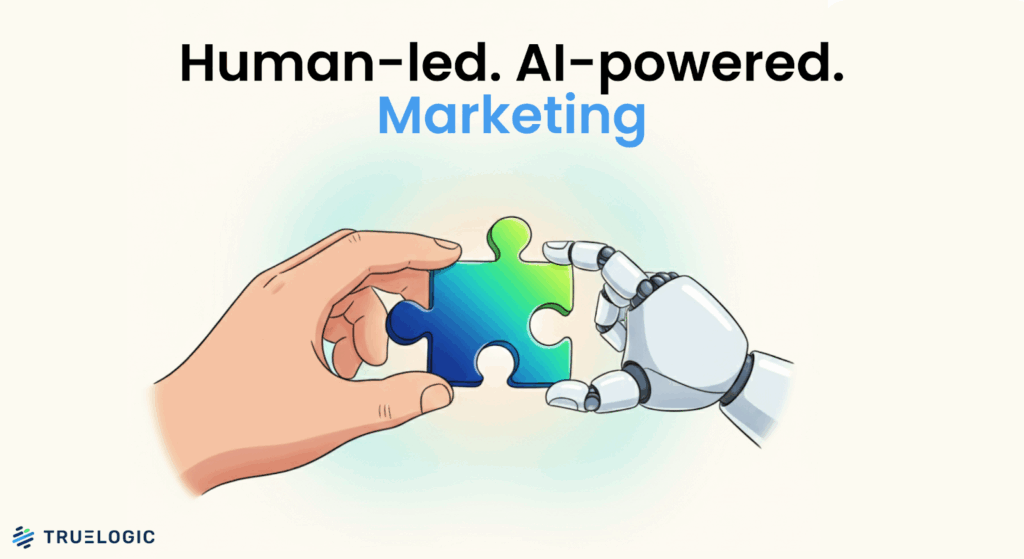
AI in marketing isn’t about replacing creative work, it’s about redefining how we work. It challenges us to strip away inefficiencies, sharpen our instincts, and spend more time on the kind of thinking machines can’t replicate: empathy, intuition, and storytelling. It starts with understanding what are the different AI tools available—and choosing only the ones that solve real inefficiencies.
When used strategically, these tools don’t steal the creative process, they streamline it. They automate the repetitive so you can focus on the meaningful. They organize the noise so you can hear what your audience is actually saying.
But depth still belongs to humans. The best marketing doesn’t come from who can produce content faster, it comes from who understands why the message matters. AI can optimize your output, but it’s you who defines the outcome.
So start small. Choose one tool that solves a real problem, measure the impact, then expand with purpose. Because the future of marketing isn’t machine-driven, it’s human-directed. AI is only as powerful as the strategy, creativity, and conscience of the person behind it.
The platforms in this guide are practical examples of AI tools that support creativity, efficiency, and decision-making replacing the human insight behind great marketing.