Google Rolls Out AI Disclosure Labels in Ad Transparency Panel to Combat Synthetic Media Deception

Google deployed a transparency feature across its advertising platforms Friday that displays whether a given ad was created or modified using artificial intelligence, according to an announcement reported by Times of India. The “How this ad was made” section now appears in the My Ad Center panel accessible from Google Search, YouTube, and the Discover feed, allowing users to check AI involvement in any sponsored content they encounter.
TL;DR: Google introduced mandatory AI disclosure labels in its ad transparency panel on July 11, 2026, applying to all ads served through Search, YouTube, and Discover that use generative AI in creative production.
The move extends Google’s existing disclosure requirements, which since 2023 have required advertisers to flag synthetic or digitally altered content in election-related ads. The new policy applies to all commercial advertising categories globally, not just political messaging.
Two Disclosure Pathways for Advertisers
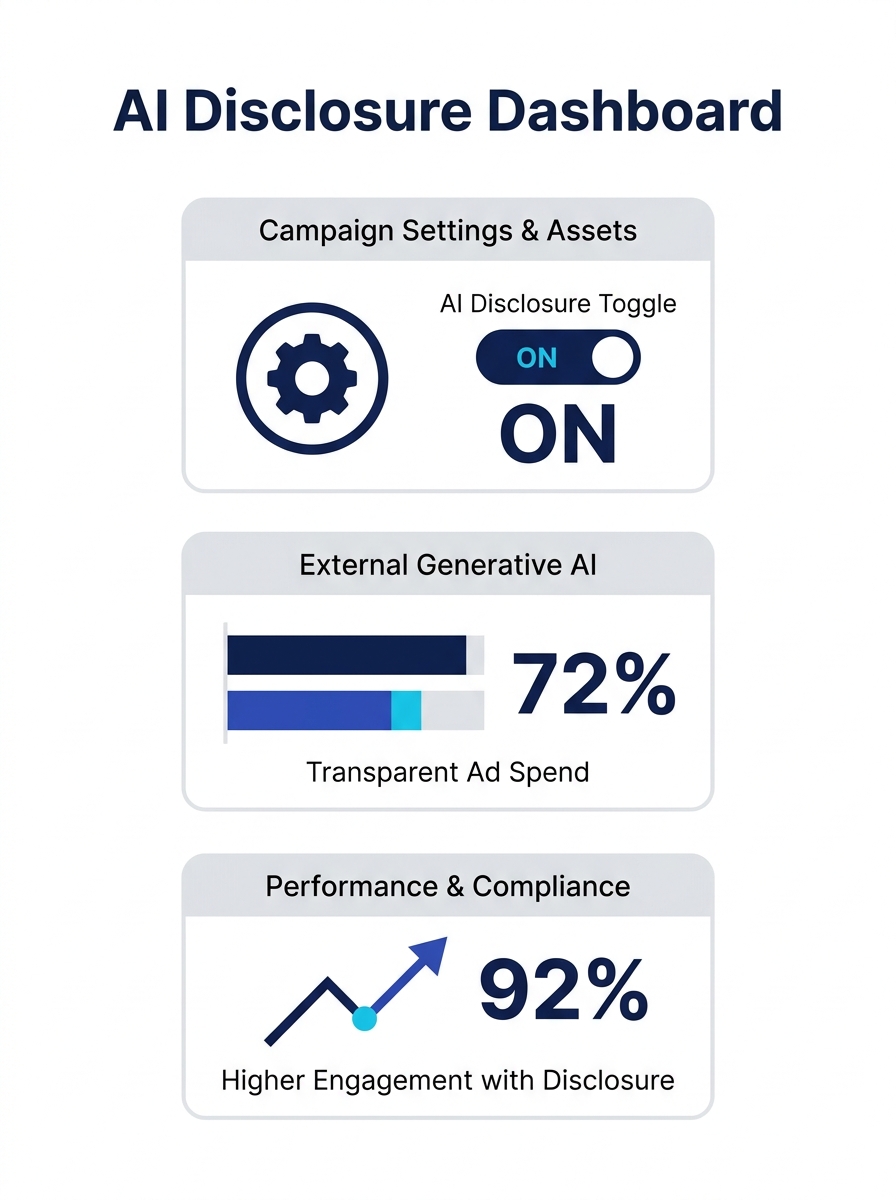
Google’s system handles AI disclosure through two mechanisms, depending on where the creative asset originates. Campaigns built using Google’s proprietary generative AI marketing tools automatically receive an AI disclosure tag appended to the ad’s information panel without requiring advertiser action.
For creative assets produced through external platforms such as Midjourney or OpenAI, advertisers access a dashboard control panel where they manually toggle an AI-creation indicator. The company confirmed both pathways feed the same transparency panel that users see when they click the three-dot menu or information icon adjacent to an ad unit.
“Our intent is to equip users with a deeper understanding of the advertisements they engage with, while simultaneously facilitating advertisers in navigating the dynamic landscape of industry standards,” Google stated in the announcement.
Regional legislation may trigger additional visible warning labels placed directly on the ad creative itself, either applied automatically by Google’s compliance system or activated through the advertiser’s manual disclosure setting. The company did not specify which jurisdictions currently mandate on-creative labels versus information-panel disclosures.
SynthID and Technical Signals Layer Beneath User-Facing Labels
Google embeds imperceptible signals such as SynthID watermarking into outputs from its generative AI tools, creating a technical verification layer that operates independently of the user-facing disclosure panel. This dual-track approach allows platform-level detection even if an advertiser fails to toggle the manual disclosure or attempts to strip visible labels from creative files before upload.
The company emphasized that its fundamental advertising policies continue to prohibit misleading, fraudulent, or deceptive marketing practices regardless of whether content originates from human copywriters or AI systems. The disclosure requirement functions as an informational layer rather than a quality judgment on AI-generated creative.
For agencies managing sponsored Google ads across client portfolios, the automation pathway reduces administrative overhead on campaigns using Google’s first-party tools, while the manual toggle introduces a compliance checkpoint on any creative brief that specifies external AI platforms. Brands evaluating partner agencies should confirm which AI tools appear in the production stack and how disclosure obligations map to existing creative QA workflows.
What This Means for, CMOs
Marketing leaders briefing paid media partners now need to clarify AI disclosure expectations in creative briefs and campaign governance frameworks. Agencies building assets through Midjourney, ChatGPT, or other external platforms must configure the manual disclosure toggle before campaigns launch, while those using Google’s generative tools inherit automatic compliance. Either pathway surfaces the AI involvement to end users, which may influence how brands choose to position AI-augmented creative versus human-only production in stakeholder conversations.
The policy creates an audit trail that maps creative production methods to specific campaigns, making it simpler to diagnose performance variance across AI-assisted and traditionally produced ad sets. CMOs running multivariate tests on creative approaches can now segment learnings by production method with platform-verified labels rather than relying solely on internal naming conventions.
For brands operating across multiple markets, the variable regional requirements, some jurisdictions mandating on-creative labels, others accepting panel disclosures, introduce localization complexity. Marketing leaders should confirm with agency partners which markets trigger visible labeling and how that affects creative versioning and approval cycles, particularly in regulated categories such as banking, pharma, and insurance where disclosure requirements already layer multiple compliance frameworks.