Enterprise Web Platforms Shift to Real-Time AI Personalization as Static Design Model Shows Diminishing Returns
Web platforms deployed by enterprise brands increasingly rely on AI-driven real-time personalization engines rather than static page layouts, according to analysis published by digital strategy firm Cybertegic on June 3, 2026. The shift reflects deteriorating performance of one-size-fits-all web experiences as visitor expectations for immediate relevance rise across commercial sectors.
TL;DR: Enterprise web platforms now use AI to modify content, navigation, and calls-to-action in real time based on behavioral signals, replacing static designs that served identical experiences to all visitors.
McKinsey & Company research cited in the Cybertegic analysis found that companies excelling at personalization generate materially higher revenue from marketing efforts compared to peers relying on undifferentiated web experiences. The performance gap has widened as visitor tolerance for generic content decreases, the firm noted.
Behavioral Signal Processing Drives Dynamic Content Adjustment
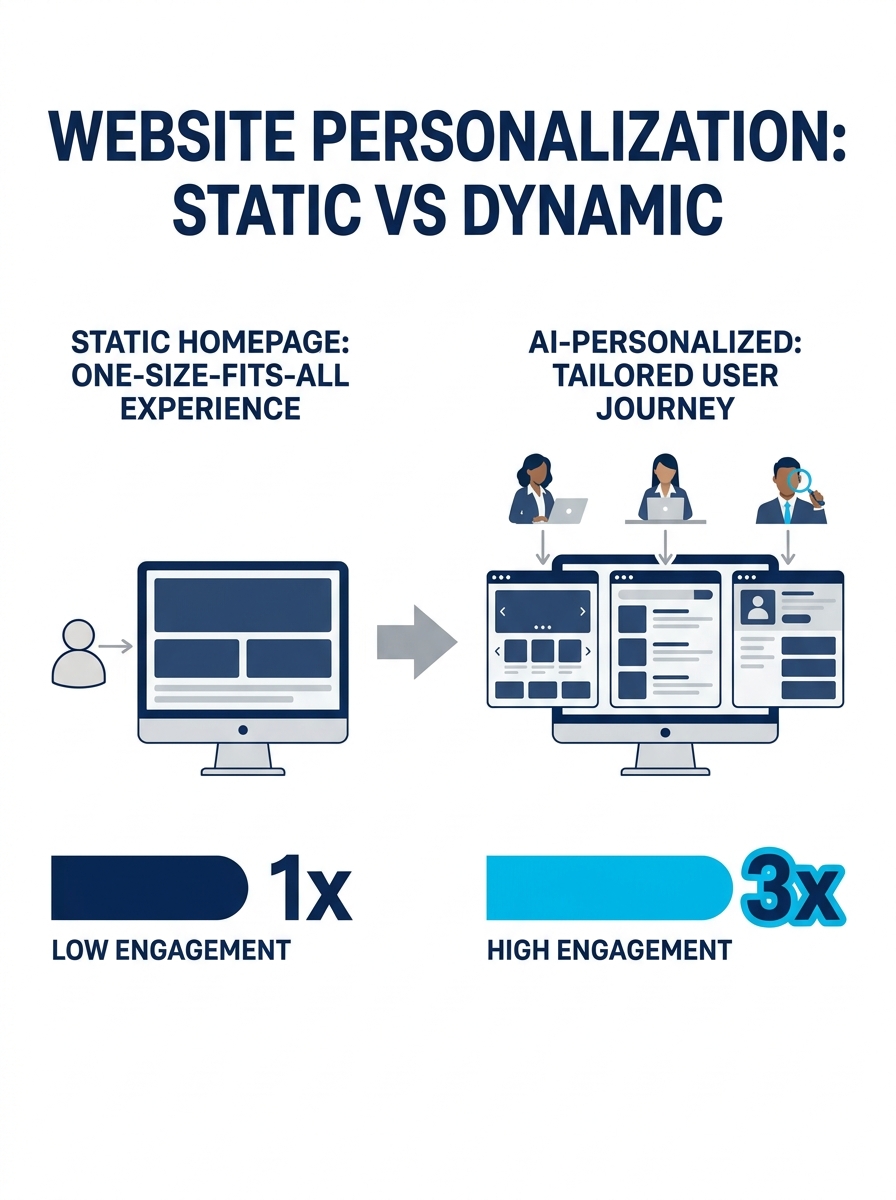
AI personalization systems analyze visitor interaction patterns—pages visited, time spent on content, scroll behavior, click sequences, purchase history, and on-site search activity—to infer intent and modify web experiences accordingly, according to the Cybertegic framework. A returning customer may see previously viewed products immediately upon site entry, while a first-time visitor receives educational content positioned to build category understanding before commercial messaging.
The technical architecture differs substantially from traditional A/B testing regimes. Where legacy optimization approaches required manual variant creation and month-long testing windows to identify winning layouts, AI systems adjust content continuously based on real-time behavioral input. Headlines, hero banners, product displays, call-to-action buttons, blog recommendations, and navigation menus can shift for individual visitors without requiring separate site builds.
Spotify’s recommendation engine exemplifies the approach at consumer scale, processing listening behavior, track skips, playlist composition, session duration, and genre preferences to power features including Discover Weekly playlists. Users frequently describe the platform’s suggestions as “accurate” or “creepy good,” reflecting the system’s ability to approximate human curation, the analysis noted.
E-Commerce and SaaS Platforms Lead Enterprise Adoption
Amazon’s recommendation infrastructure—spanning homepage suggestions, “frequently bought together” modules, browsing-history-driven product displays, and personalized deal presentations—has operated at scale for years, with Forbes reporting the systems contribute significantly to overall sales performance. The e-commerce model has since expanded to B2B software platforms, where companies deploy similar engines to recommend case studies aligned with visitor industry or present product configurations matched to detected company size signals.
Adobe integrates AI personalization capabilities across its marketing and experience platforms through Adobe Sensei, enabling client brands to automate design adjustments and optimize content delivery without manual intervention. A retail client can configure the system to display different homepage layouts to mobile versus desktop visitors, or surface region-specific product assortments based on detected geography.
The capability set extends beyond recommendation logic. Dynamic personalization modifies navigation structures to prioritize paths most likely to drive conversion for specific visitor segments, adjusts messaging tone based on inferred experience level (startup founder seeking affordable solutions versus enterprise executive evaluating scalability), and throttles content density to match device constraints.
APAC. Implications
Marketing leaders briefing agencies on web redesign or conversion-optimization engagements should evaluate whether proposed architectures support real-time personalization or remain locked into static template models. The performance difference between approaches compounds over time—static designs require periodic manual refreshes to address shifting visitor behavior, while AI-driven systems adapt continuously without additional creative or development spend.
Philippine enterprises with diverse customer segments (mass retail banking serving both high-net-worth and unbanked populations, real estate developers targeting OFW buyers versus local upgraders, insurance providers spanning corporate group policies and individual microinsurance) face particularly acute relevance challenges when presenting undifferentiated web experiences. Building SEO information architecture for scale becomes more complex when personalization logic determines which content surfaces to which visitors, requiring agencies to map both static URL structures and dynamic content-serving rules.
APAC brands expanding across markets should specify personalization requirements during agency briefing, particularly around language detection, currency switching, and region-specific product availability. The technical lift is non-trivial—personalization engines require integration with content management systems, customer data platforms, and analytics infrastructure—but enterprise platforms that wait for static-design performance to fully deteriorate before implementing adaptive systems face lengthier migration timelines and steeper opportunity costs.