How to Optimize Your Website for AI Search: What Philippine Businesses Should Be Doing Now

Optimizing your website for AI search is the most direct action Philippine businesses can take to stay visible as search continues to evolve.
Key Takeaways
- Optimizing your website for AI search requires technical, structural, and content-level changes that go beyond traditional SEO keyword strategy.
- AI tools favor websites with strong E-E-A-T signals, structured data, and content that answers questions directly and authoritatively.
- Philippine businesses that build their AI search presence now will establish credibility with AI tools before competitors claim those positions.
The way buyers find businesses online is changing faster than most marketing strategies can keep up with. Website optimization for generative AI has become one of the most consequential decisions a marketing head or executive can make for their company’s long-term digital visibility.
Philippine buyers are already using tools like Google’s AI Overviews, ChatGPT, Perplexity, and Gemini to research products, compare service providers, and make purchasing decisions. These tools work differently from traditional search. They do not hand users a list of links to sort through. They read multiple sources, weigh their credibility, and generate a single, direct answer.
Your website either makes the cut as one of those sources or it does not. This guide covers the technical, structural, and content-level changes your business needs to make right now.
Why AI Search Requires a Different Approach

Traditional SEO is about ranking in search results. AI search optimization is about being chosen as a source inside a generated response. Those are two different goals, and they require different approaches.
Search engines weigh signals like keyword relevance, backlinks, and page speed. AI tools ask a different set of questions: Is this content trustworthy? Is it clearly structured? Does it actually answer what the user is asking?
A page that ranks well on Google does not automatically get cited by AI. It needs to meet a higher bar for credibility and clarity.
For Philippine businesses, this means your website optimization strategy needs to account for both audiences: search engines and AI systems that may be reading your content to generate an answer.
How to Optimize Your Website for AI Search
Technical Foundations: What AI Tools Need to Access Your Site
Before any content-level optimization can work, your website needs a solid technical foundation. AI tools draw from indexed web content, which means they can only use what they can find and read.
Site Speed and Crawlability
A slow site or one with crawl errors limits how much of your content gets indexed and, by extension, how much of it can be used by AI tools. Run regular technical audits to identify and resolve crawl blocks, broken links, and page speed issues.
Structured Data and Schema Markup
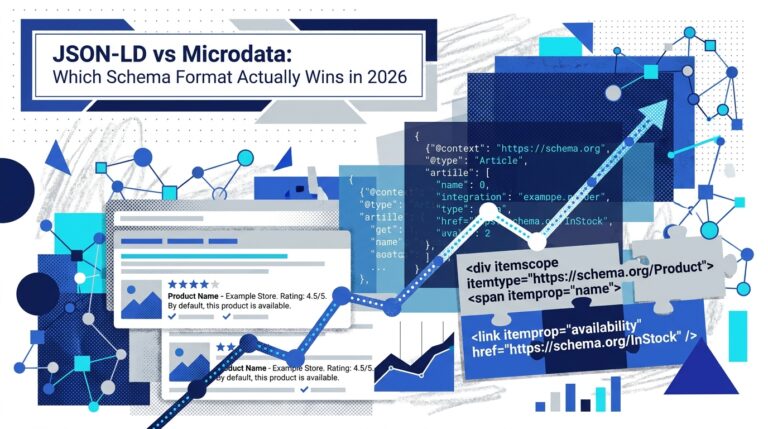
Schema markup is one of the most direct ways to help AI systems understand your content. Using Organization, Article, FAQ, and Product schema from Schema.org gives AI tools a structured reference point for your brand, your content, and your offerings. Without it, AI systems have to infer that information from unstructured text, which introduces errors and reduces the likelihood of citations.
Mobile Performance
A significant portion of AI search queries originates from mobile devices. Your site needs to perform well across screen sizes, not just on desktop.
HTTPS and Security Signals
AI tools prioritize content from sources they consider trustworthy. A secure, properly configured site is a baseline requirement.
Content Structure: Making Your Pages Easy for AI to Use
AI tools extract and synthesize information from your content. The easier that process is, the more likely your pages are to be cited.
Answer Questions Directly and Early
AI tools favor content that leads with a clear answer rather than building up to it. If a page is designed to answer a specific question, that answer should appear in the first paragraph, not the fifth. The rest of the page can provide supporting context and depth.
Use clear headings and logical structure
Pages organized with descriptive H2 and H3 headings are easier for AI systems to parse. Each section should have a clear, specific focus. Make sure heading titles clearly describe what the section covers.
Keep paragraphs short and focused
Long, dense paragraphs make it harder for AI tools to pull out specific information accurately. Keep paragraphs short and focused on one idea. It is better for both readers and the AI systems reading your content.
Include FAQ sections
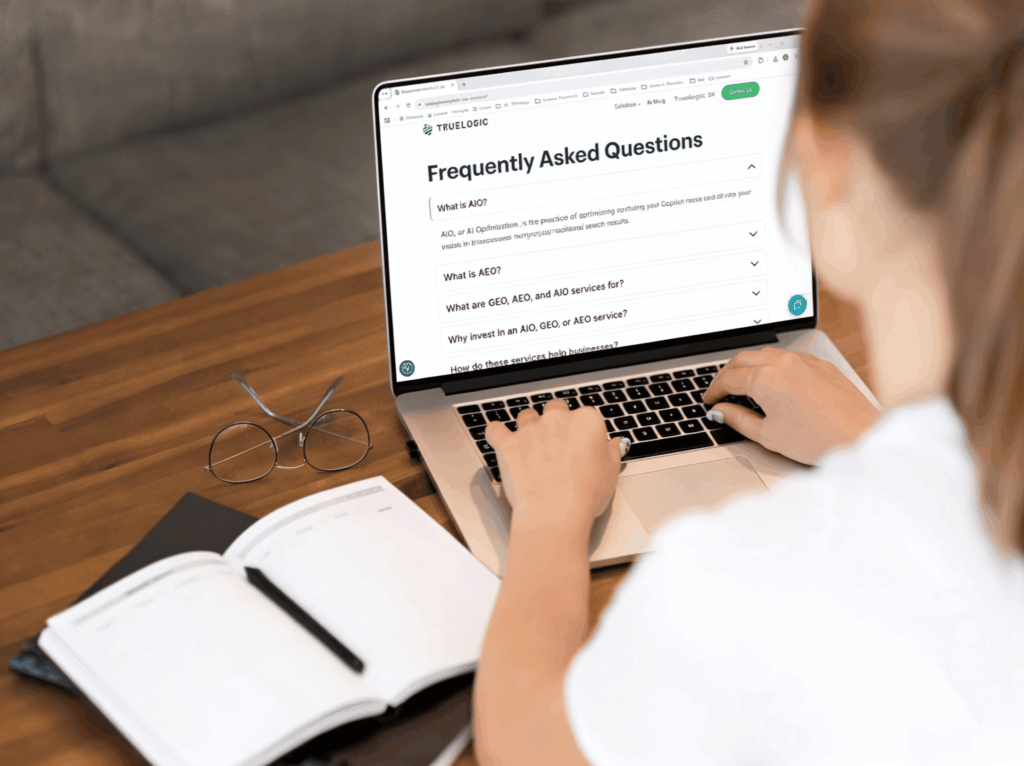
FAQ sections are one of the simplest ways to optimize content for AI overviews. Information from the FAQs sections is the most commonly cited content formats in AI-generated responses. They present questions and answers in a format that AI tools can extract cleanly and use accurately.
E-E-A-T: Building the Credibility AI Tools Look For
Google’s E-E-A-T framework, which stands for Experience, Expertise, Authoritativeness, and Trustworthiness, is one of the primary lenses through which AI tools evaluate whether content is worth citing.
Author credentials and profiles
LLMs only cite sources they trust. When content is attributed to a named expert with clear credentials, AI tools are more likely to treat it as a credible source. To establish your site’s credibility, build out author profiles that establish who is writing, what their background is, and why they are qualified to speak on the topic.
Accurate, well-sourced information
AI tools are trained to avoid surfacing inaccurate or poorly supported content. Cite credible sources, keep statistics current, and ensure every factual claim is accurate and verifiable.
Brand consistency across the web
AI tools do not form an opinion about your brand from your website alone. They draw from everything that exists about you across the web. Your brand description, area of expertise, and key differentiators should read consistently whether someone finds you on your site, your Google Business Profile, an industry directory, or a third-party article.
Third-party validation
Mentions in reputable publications, positive reviews on credible platforms, and coverage in industry media represent some of the strongest off-page opportunities for AI search optimization. They all feed directly into how AI tools evaluate your brand’s credibility. A digital PR strategy is not just a brand awareness play. It is an AI visibility strategy.
Content Depth: Becoming the Source AI Trusts
Covering ten topics adequately is not the same as owning one topic well. AI tools are more likely to cite a brand that consistently publishes authoritative content in a defined area than one that spreads itself too thin across too many subjects.
Build topic clusters
Organize your content around a central pillar page and support it with related articles that go deeper on specific aspects of the topic. This structure tells both search engines and AI tools that your brand has genuine depth in a subject, not just a surface-level presence.
Update content regularly
Outdated content loses credibility with AI tools in a year or two. Build a process for reviewing and refreshing your key pages on a regular basis. This is especially important for topics that move quickly, like AI search, where what was true six months ago may already be outdated.
Cover the questions your audience is actually asking
Conduct regular content gap analyses to identify the questions your target audience is asking that your site does not yet answer. Every unanswered question is a citation opportunity your competitors may be capturing instead.
The Businesses That Act Now Will Be the Hardest to Displace
AI search is not replacing traditional SEO. It is adding a layer of complexity that rewards the websites with the strongest technical foundations, clearest content structures, and most credible brand signals.
Website optimization for generative AI requires the same discipline as traditional SEO, but with higher standards for credibility, structure, and authority. The businesses that meet those standards now will hold positions that competitors will find difficult to displace later.
For Philippine businesses, the action plan is clear: Audit your technical setup, strengthen your structured data, build content that answers questions directly, and invest in the brand authority signals that AI tools use to evaluate credibility.
Truelogic works with Philippine businesses to build search strategies that perform across both traditional and AI-powered search. Ask our team about our AI SEO services to audit and improve your site’s AI search visibility.
Frequently Asked Questions
How do I know if AI search tools are already citing my website?
Query ChatGPT, Perplexity, and Gemini with the questions your audience would ask about your category. Note whether your brand appears in the responses and how it is described relative to competitors. This manual audit gives you a baseline for measuring improvement over time.
Does optimizing for AI search affect my traditional Google rankings?
In most cases, yes, positively. The signals that improve AI search visibility, such as structured data, strong E-E-A-T, clear content structure, and authoritative brand mentions, also strengthen traditional SEO performance. The two strategies are complementary rather than competing.
How quickly can a website see improvement in AI search visibility after making these changes?
There is no fixed timeline. Technical changes like schema markup can be processed relatively quickly. Content and authority signals take longer to build. Most businesses begin seeing measurable shifts within three to six months of consistent, structured effort.
What role does internal linking play in AI search optimization?
Internal linking helps AI tools understand the structure and hierarchy of your website and the relationships between your content. A well-linked site makes it easier for AI systems to map your expertise and surface the right pages for the right queries.