Ecommerce SEO: Improving Rankings to Drive More Sales

E-commerce continues its explosive growth trajectory. With global e-commerce sales projected to exceed $7 trillion in 2026, the competition for online visibility has never been fiercer.
For Philippine online retailers, where e-commerce spending reached USD 8.24 billion in 2026, mastering e-commerce SEO isn’t optional—it’s essential for survival and growth.
This comprehensive guide covers proven e-commerce SEO strategies that drive rankings, traffic, and most importantly, sales.
What is E-commerce SEO?
E-commerce SEO is the process of optimizing your online store to rank higher in search engine results for product-related queries. Unlike traditional SEO, e-commerce optimization focuses heavily on transactional intent—capturing users ready to buy.

Key components of e-commerce SEO include:
- Product page optimization: Titles, descriptions, images, and schema markup
- Category page structure: Logical organization and internal linking
- Technical SEO: Site speed, mobile optimization, crawlability
- Content strategy: Buying guides, comparisons, and educational content
- Link building: Authority signals from relevant external sites
According to BrightEdge research, organic search drives 43% of all e-commerce traffic—making SEO the single most important acquisition channel for online retailers.
E-commerce Keyword Research: Finding Buyer Intent
Effective e-commerce SEO starts with understanding what your customers search for when they’re ready to buy.
Focus on Transactional Keywords
Unlike informational queries, transactional keywords signal purchase intent:
- Product-specific: “iPhone 15 Pro Max price Philippines”
- Comparison: “best wireless earbuds under 5000 pesos”
- Deal-seeking: “laptop sale Manila free delivery”
- Brand + product: “Nike running shoes authentic”
Long-tail Keywords Drive Conversions
Long-tail keywords may have lower search volume, but they convert better. A user searching “waterproof hiking boots size 10 brown leather” knows exactly what they want.
Use tools like Ahrefs, Semrush, or Google Keyword Planner to identify:
- Search volume trends
- Keyword difficulty scores
- Related keyword opportunities
- Competitor keyword gaps
Learn more about finding the right keywords in our competitor analysis guide.
Optimizing Product Pages for Rankings and Conversions
Product pages are the workhorses of e-commerce SEO. Each page should be optimized for both search engines and human buyers.
Product Titles
Write descriptive titles that include your target keyword naturally:
- Good: “Men’s Waterproof Hiking Boots – Brown Leather | Brand Name”
- Poor: “Product #12345”
Product Descriptions
Avoid manufacturer descriptions—create unique content that:
- Highlights key benefits and features
- Addresses common customer questions
- Includes relevant keywords naturally
- Uses bullet points for scannability
Product Images
Visual search is growing. Optimize images with:
- Descriptive file names (not IMG_001.jpg)
- Comprehensive alt text
- Multiple angles and zoom functionality
- Compressed file sizes for speed
Schema Markup
Implement Product schema to enable rich results:
- Price display in search results
- Star ratings from reviews
- Availability status
- Brand information
According to Search Engine Land, pages with schema markup see up to 30% higher click-through rates.
Site Architecture: The Foundation of E-commerce SEO
How you structure your online store impacts both user experience and search crawling efficiency.
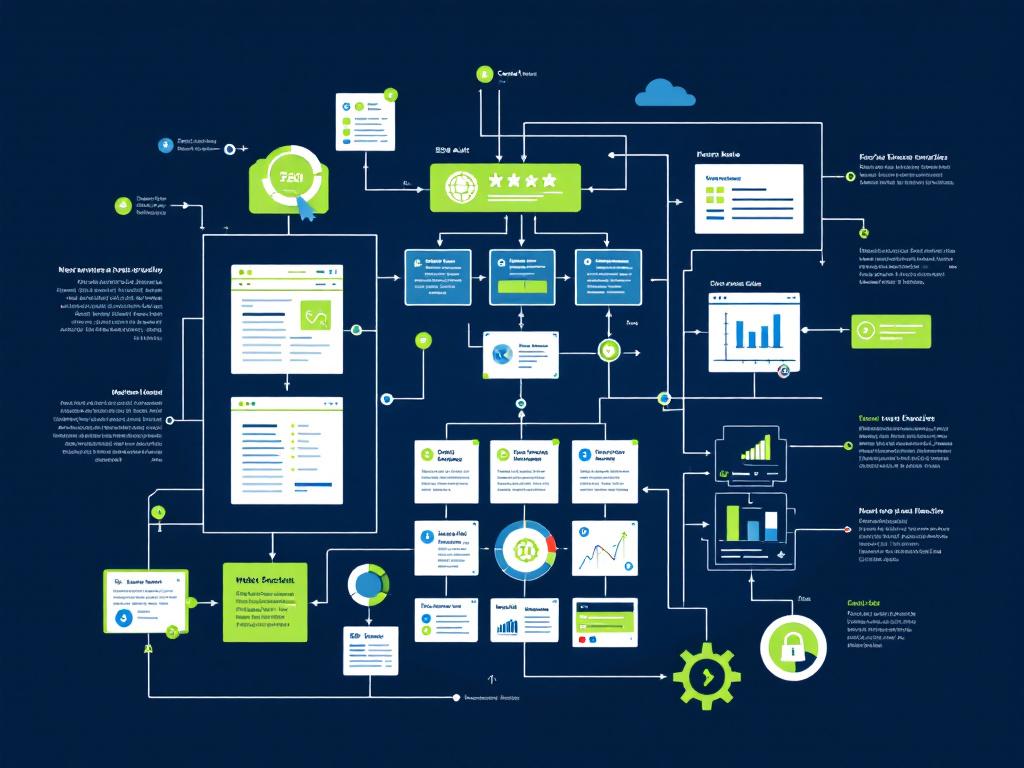
The three-click rule: Any product should be reachable within three clicks from the homepage.
Category Structure Best Practices
- Logical hierarchy: Home → Category → Subcategory → Product
- URL structure: /category/subcategory/product-name/
- Breadcrumb navigation: Help users and search engines understand page relationships
- Internal linking: Connect related products and categories
Faceted Navigation Considerations
Filters create SEO challenges. Implement:
- Canonical tags to prevent duplicate content
- Noindex for low-value filter combinations
- Strategic indexing for high-value filtered pages
Work with your SEO agency to audit and optimize your site structure.
Technical SEO for E-commerce
Technical excellence separates top-performing online stores from the competition.
Page Speed Optimization
Cloudflare research shows that a 1-second delay in page load time reduces conversions by 7%. For e-commerce sites, this directly impacts revenue.
Speed optimization strategies:
- Image compression and lazy loading
- CDN implementation
- Browser caching
- Minimized CSS and JavaScript
Mobile-First Optimization
With over 70% of Philippine internet traffic coming from mobile devices, mobile optimization is non-negotiable:
- Responsive design across all devices
- Touch-friendly navigation and buttons
- Fast mobile page speeds
- Simplified mobile checkout
Learn more about creating effective mobile experiences in our UX metrics guide.
Core Web Vitals
Google’s ranking factors for page experience:
- LCP (Largest Contentful Paint): Under 2.5 seconds
- INP (Interaction to Next Paint): Under 200ms
- CLS (Cumulative Layout Shift): Under 0.1
Content Marketing for E-commerce
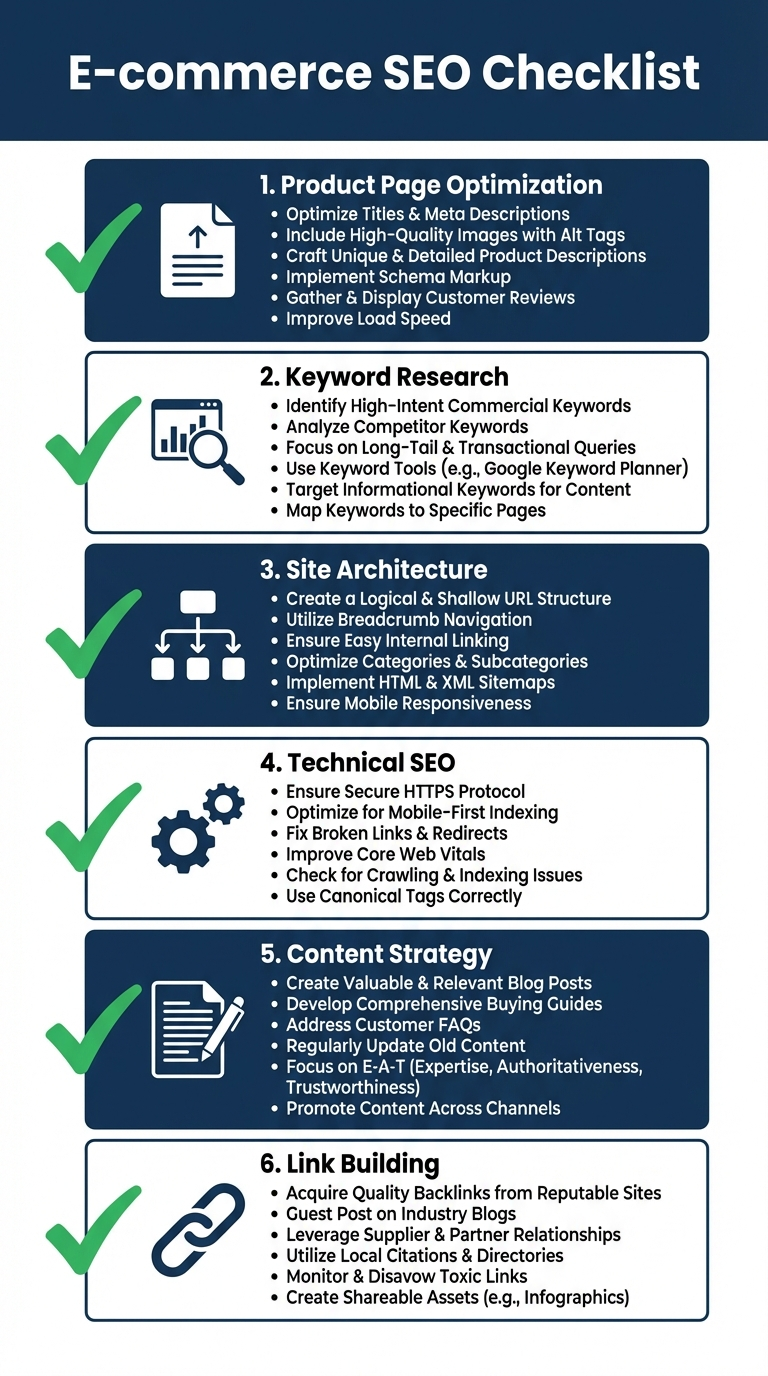
Product pages alone won’t capture top-of-funnel traffic. Content marketing builds authority and attracts customers earlier in their buying journey.
Content Types That Drive E-commerce Traffic
- Buying guides: “How to Choose the Right Running Shoes”
- Product comparisons: “iPhone 15 vs Samsung S24: Which Should You Buy?”
- How-to content: “How to Style a Capsule Wardrobe”
- Industry trends: “2026 Fashion Trends to Watch”
Discover how to plan your content strategy with our content calendar guide.
AI and the Future of E-commerce SEO
Artificial intelligence is transforming how customers find and buy products online.
Prepare for AI-Powered Search
With Google’s AI Overviews and conversational search experiences, e-commerce sites need to:
- Provide clear, comprehensive product information
- Answer common questions directly on product pages
- Implement structured data thoroughly
- Build topical authority through content
Explore AI-powered SEO strategies to stay ahead of the curve.
Voice Search Optimization
Voice commerce is growing. Optimize for conversational queries:
- Natural language product descriptions
- FAQ sections addressing common questions
- Local inventory information for “near me” searches
Building E-commerce Authority Through Link Building
Quality backlinks remain crucial for e-commerce rankings. Effective strategies include:
- Product reviews: Send products to relevant bloggers and reviewers
- Digital PR: Newsworthy campaigns that earn media coverage
- Resource linking: Create valuable tools and guides others want to reference
- Broken link building: Replace outdated competitor links
Learn more about effective link building services.
Measuring E-commerce SEO Success
Track these metrics to gauge your e-commerce SEO performance:
- Organic traffic: Sessions from search engines
- Organic revenue: Sales attributed to organic search
- Keyword rankings: Position for target transactional keywords
- Conversion rate: Percentage of visitors who purchase
- Pages per session: Engagement with your catalog
Dive deeper into measurement in our essential KPIs guide.
Partner with E-commerce SEO Experts
E-commerce SEO requires specialized expertise. From technical optimization to content strategy to link building, the complexity demands dedicated focus.
Truelogic’s e-commerce SEO services have helped Philippine online retailers achieve:
- Significant organic traffic growth
- Improved keyword rankings for high-value terms
- Increased organic revenue and ROI
Contact us to discuss how we can help your online store grow through search.