Ecommerce Marketing Guide: What You Need To Know About Ecommerce Marketing

With the acceleration of digital shopping and shifting consumer habits, ecommerce has become one of the most competitive business environments today. Global retail ecommerce sales are projected to reach around $6.9 trillion by 2026, which means new stores enter the market every day. For ecommerce owners, the real question is: how do you stand out, win attention, and turn browsers into buyers? That’s where ecommerce marketing comes in.
Ecommerce refers to buying and selling products or services online. It covers everything from physical goods and digital downloads to subscriptions and marketplaces. Because almost anything can be purchased online, customers expect fast, frictionless experiences—and they compare brands instantly.
This guide clarifies ecommerce marketing, explains why it matters, and shows the most effective channels you can use to grow traffic, conversions, and retention in 2026.
What is Ecommerce Marketing (and How Is It Different From Internet Marketing)?
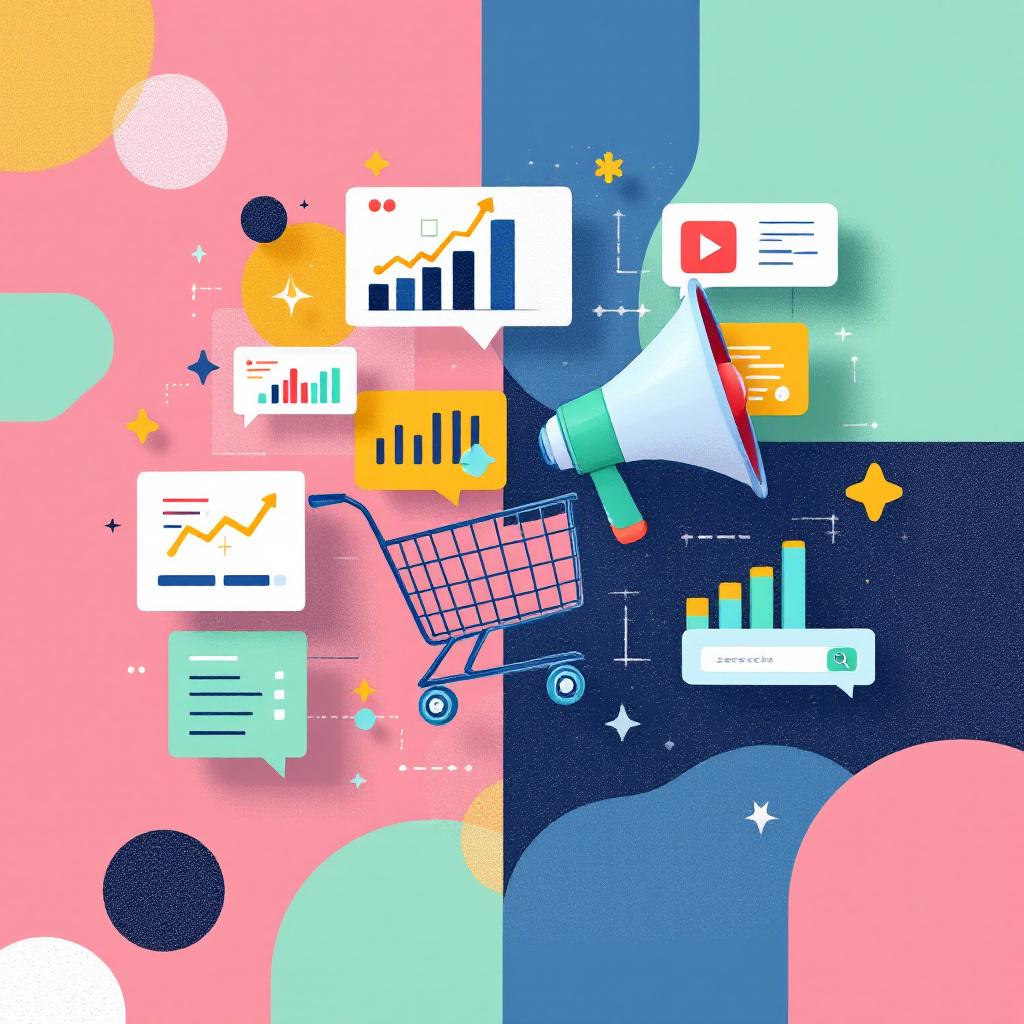
Ecommerce marketing is the set of strategies that drive awareness, traffic, and sales for online stores. It includes acquisition tactics like SEO and paid ads, and retention tactics like email and SMS automation.
Internet marketing is a broader umbrella that covers all digital promotion. Ecommerce marketing sits inside it, with a focus on product discovery, conversion, and repeat purchases.
Why Ecommerce Marketing Matters
Today’s buying journey starts on search engines, social platforms, or marketplaces. Ecommerce marketing helps you show up at those touchpoints and build momentum across the funnel. Here’s why it’s essential:
- Reaches the right audience: Target by intent, behavior, and interests.
- Levels the playing field: Smaller brands can compete with larger retailers using smart targeting.
- Personalization at scale: Use data to tailor messaging and offers.
- Measurable ROI: Every channel can be tracked and optimized.
- Built for adaptability: Quickly adjust campaigns based on demand and seasonality.
- Aligned with modern behavior: Shoppers research online before buying.
Top Ecommerce Marketing Channels (Updated for 2026)
There’s no single best channel—winning brands combine multiple tactics across acquisition, conversion, and retention. Below are the most effective channels to prioritize.
1) Search Engine Optimization (SEO)
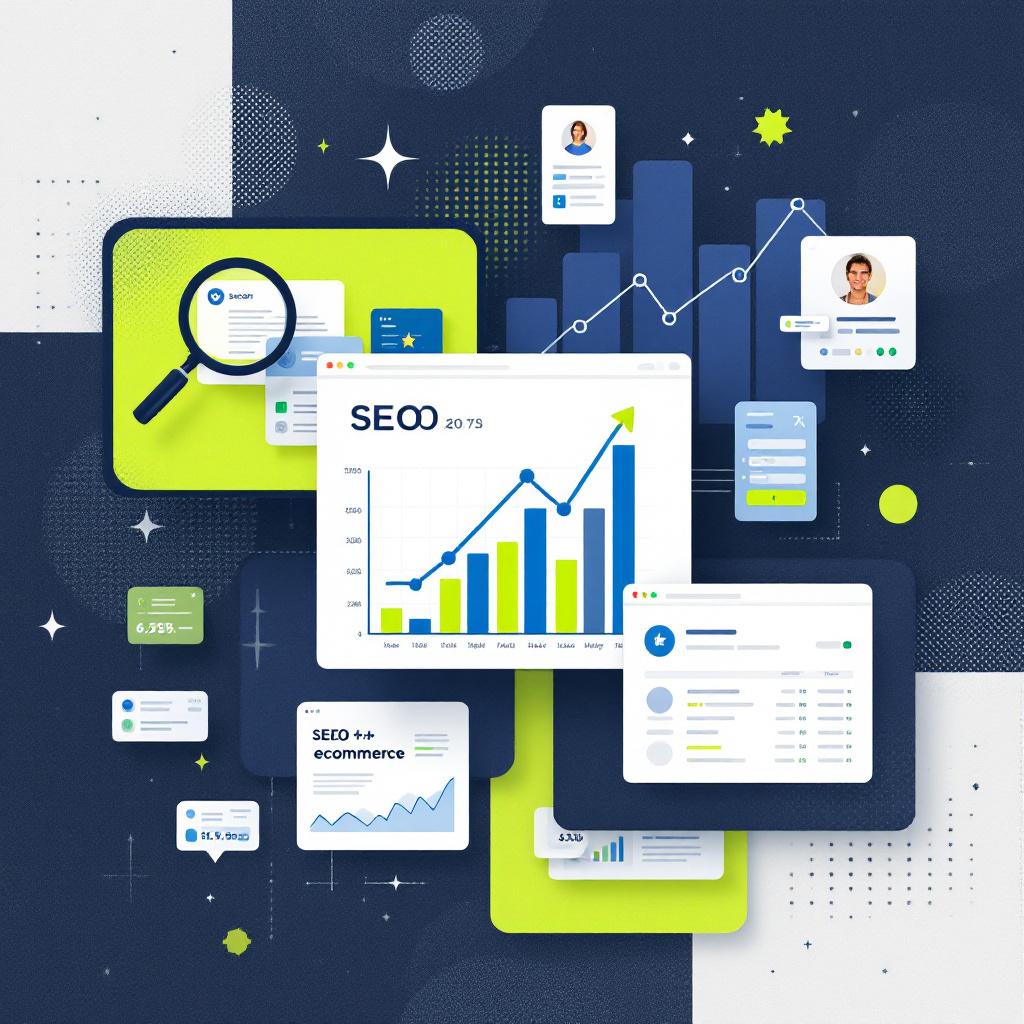
SEO improves your visibility when shoppers search for products. According to StatCounter, Google still accounts for roughly 90% of global search engine usage, which makes search visibility critical for ecommerce growth.
SEO focuses on:
- Keyword targeting and product page optimization
- Technical performance (speed, crawlability, structured data)
- Internal linking, category hierarchy, and user experience
- Content that answers product research questions
Work with a digital marketing agency or e-commerce SEO agency to build a long-term search strategy. This ensures your website is optimized for both users and search engines.
2) Content Marketing
Content builds awareness and trust before purchase. For ecommerce, content can include buying guides, product comparisons, how-to articles, and videos. The goal is to rank for discovery keywords and help shoppers make confident decisions.
Benefits of content marketing include:
- Higher brand recognition
- More organic traffic
- Better conversion rates from informed buyers
- Improved authority and backlinks
Investing in content marketing services makes it easier to publish consistently and align content with buyer intent.
3) Paid Media & Performance Ads
Paid media gives you instant visibility. Search ads, shopping ads, and social ads let you target high-intent shoppers quickly. This is especially useful for new stores, product launches, and seasonal promos.
Common formats include:
- Google Search & Shopping Ads
- Meta (Facebook/Instagram) conversion campaigns
- Retargeting ads across display networks
- Retail media ads on marketplaces
Explore PPC marketing services to build optimized campaigns that convert, not just drive clicks.
4) Social Media & Social Commerce
Social platforms are both discovery channels and conversion channels. Statista estimates around 5.07 billion social media users worldwide in 2024, and over 86 million social network users in the Philippines in 2024.
Social media marketing supports ecommerce by:
- Driving awareness through content and short-form video
- Building community and trust
- Powering direct checkout with social commerce features
A strong social media marketing strategy helps you reach new audiences while nurturing existing customers.
5) Email & SMS Lifecycle Marketing
Email and SMS remain the most profitable retention channels. According to Litmus, email marketing generates an average ROI of $36 for every $1 spent.
Use lifecycle campaigns like:
- Welcome series and onboarding
- Abandoned cart recovery
- Post-purchase follow-ups
- Reactivation campaigns
If you need help building automated flows, consider email marketing services.
6) AI-Powered Personalization & Product Recommendations
Personalization has moved from “nice to have” to a revenue driver. Use behavioral data—like browsing history, past purchases, and cart activity—to serve dynamic product recommendations, tailored content, and smarter offers. AI-powered personalization can improve average order value by showing complementary products and by predicting what a shopper is most likely to buy next.
Practical ways to apply personalization include:
- Personalized product grids and “recommended for you” blocks
- Dynamic homepage messaging based on visitor type
- Automated cross-sell and upsell sequences after purchase
7) Conversion Rate Optimization (CRO)
Driving traffic is only half the equation. CRO focuses on improving your onsite experience to turn visitors into customers. Common CRO improvements include:
- Faster page speed and mobile-first design
- Simpler checkout flows
- Trust signals (reviews, guarantees, security badges)
- Better product merchandising and UX
Even a small increase in conversion rate can significantly boost revenue without increasing ad spend.
8) Measurement, Attribution, and KPIs
Modern ecommerce marketing is data-driven. Beyond traffic, you need to track profitability and customer quality. Set up analytics that connect channels to revenue and monitor key metrics across the funnel.
- Acquisition: CTR, CPC, cost per acquisition (CPA)
- Onsite behavior: conversion rate, add-to-cart rate, checkout completion
- Revenue: average order value (AOV), revenue per visitor (RPV)
- Retention: repeat purchase rate, customer lifetime value (CLV)
When you measure the full customer journey, you can identify what’s working and reallocate budget toward the highest ROI channels.
9) Marketplace & Retail Media Marketing
Marketplaces like Shopee and Lazada are major ecommerce entry points in the Philippines. Optimizing marketplace listings, reviews, and sponsored placements helps you win traffic where buyers already shop. Retail media also offers brand visibility across large platforms without relying solely on search and social.
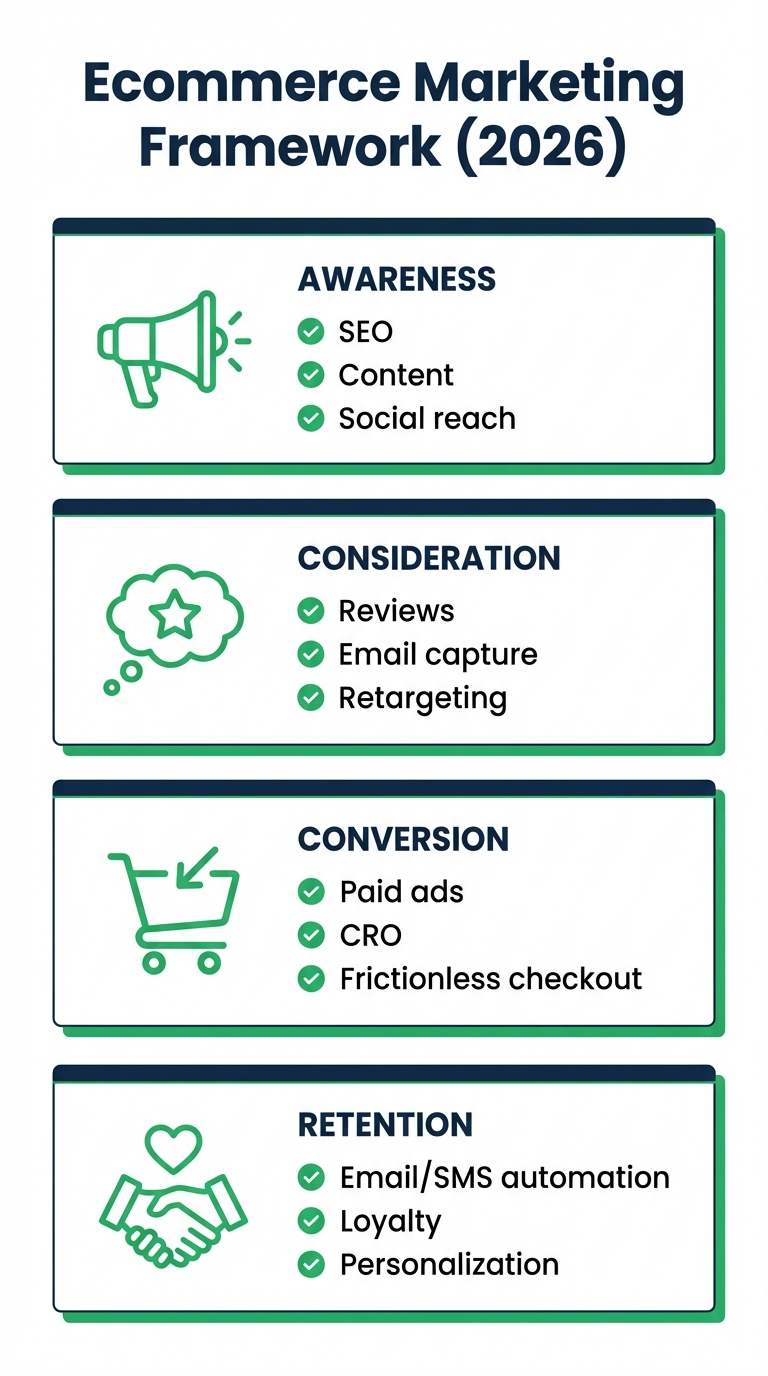
Putting It All Together: The Ecommerce Marketing Framework
Successful ecommerce marketing ties every channel into a full-funnel system—from awareness through retention. Below is a simple framework you can follow.
Common Ecommerce Marketing Mistakes to Avoid
Many ecommerce stores struggle not because the product is weak, but because the marketing system is fragmented. Avoid these common pitfalls:
- Relying on one channel: A single traffic source (like paid ads alone) makes growth unstable.
- Ignoring retention: Acquiring new customers is expensive; lifecycle marketing improves profitability.
- Weak mobile experience: Mobile shoppers won’t wait for slow pages or complex checkout.
- Unclear value proposition: If the product benefits aren’t obvious, shoppers won’t convert.
- No measurement loop: Without consistent tracking, you can’t optimize what matters.
Fixing these issues early helps you scale sustainably and protect margins as competition increases. It also makes your marketing more resilient when platform algorithms change or ad costs rise during peak seasons, especially during major sales events.
Effectively Market Your Products and Services
Ecommerce marketing works best when every tactic aligns with customer intent. That means understanding how customers discover products, what influences decisions, and what makes them return. When you combine SEO, content, paid ads, social, and lifecycle marketing into one system, you build a sustainable ecommerce engine.
If you need help building a full ecommerce growth plan, Truelogic can help you align strategy, execution, and measurement so you get results that scale.