The Ultimate Guide to Effective Email Marketing
Email marketing has been around forever. It still works. That’s the part people forget.
But here’s the catch. A lot of email programs are basically noise—same template, same blast, same disappointing results. If you want email to perform in 2026, you need a system that’s tighter, smarter, and measured like a real revenue channel.
This guide is that system. It’s direct, practical, and built for teams who want better results without turning email into a full‑time job.
What email marketing is (and what it isn’t)
Email marketing is the deliberate use of email to move people through a customer journey. That’s it. It’s not just newsletters. It’s not just promos. It’s a sequence of messages that should guide someone from “who are you?” to “take my money” to “see you again next month.”
And no, it doesn’t have to be complicated. But it does need intent.
The email funnel that actually works
Think in stages. You can’t jump straight to a hard sell and expect people to love you.
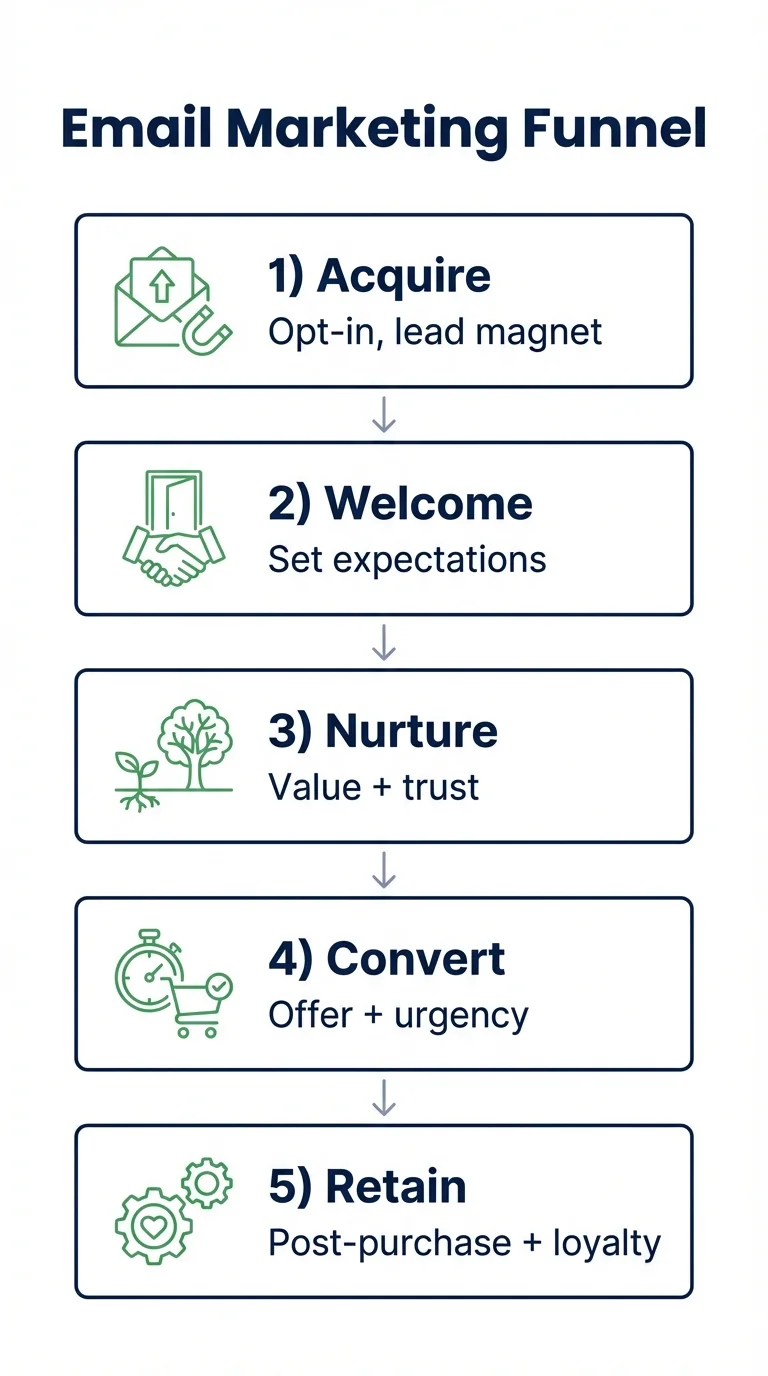
Here’s a simple funnel you can run in almost any industry:
Simple, not easy. But it works if you run it consistently.
List building: quality beats size
A list full of disinterested subscribers is a liability. It kills deliverability and makes your results look worse than they are.

If you’re not sure where to start, build a high‑intent opt‑in first. A checklist, a short guide, or a tool that saves time. Then gate it behind a simple form. Don’t ask for five fields. Ask for an email and one question that helps segmentation.
Say you’re a mid‑size clinic in BGC. A “first‑time patient pricing guide” will outperform a generic “newsletter sign‑up” every time. It’s clearer. It sets expectations. It brings in the right people.
Segmentation isn’t fancy, it’s necessary
Segmenting doesn’t mean building 30 lists. It means sending the right message to the right group.
Start with three buckets:
That alone will improve results. You don’t need a CDP to start.
Automation: where email earns its keep
Manual blasts can work. But automation is where the ROI jumps because messages are tied to behavior.
Three automations you should run in almost every business:
If you need help setting this up, our marketing automation services team can map the triggers and timelines so you’re not guessing.
Copy and creative: keep it human
Short emails win. So do honest subject lines. People can smell hype from a mile away.
Here’s a simple rule: one email, one action. If you want them to click, don’t also ask them to book a demo and follow your socials. Pick a lane.
Also, cut the filler. You don’t need a paragraph explaining the paragraph. Say what you’re offering, why it’s useful, and what to do next. Done.
Metrics that matter (and the ones that don’t)
Benchmarks help, but your own trendline matters more. Still, it’s useful to know what “normal” looks like in 2025–2026.
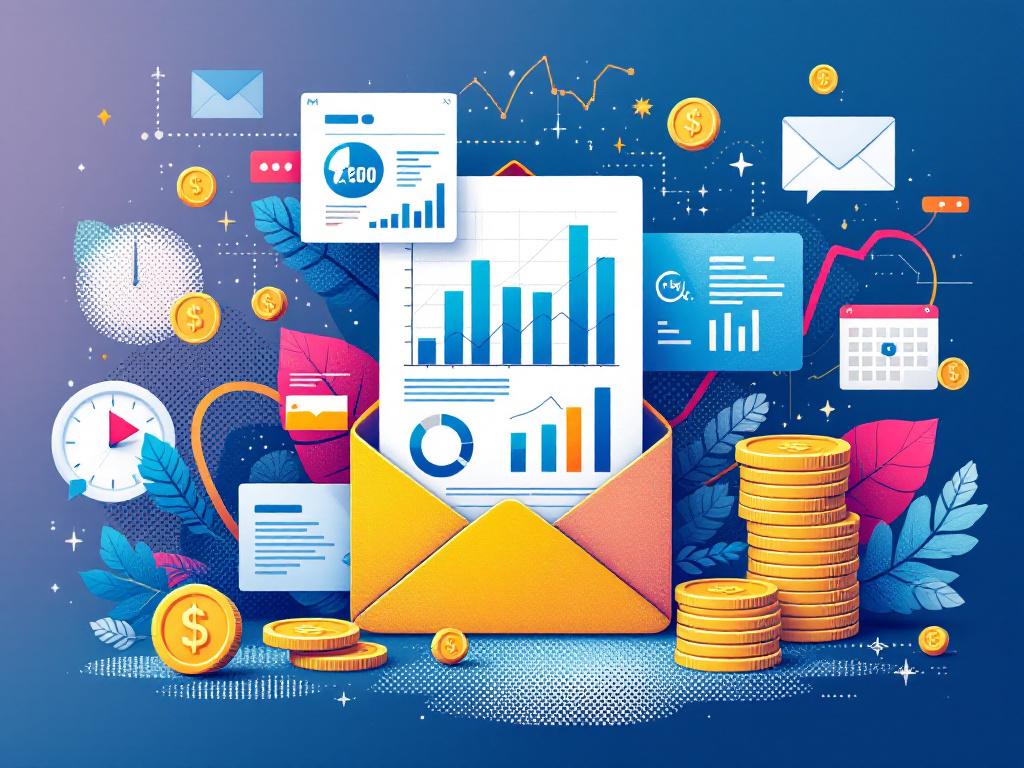
ActiveCampaign’s 2025 data puts typical open rates around 42% with CTR around 2–3%. And ROI roundups still show email returning roughly $36 per $1 spent in 2026.
Use those as context. But track your own CTOR, conversion rate, and revenue per email. If those are moving up, your program is healthy even if opens are flat.
Deliverability: protect your sender reputation
If your emails land in spam, your whole program is dead. That’s not dramatic. That’s math.
Mailgun’s 2025 report warns that 0.1% spam complaints is already a warning sign, and 0.3% is trouble. So clean your list, respect unsubscribes, and avoid sending to cold segments that haven’t engaged in months.
But wait—deliverability isn’t just list hygiene. It’s also relevance. If your content isn’t useful, people hit spam. You can’t hack your way out of that.
Common mistakes that tank performance
These aren’t rare. Most teams fall into at least one of these traps.
Testing that doesn’t waste your time
A/B testing is useful, but only if you test things that matter. Don’t spend two weeks testing button colors when your offer is unclear.
Start with the biggest levers. Subject lines. Offer framing. One CTA vs two. Then move to timing and send frequency.
Here’s a simple weekly test plan you can run without a lab coat:
And yes, keep a simple test log. You’ll forget what worked if you don’t.
How to measure success without getting lost
You can go deep on analytics. But you don’t have to. Pick a tight set of metrics and stick to it.
ActiveCampaign’s 2025 benchmarks are useful for context, but your own trends matter more. If your CTR climbs from 1.6% to 2.4% in eight weeks, that’s progress—even if a benchmark says 2.6% is “average.”
If you want a deeper walkthrough, our post on measuring email marketing success breaks down the core KPIs and what to do when they move.
Local reality check: PH inboxes are crowded
Filipino audiences are mobile‑first and value‑driven. That means short, clear messages beat long promotional essays most days.
Picture a mid‑size e‑commerce brand in Quezon City sending three promos a week. If they stop segmenting and blast the whole list, opens might hold for a week—but clicks drop fast, spam complaints rise, and their sender reputation dips. The fix isn’t “send more.” It’s “send smarter.”
One practical move: split your list by recent activity and send a lighter cadence to cold segments. It protects deliverability and keeps your main list healthy.
Tooling doesn’t save a bad strategy
It’s tempting to jump tools. But tech won’t fix a weak offer or a messy list.
Start by tightening your funnel, then pick tools that make execution easy. If you need help with the setup and measurement side, we cover a lot of it in our marketing automation guide and in the broader campaign planning walkthrough.
Deliverability basics you can’t skip
You can have great copy and still fail if your emails don’t land. Deliverability is the tax nobody wants to pay. Pay it anyway.
Mailgun’s 2025 report calls out a hard truth: a spam complaint rate above 0.1% is already a warning, and 0.3% puts you in the danger zone. That’s tiny. It means a handful of angry recipients can derail a whole program.
Here’s what to watch every week:
If you want the short version: clean the list, respect unsubscribes fast, and never send to truly cold segments without re‑permissioning.
ROI is real, but it’s not automatic
Email still delivers outsized returns. A 2026 roundup puts average email ROI around $36 per $1 spent. Great. But you only earn that if your program is disciplined.
If you’re selling B2B services, the ROI might show up as leads, not direct revenue. That’s fine. But track it. If you’re ecommerce, revenue per email should be on your weekly dashboard. No excuses.
Timing and frequency: less guessing, more rules
Frequency fights are common. The fix is simple. Set a cadence for each segment and stick to it for 6–8 weeks before you judge.
Example: engaged subscribers get 1–2 campaigns a week plus automations. Cold segments get a light touch, maybe twice a month. Then you watch the unsub rate and spam complaints. If they rise, dial back. If they stay flat, you can test more.
FAQs
How often should I send marketing emails?
Enough to stay relevant, not enough to annoy. For most brands, 1–2 campaigns per week plus automation flows is a solid starting point.
Is email still worth it in 2026?
Yes. ROI data still shows email outperforming most paid channels. The trick is doing it properly, not blasting.
What tools should I use?
If you’re starting, any mainstream ESP can work. The tool matters less than the list quality and offer.
Next steps
If you want a tighter email program—segmented, automated, and measured—we can help. Our email marketing services team can audit your flows and rebuild what’s not working. Pair it with content marketing and you’ll have a system that actually compounds.