AI Integration in Web Design Shifts From Experimental to Expected as Philippine Agencies Retool Service Offerings

Philippine web development agencies are repositioning AI-powered personalization and automation as core service offerings rather than premium add-ons, according to a June 20 industry analysis from Adox Global, a Kerala-based digital consultancy tracking Southeast Asian web development markets. The shift reflects rising client expectations that business websites function as adaptive platforms rather than static digital brochures, according to the firm’s published research.
TL;DR: Web development agencies across APAC are integrating AI-driven user personalization, behavior analysis, and automated optimization into standard website builds as client expectations shift from aesthetic design to measurable engagement outcomes.
The repositioning arrives as marketing leaders increasingly evaluate web design partners on their ability to deliver real-time behavioral insights and adaptive user experiences alongside visual execution. Adox Global’s analysis highlights the gap between traditional web development workflows—where design decisions relied on stakeholder preferences and best-practice assumptions—and the data-informed optimization loops that AI tooling enables.
The Service-Offering Realignment
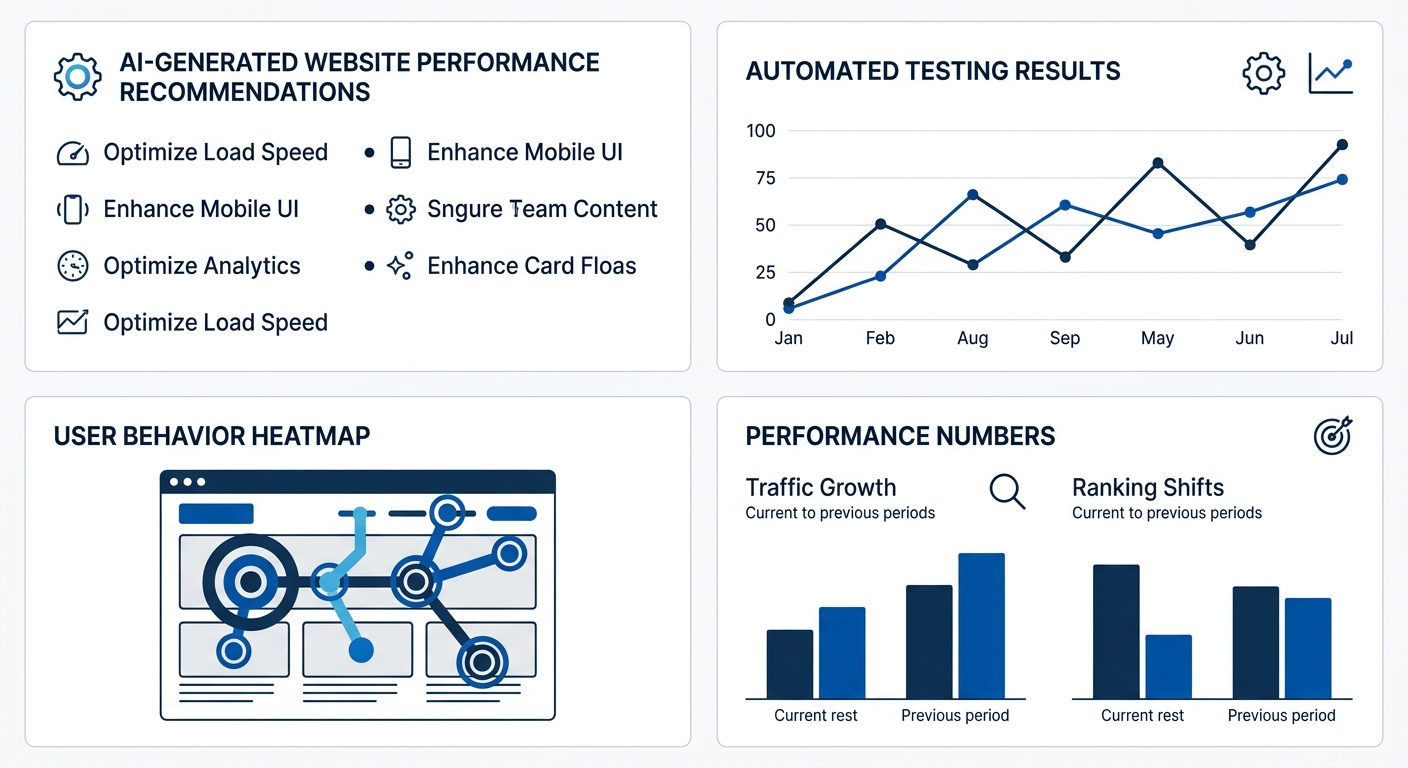
Agencies are bundling AI capabilities that were previously sold as standalone enhancements into baseline website development scopes. Adox Global’s report identifies six functions now treated as table-stakes requirements: visitor behavior pattern analysis, design improvement recommendations based on interaction data, automated quality assurance testing, performance optimization, accessibility compliance checks, and content strategy support tied to search visibility.
The firm positions the shift as driven by client impatience with guesswork-based design iterations. Marketing leaders briefing website projects now expect agencies to surface user journey friction points through session replay and heatmap data rather than delivering mockups based purely on design conventions.
For digital marketing for ecommerce operations, the expectation extends to revenue attribution. Adox Global notes that enterprise ecommerce clients increasingly require web development partners to instrument conversion tracking and multivariate testing infrastructure during the build phase rather than retrofitting analytics post-launch.
The Personalization Baseline
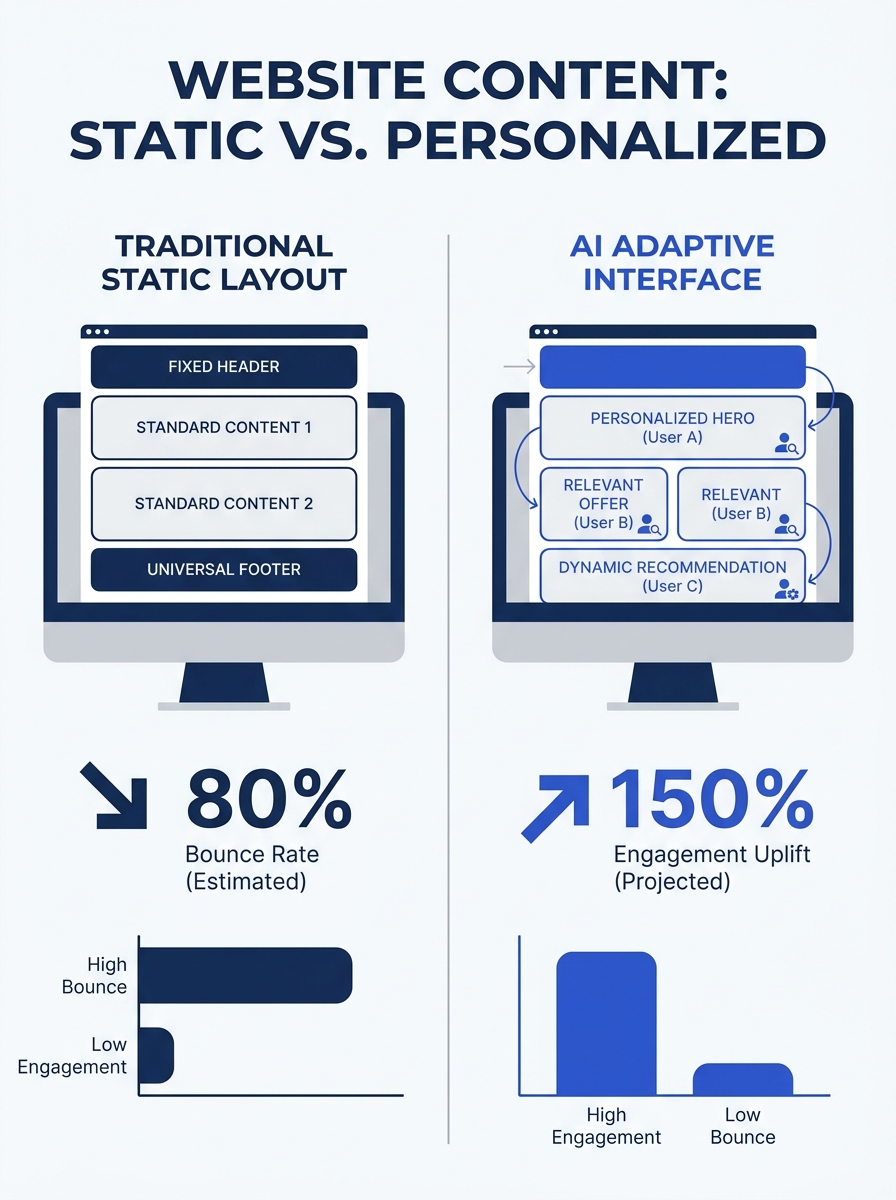
The analysis distinguishes between AI-driven content personalization—adjusting messaging, product recommendations, and navigation based on individual user signals—and the static one-size-fits-all experiences that defined corporate websites through 2023. Adox Global frames personalization as a retention necessity rather than a competitive differentiator, arguing that visitors now abandon sites failing to surface relevant content within the first session.
The technical implementation varies by platform. Agencies working on enterprise content management systems integrate machine learning modules that analyze browsing history, referral source, device type, and time-on-page metrics to adjust homepage layouts and navigation hierarchies. Smaller builds on hosted platforms rely on third-party personalization engines that inject dynamic content blocks via JavaScript.
Marketing leaders overseeing replatforming projects face a briefing challenge: distinguishing between AI features that materially improve engagement and vendor-marketed capabilities that add cost without measurable impact. Adox Global’s framing suggests the evaluation criteria should center on whether the AI tooling reduces the time-to-insight for user behavior data and whether it automates optimization tasks that would otherwise require manual A/B testing cycles.
The Workflow Efficiency Argument
The agency-side case for AI integration emphasizes speed and quality consistency rather than headcount reduction. Adox Global’s analysis positions AI as handling repetitive technical validation—cross-browser compatibility checks, accessibility audits, performance benchmarking—that previously consumed developer hours without strategic value.
The workflow shift allows agencies to reallocate senior developer time toward architecture decisions, security hardening, and integration complexity. For marketing leaders evaluating proposals, the implication is that AI-enabled agencies should deliver faster iteration cycles and fewer post-launch defects, not lower project fees.
The report does not address the measurement gap that complicates AI tool adoption: marketing leaders now allocate meaningful budgets to AI initiatives yet most lack frameworks to assess whether those tools generate returns. The same challenge applies to AI-powered web development. Marketing directors approving website builds with AI-driven personalization features need post-launch reporting that isolates the performance lift attributable to those capabilities versus baseline design improvements.
Reading Between the Lines
Adox Global’s analysis—published by a competing agency rather than an independent research firm—should be read as a market-positioning document reflecting what agencies believe clients now expect. The salient signal is not whether every claim holds across all enterprise web projects, but that agencies are preemptively reframing AI capabilities as baseline rather than premium. That shift forces marketing leaders into a new briefing posture: requesting specific evidence of how an agency’s AI tooling improves measurable outcomes (session duration, conversion rate, support deflection) rather than accepting AI integration as inherently valuable.
The larger strategic question for Philippines-based enterprises evaluating web design and development partners is whether the AI capabilities being bundled into standard scopes genuinely align with their measurement frameworks and stakeholder expectations. If the marketing team lacks instrumentation to isolate personalization impact or if executive dashboards still track vanity metrics (page views, bounce rate) rather than revenue-linked engagement signals, the AI tooling becomes expense without accountability. The due diligence step before signing a web development contract is confirming that the AI features being proposed tie directly to metrics the organization already tracks and trusts—not requiring a parallel investment in analytics infrastructure to validate the original investment.
Enterprise marketing leaders should treat AI-powered web design proposals the same way they evaluate enterprise web platforms shifting to real-time personalization: as a capability that compounds value only when the organization has the measurement discipline to instrument what changed, test competing hypotheses, and allocate budget based on incremental lift rather than vendor promises.