Instagram Tests Ephemeral-Only App as Social Platforms Shift Toward Private Sharing

Instagram is testing a standalone app that limits photo sharing to close friends and deletes content after single views, according to Marketing-Interactive, as major social platforms pivot toward private communication over public broadcasting. The app, tentatively named “Instants,” surfaces alongside Friendster’s recent relaunch as a friend-to-friend platform and follows established ephemeral channels such as Snapchat and Locket.
The shift challenges the decade-long social media playbook for brands: post publicly, optimize for visibility, measure reach. Marketing leaders at enterprises with established social media advertising programs now face a structural question — when audiences retreat to closed networks, where do brand budgets and agency briefs go next?
Shermaine Wong, founder and CEO of Cult Creative, told the publication the move represents “a quiet revolt” against performative, algorithm-driven social media rather than a fleeting trend. “When two completely different generations arrive at the same conclusion — I want a smaller, more honest digital life — that’s not a phase. That’s a shift,” Wong said.
Platform Shifts Signal Behavioral Change
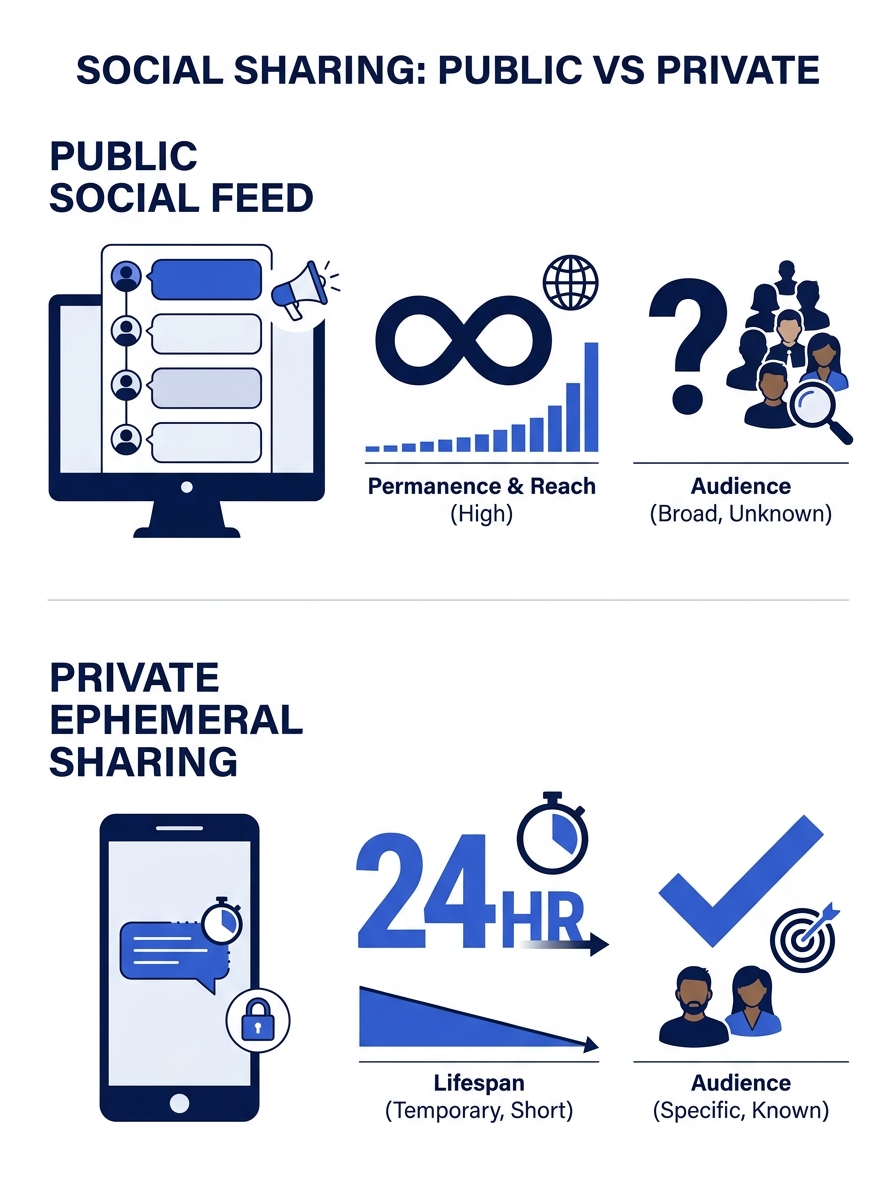
The Instants test removes editing tools and narrows distribution to pre-selected contacts. Content vanishes after a single view within a 24-hour window. Friendster’s relaunch similarly emphasizes smaller networks over mass reach, according to the report.
Wei Sian Soh, marketing lead at Kobe, characterized the trend as behavioral correction rather than platform innovation. “Users are gravitating toward sharing with close friends rather than wider audiences,” Soh said. The platforms feel “more like communication than publishing,” with diminished emphasis on visibility.
Judy Byun, head of talent at Gushcloud for the US and Korea, identified “radical low friction” as the defining feature. Removing the effort required to produce polished content strips away the performance layer that defines mainstream platforms. “You’re no longer sharing a moment — you’re producing a version of yourself,” Byun said. The newer platforms reverse that dynamic.
The behavioral shift is most pronounced in Southeast Asia, where early social experiences centered on close-knit networks, according to Wong. The resurgence of intimate platforms taps into nostalgia for that era while addressing fatigue with broadcast-style content creation.
Why Intimate Platforms Resist Traditional Advertising
Private, ephemeral environments do not present opportunity in the traditional media buying sense. “Traditional advertising doesn’t belong here,” Wong said, warning that brands approaching these platforms with conventional paid strategies risk immediate rejection. Creator-led recommendations built on genuine trust offer the actual lever for impact, she added.
Soh reinforced the point: “The bigger opportunity is not ad inventory, but intimacy and relevance.” Formats that succeed include creator-led drops, referral mechanics, and shareable content designed for private circulation rather than mass distribution. Brands attempting to buy reach rather than earn it face rejection from audiences choosing these platforms specifically to avoid commercial interruption.
Byun noted that the most effective brand presence will be organic — embedded within real-life moments rather than inserted between them. “The aspiration for brands should be to become a natural part of someone’s day, not an interruption to it,” she said.
The shift requires marketers to rethink how success is measured. In private and ephemeral environments, traditional metrics such as reach and impressions carry diminished weight. Signals such as private shares, replies, and referrals better reflect whether content drives meaningful interaction, according to Soh.
Byun added that engagement depth may become more valuable than scale. “A user actively choosing to open brand content carries far more signal than a passive scroll,” she said.
Measurement Changes When Visibility Disappears
The move toward closed platforms surfaces a measurement challenge for marketing leaders overseeing agency performance. Dashboards built to track impressions, reach, and public engagement do not capture activity in friend-to-friend networks or ephemeral content that deletes after viewing.
Soh said brands risk irrelevance if they continue to rely on presence alone rather than value. “The role of the brand shifts from trying to be the centre of attention to creating value that people choose to bring into their private conversations. That is what keeps a brand welcome rather than intrusive,” he said.
Byun added that private platforms are where cultural signals form earliest, particularly among younger audiences. Brands that ignore these spaces forfeit insight into emerging behavior, even if they cannot directly advertise there.
What Happens Next
Marketing leaders at APAC enterprises should anticipate agency briefs shifting from reach-based social optimization toward creator partnerships and referral mechanics. The platforms gaining traction — Instants, Locket, relaunched Friendster — do not support traditional ad units. Agencies will need to demonstrate capability in seeding shareable content through trusted voices rather than buying impressions.
The measurement conversation changes in parallel. CMOs evaluating agency performance will need to accept that private-channel activity does not surface in standard dashboards. Proxy metrics such as referral traffic, direct-message volume, and creator-partnership outcomes become the available data. Boards accustomed to reach reports may require education on why those figures no longer capture the full picture.
For enterprises with diversified channel strategies, the shift reinforces the need for owned platforms and first-party data collection. As organic social reach continues to fragment across public and private networks, brands that built direct customer relationships through email, loyalty programs, and content hubs hold durable distribution regardless of which social platforms rise or retreat.