The Internal Linking Multiplier: How to Map Your Site Architecture for 3x Organic Growth in 12 Months

Zyppy’s analysis of 23 million internal links found that pages with varied, descriptive anchor text carried roughly 5x more organic traffic than those with generic anchors. A phased internal linking strategy SEO overhaul, executed across four stages over 12 months, is the highest-return on-page investment a brand can make for compounding organic growth.
The Month-Zero Audit
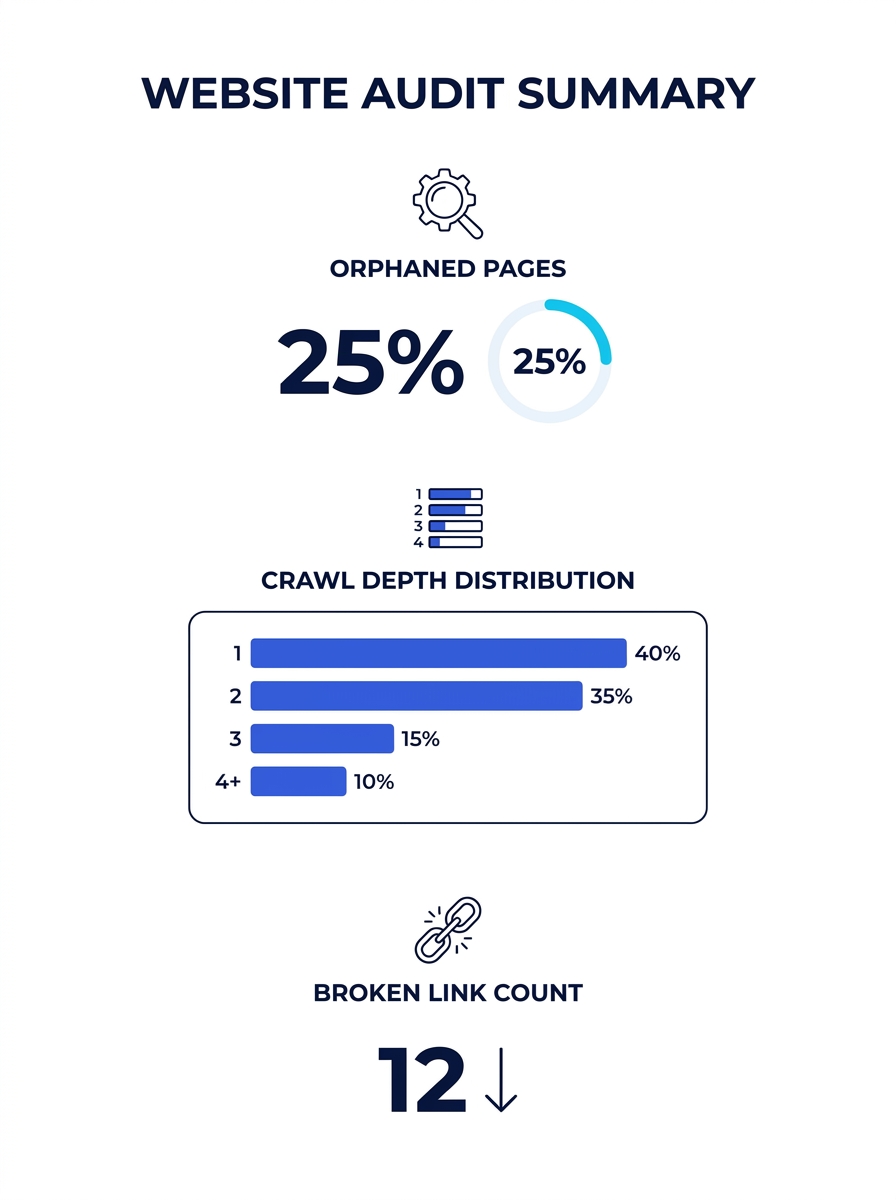
Every internal linking project starts with the same ugly discovery: the site is full of orphaned pages. Large sites typically waste 25% of their URLs with zero internal links pointing to them, according to JetOctopus crawl data. These pages exist in your CMS. Google has no reliable way to find them.
A full-site crawl using tools like Screaming Frog, Sitebulb, or Siteimprove exposes three problems at once: broken links, orphaned pages, and pages with weak internal link coverage. Siteimprove’s SEO team recommends starting here because this crawl data becomes the foundation for every decision that follows.
The other number to pull at month zero is crawl depth. Moz’s internal linking research confirms that revenue-driving pages should sit at the lowest crawl depth possible, ideally within 3 clicks of the homepage. If your top product categories or service pages sit at depth 4 or deeper, Googlebot deprioritizes them. Your most important content gets crawled less often and indexed more slowly.
For brands operating at scale, this audit often reveals that crawl coverage hovers around 40% of total pages. Googlebot is ignoring more than half the site. The goal over the next 12 months is to push that number toward 70%, a shift documented in JetOctopus enterprise case studies after internal link remediation.
If you’ve already mapped out your SEO information architecture at the enterprise level, month zero is about stress-testing that structure with real crawl data rather than rebuilding from scratch.
Months One Through Three — Building the Pillar-Cluster Map
The 2026 standard for site architecture organic growth is the pillar-cluster topology. Google’s own guidance says to “map top-level pages and build hierarchy beneath them,” and the data supports this structure aggressively. Topic clusters drive 30% more organic traffic than isolated posts and hold rankings 2.5 times longer, according to HubSpot’s internal benchmarking.
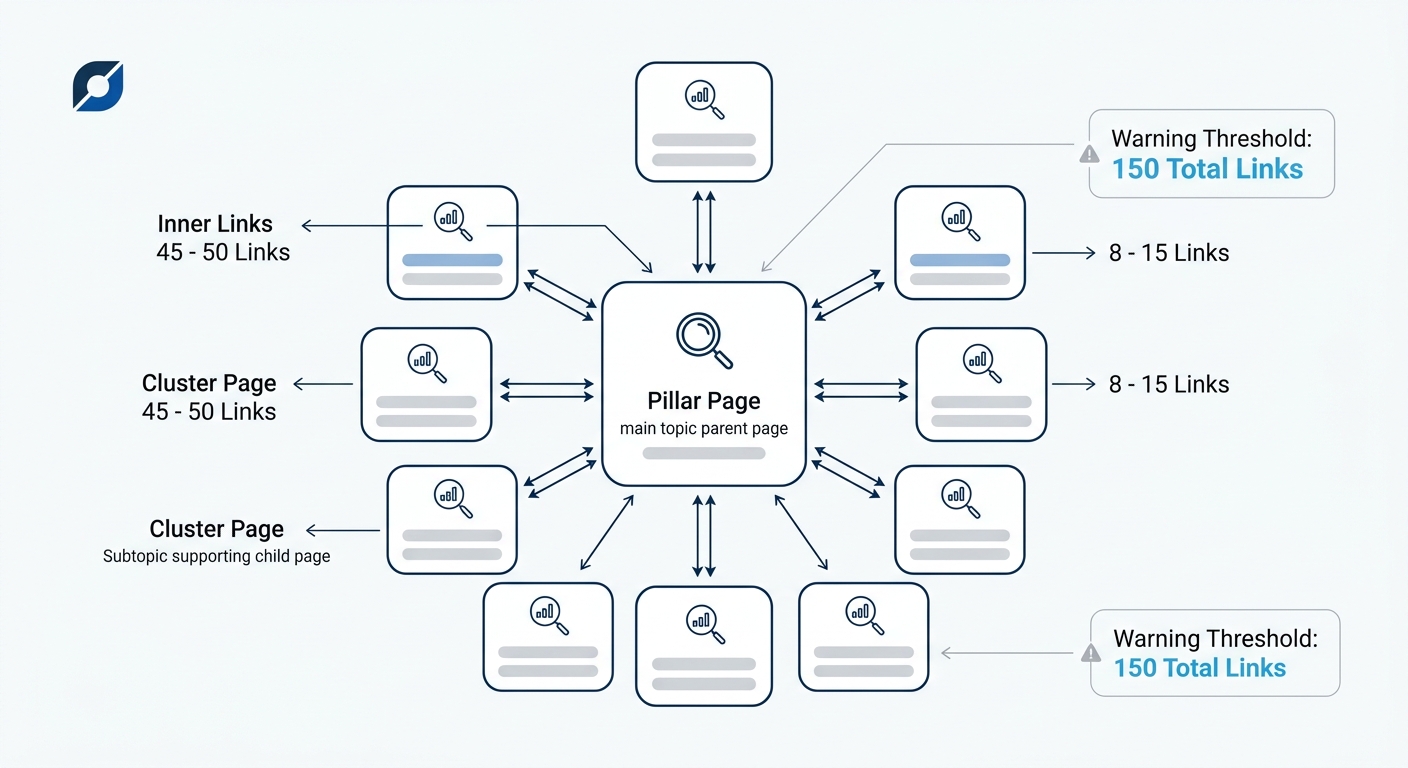
Here’s what this looks like in practice. A pillar page covers a broad topic. Beneath it, 8 to 15 cluster pages target specific subtopics. Bi-directional links connect every cluster page back to the pillar and the pillar out to each cluster.
The recommended density sits at 45 to 50 internal links per page for pages at the top of your hierarchy. Go past 150 total links on a single page and you start diluting the equity each link passes. This is where judgment matters. Your agency or internal SEO team needs to decide which 45 links belong on each pillar page based on topical relevance, not just proximity in the CMS.
Land of Rugs provides a concrete example. After shifting their blog to a topic cluster structure, blog page views increased 119% and they saw meaningful revenue improvement tied directly to the new architecture. The timeline for that result was roughly 3 months from implementation to measurable impact.
During this phase, anchor text strategy matters as much as link placement. The Zyppy 23-million-link study showed that varied, descriptive anchors outperform generic “click here” or “learn more” text by a wide margin. Each internal link’s anchor should describe what the target page covers, using natural language that signals topical relevance to both readers and crawlers. As Americaneagle’s internal linking research explains, the goal is building “a coherent site architecture” where every link reinforces the topical relationship between pages.
Brands investing in e-commerce SEO services see this phase hit especially hard, because product catalogs tend to generate massive numbers of near-duplicate or faceted URLs. Cleaning those up and linking the remaining pages properly compounds the traffic effect in later months.
When Orphan Pages Disappear, Crawl Budget Opens Up
Crawl budget optimization becomes visible around month three or four. Once orphaned pages gain at least 2 to 3 internal links each, Googlebot starts discovering content it previously ignored. The documented result: crawl coverage climbs from 40% to 70% on large sites.
Why does this happen so directly? Google’s own crawl budget documentation explains that Googlebot allocates finite crawling resources to each domain. Pages with no internal links receive no share of that budget. Every orphan page you connect back into your site hierarchy gives Googlebot a path to discover and eventually index it.
For enterprise sites with thousands of URLs, this phase also involves XML sitemap segmentation. Conductor’s crawl budget research recommends splitting sitemaps by site section: one for blog content, one for product pages, one for category pages. This gives you diagnostic clarity. You can check Google Search Console’s indexing reports per sitemap to identify which sections Googlebot is struggling with.
Tip: Ask your agency to reconcile their crawl data with Google Search Console’s “Pages” report. If GSC shows 4,000 indexed pages but the crawl tool finds 6,500 live URLs, you’ve got 2,500 pages that Google either hasn’t found or has chosen to skip. That gap is your crawl budget problem in a single number.
This is also the point where brands should revisit whether high-traffic pages are actually sending visitors toward conversion-oriented content. Internal link architecture determines whether traffic flows toward pages designed to convert or dead-ends on informational content with no next step.
Routing Link Equity to Revenue Pages in Months Four Through Six
The architecture is now mapped. Orphans are connected. Crawl coverage is climbing. The next phase shifts from structural repair to strategic equity distribution.
The idea is straightforward. Find pages on your site that carry strong backlink authority: blog posts that earned press coverage, resource pages that other sites reference, old content that accumulated links over years. Then route internal links from those pages to your highest-priority commercial pages. Moz’s documentation explains that this approach “allows link equity (ranking power) to flow throughout the entire site, thus increasing the ranking potential for each page.”
This is more effective than chasing external backlinks for new pages. A page with 12 strong internal links from authoritative pages on your own domain often ranks faster than a new page with 2 or 3 weak external backlinks. The equity is already in your system. The enterprise link building framework just decides where it flows.
One B2B SaaS company documented the results of this approach in a published case study. After implementing site-wide internal linking changes alongside equity routing, they saw an immediate 40% jump in organic traffic and took the top position for their primary non-branded keyword.
A page with 12 strong internal links from authoritative pages on your own domain often ranks faster than a new page with 2 or 3 weak external backlinks. The equity is already in your system.
Brands working with an enterprise digital marketing partner will typically see their agency maintain a link equity map: a living document that tracks which pages hold the most authority and which commercial pages need support. This map gets updated quarterly as new content publishes and old content earns or loses backlinks.
The Compounding Effect After Month Nine
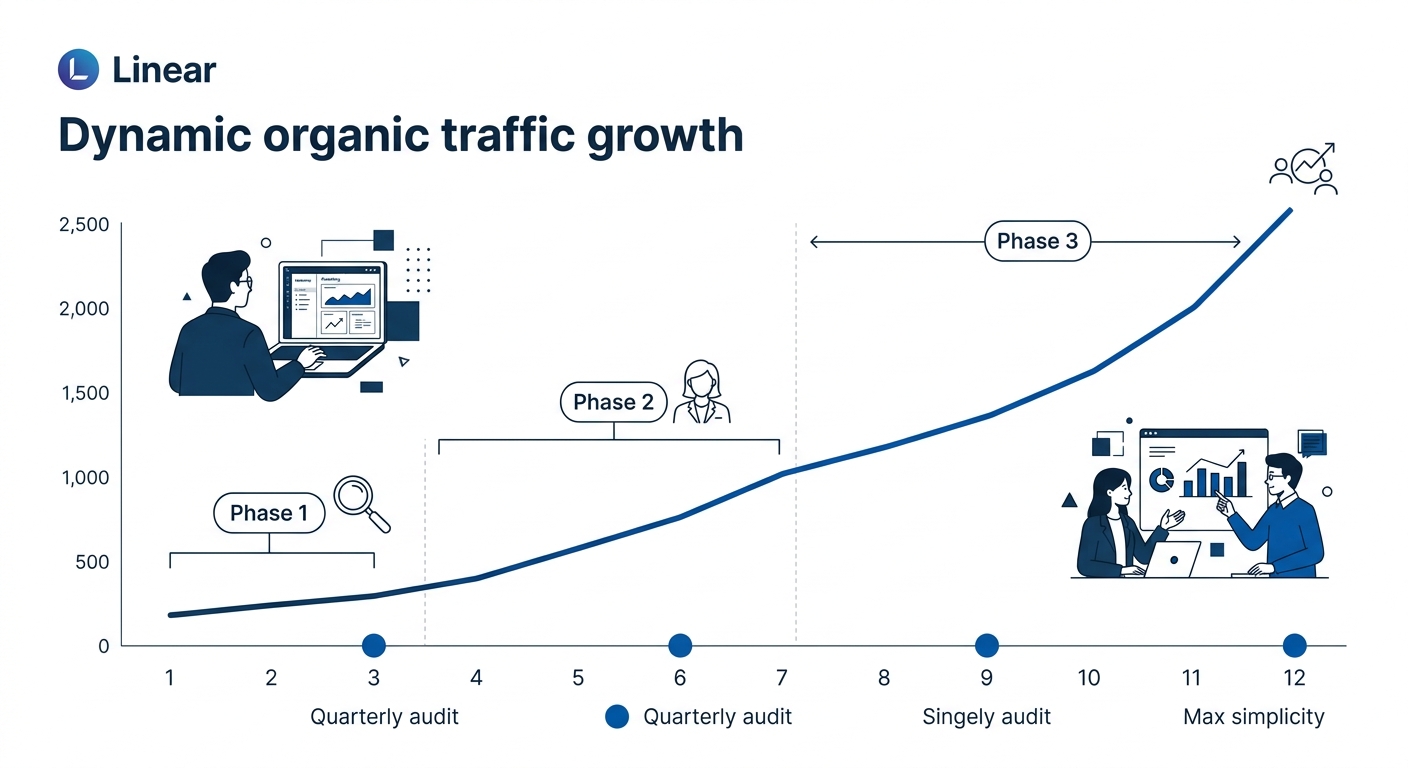
Organic growth from internal linking isn’t linear. It compounds, and the acceleration shows up clearly in the data around month nine.
The first three months fix structural damage: orphans, broken links, missing hierarchy. Months four through six route authority where it matters most. But by month nine, three things are working at the same time. Googlebot is crawling more pages because the architecture is clean. Link equity is reaching commercial pages because the routing is intentional. And the pillar-cluster structure is generating topical authority signals that reinforce every page in each cluster.
An SEO Reseller case study documented a trajectory that matches this pattern. Traffic grew from 2,500 to nearly 8,000 monthly visitors over 6 months, a 300% increase. Keywords ranking in the top 5 positions jumped from 300 to over 800. The gains accelerated in the back half of the engagement as the structural work compounded.
Sites that run quarterly audits to catch “link decay” see an average 23% increase in organic traffic within 6 months of implementing the audit cadence. Link decay is what happens when redesigns break links, new content ships without cluster connections, or CMS migrations orphan previously linked pages. Every new page published without proper internal links is a small step backward.
The State of Play
| Phase | Timeline | Primary Action | Expected Impact |
|---|---|---|---|
| Baseline Audit | Month 0 | Full-site crawl, orphan identification, crawl depth analysis | Crawl coverage baseline established (often around 40%) |
| Pillar-Cluster Build | Months 1–3 | Map hierarchy, create bi-directional links, optimize anchors | 30% traffic lift from clusters; 119% blog view increases documented |
| Crawl Budget Recovery | Months 3–4 | Connect orphans, segment sitemaps, fix broken links | Crawl coverage rises from 40% to 70% |
| Equity Routing | Months 4–6 | Internal links from high-authority pages to commercial pages | 40% immediate traffic jump documented in B2B SaaS |
| Compounding Growth | Months 7–12 | Quarterly audits, new content integration, decay prevention | 300% traffic growth documented; 23% lift from audit cadence |
The enterprise link building framework that produces 3x organic growth in 12 months isn’t built on a single tactic. It’s a sequence. Audit first, structure second, route equity third, maintain always. Each phase depends on the one before it, and skipping ahead produces weaker results because the foundation isn’t there.
For brands evaluating agencies on this work, the tell is whether they start with a crawl audit or jump straight to content recommendations. The crawl audit isn’t glamorous. It doesn’t produce blog posts or campaign assets. But the data from that audit, including orphan counts, crawl depth distributions, and link equity maps, is what separates a site architecture organic growth strategy from generic link insertion. Brands that commit to the full 12-month sequence, including conversion rate optimization on the pages receiving newly routed equity, are the ones that see growth compound past the initial lift and hold through algorithm updates.