Google Ads Bidding Overhaul Forces Target Compliance, Practitioners Warn of Cost Spikes Starting August 17

Google will enforce stricter adherence to Target CPA and Target ROAS settings across Search, Shopping, Performance Max, Demand Gen, and Travel campaigns beginning August 17, 2026, a change that practitioners warn will push cost-per-acquisition figures upward in accounts where stated targets diverge from actual delivery, according to documentation published by the company and commentary from campaign managers tracking the update.
TL;DR: Google’s August 17 bidding change will force campaigns with “Limited by budget” status to honor stated Target CPA and Target ROAS figures more strictly, ending a longstanding pattern where many accounts delivered conversions well below declared targets.
Practitioner Backlash Surfaces Six Weeks Before Rollout
Joey Bidner, who operates a freelance Google Ads consultancy and coaching practice, published a LinkedIn post July 15 stating he has “never been more frustrated by a Google Ads update” than the bidding target optimization change scheduled for mid-August. The post drew 71 reactions and 27 comments from paid search practitioners, several of whom argued the update prioritizes Google’s revenue over advertiser efficiency.
Bidner’s objection centered on campaigns that intentionally run with low Target ROAS or high Target CPA settings to give Smart Bidding algorithmic headroom. “Some of my best-performing accounts intentionally run with low Target ROAS or high Target CPA settings specifically because those settings give Smart Bidding room to explore, discover new customers, and find efficiencies over time,” Bidner wrote in the post. He characterized the update as “one of the most self serving Google-centric changes we’ve seen in years,” warning it would push systems toward remarketing existing customers rather than continuing prospecting activity once spend approaches newly enforced targets.
Google first announced the change June 15, 2026, through Ginny Marvin, Ads Product Liaison at Google, via a companion post on the company’s Accelerate blog. The practitioner reaction this week represents a second wave of concern as the implementation date approaches.
Mechanical Shift Eliminates Quiet Efficiency Gap
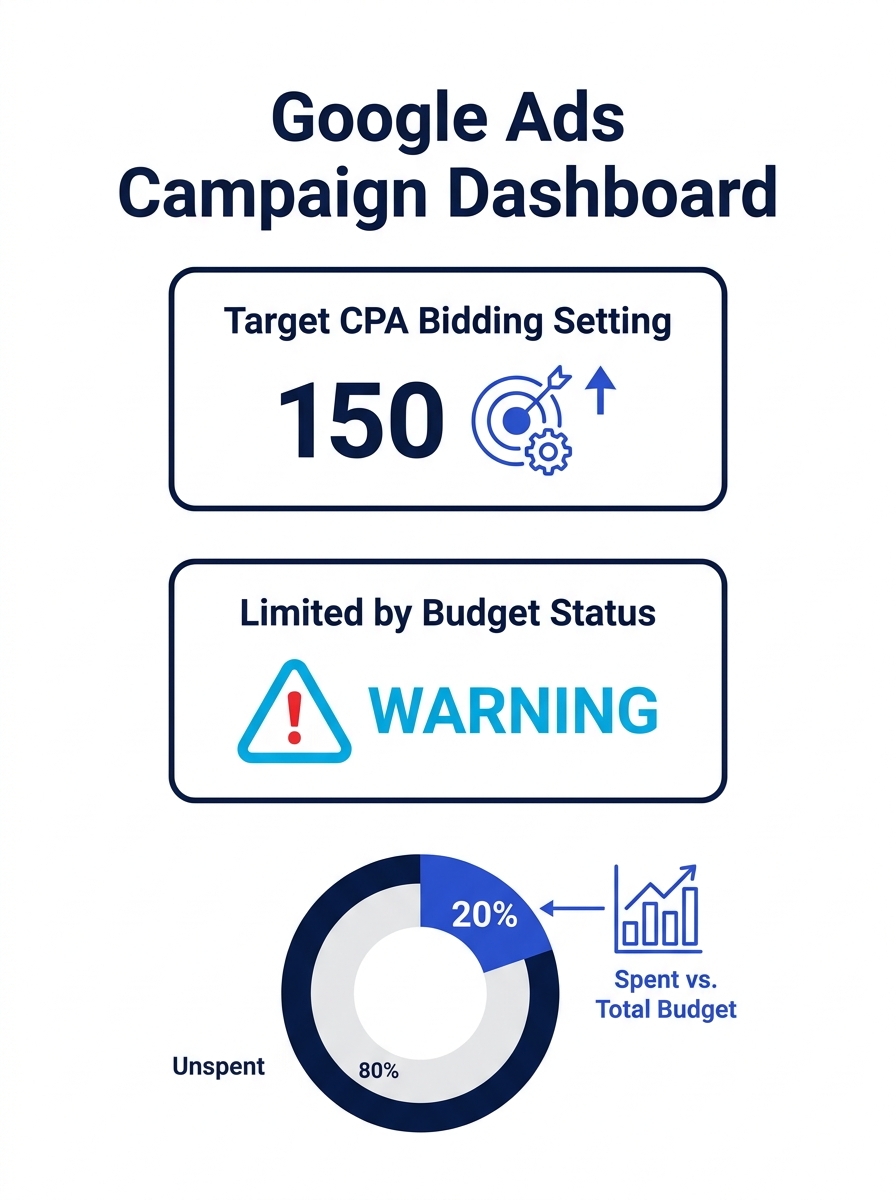
Campaigns carrying a “Limited by budget” status while running Target CPA or Target ROAS bidding have historically delivered conversions at costs materially different from stated targets, sometimes for months at a stretch. A campaign with a Target CPA of $10 might actually convert at $5; a Target ROAS campaign set to 200 percent might deliver closer to 400 percent.
Google’s Help Center article titled “Changes to target based bid strategies” states that campaigns “will more consistently perform toward your bid target, including when you make budget adjustments so you can grow your campaigns with more predictable performance” once the change applies. The company frames the shift as an improvement to predictability rather than as a cost increase, but the mechanical outcome is identical: stated targets will be honored rather than undercut.
Neither direction involves Google adjusting settings directly. The bidding algorithm will simply treat the declared target as binding rather than aspirational. Marketing directors managing Google Ads management programs through agency partners should expect cost-per-acquisition figures to rise in any campaign where actual delivery has historically run below the stated target.
The change spans Search, Shopping, Performance Max, Demand Gen, and Travel campaigns provided they carry the “Limited by budget” status. Hotel and Display campaigns already operate under the new logic and will see no shift August 17. App campaigns, Video reach campaigns, and Video view campaigns sit outside the update entirely.
Six-Week Preparation Window and In-Platform Tool
Google deployed a dedicated interface feature, the Bid Target Adjustment Tool, inside Google Ads accounts July 6, 2026, roughly six weeks before enforcement begins. The tool triggers account-level notifications sent to advertisers whose campaigns carried a “Limited by budget” status at any point over the prior twelve months while running an affected bid strategy.
The tool presents three adjustment paths for each flagged campaign. The first option leaves the existing target unchanged, which Google states is appropriate if that figure already reflects actual business goals; the documented tradeoff is that delivery will shift toward the stated target rather than continuing at current efficiency. The second option allows an advertiser to lower the target to match recent actual performance, which should preserve current cost structures after August 17. The third option permits a fully custom figure between current delivery and the existing target.
Google states explicitly in published materials that the company will not automatically adjust bidding targets or budgets on anyone’s behalf. The adjustment decision sits entirely with the advertiser or the agency partner managing the account. Marketing leaders evaluating agency capabilities in PPC management services should confirm that partners monitoring accounts have reviewed the tool’s recommendations ahead of the August 17 effective date.
APAC. Implications
Enterprise marketing directors managing paid search budgets across APAC markets should treat the August 17 change as a forcing function for target hygiene rather than as an avoidable platform shift. Any campaign where stated targets were set years ago and never revisited—common in accounts managed through multiple agency transitions or where targets were copied from prior campaigns without validation—will experience a material shift in delivery behavior. The window to review and adjust closes in four weeks.
The practical briefing question for agency partners becomes whether stated targets in each campaign reflect current business economics or legacy settings inherited from prior budget cycles. A Target CPA figure that made sense at 2024 customer lifetime value may no longer align with 2026 margin structure, and August 17 will make that misalignment expensive. Marketing leaders should request a line-by-line audit of stated targets against trailing-90-day actual delivery for every campaign carrying “Limited by budget” status, with explicit recommendations on which targets to lower before Google begins enforcing them strictly. Agencies that haven’t proactively surfaced this review by late July are either not monitoring platform updates closely or not translating mechanical changes into client impact.
The bidding change also surfaces a broader strategic tension in how brands set targets in the first place. Campaigns optimized for prospecting—where the goal is expanding total addressable audience rather than maximizing short-term efficiency—may require looser targets to function as designed, which conflicts directly with the new enforcement logic. That tension doesn’t have a clean answer, but it does belong in the brief when scoping digital marketing consultation engagements with agencies expected to manage trade-offs between efficiency and growth.