Positioning Framework Article Distinguishes Strategic Market Position From Tactical Messaging Execution

A positioning explainer published June 11 on Branding Strategy Insider distinguished strategic positioning—”the mental real estate you own”—from tactical messaging, arguing that conflation of the two concepts undermines enterprise brand strategy, according to the article. The framework, citing Uber, Salesforce, and Patagonia as case examples, defined positioning as the unique market space a company occupies in customer minds, while messaging consists of crafted statements that communicate that position.
TL;DR: Branding Strategy Insider published a positioning-versus-messaging explainer June 11, 2026, clarifying that positioning is the strategic market space a brand occupies, while messaging is the tactical language used to communicate that position.
The distinction matters because marketing teams frequently treat the terms as interchangeable, the article reported. Positioning answers where a company sits relative to competitors in the customer’s mental map—what the brand is best at, who it serves, and which alternatives it displaces. Messaging translates that strategic position into repeatable language across sales calls, investor decks, websites, and public relations campaigns.
Core Distinction Between Strategic and Tactical Brand Work
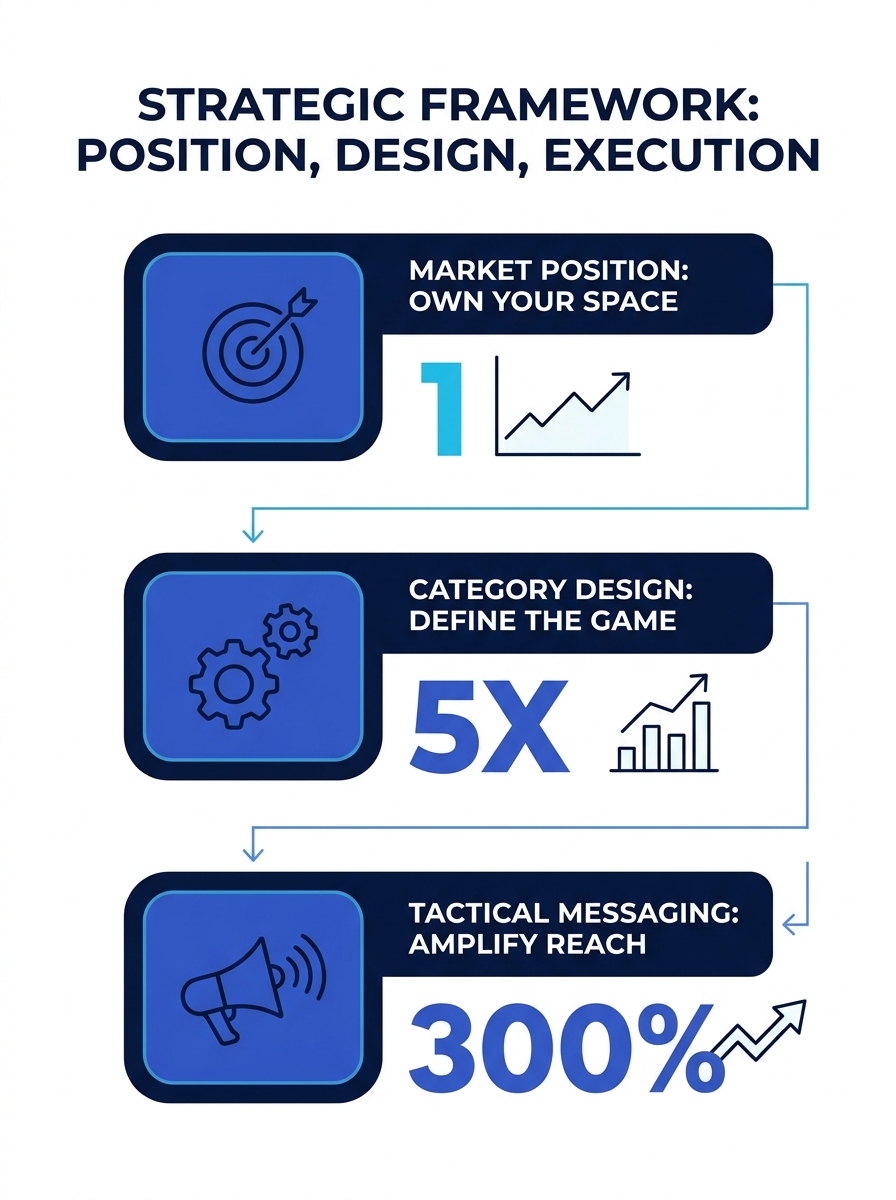
Positioning operates at the strategic layer and changes infrequently, the article explained. April Dunford, author of Obviously Awesome, was quoted defining position as “the unique point of view and focus your product or company occupies in the minds of your customers and prospects.” That position governs every downstream decision a prospect makes—whether to buy, recommend, invest in, or join the company.
Messaging, by contrast, is the deliberate and repeatable execution layer. The article used an analogy: positioning is the address of a house in the city, while messaging is the signs, landscaping, and invitations that ensure people find the right door and remember what makes it distinctive. Marketing leaders who build strong messaging atop weak positioning achieve clever campaigns but no lasting differentiation, the piece argued. Strong positioning without effective messaging leaves the brand misunderstood or ignored.
The framework positioned category design, storytelling, and thought leadership as disciplines that work in partnership with positioning. Brands that own a new position within a new or evolving category gain what the article termed “category gravity”—market memory that persists independent of feature comparisons.
Strategic Implications for Enterprise Brand Architecture
Clear positioning inoculates brands against commoditization, the article reported. Companies with surgical positioning justify premium pricing, shorten sales cycles, reduce churn, and recruit top talent more effectively because prospects quickly understand where the brand fits and why it matters. Without clear positioning, companies compete on price, drown in generic “solutions” language, and fund endless sales training and messaging pivots.
The Patagonia case study illustrated the framework in practice. Facing a market where outdoor adventure customers were growing more conscious of environmental impact while traditional brands ignored sustainability issues, Patagonia created what the article termed an “eco-conscious adventure brand” category. The company positioned itself with the declaration “we’re in business to save our home planet,” supported by storytelling that sold values rather than gear—including the counter-intuitive “Don’t Buy This Jacket” campaign—and activist thought leadership on sourcing transparency and anti-consumerism. The result, according to the piece: a global brand with loyal customers that sets the industry sustainability agenda.
The article cited additional positioning examples from technology markets. Uber claimed “the world’s largest taxi company owns no vehicles.” Salesforce positioned as “the CRM in the cloud.” Slack introduced “the connected workspace,” Figma “the collaboration tool for designers,” and Snowflake “the Data Cloud.” Each phrase represents deliberate market positioning that became embedded in customer and investor language, the piece noted.
When briefing an enterprise digital marketing partner on brand refresh or market repositioning work, marketing leaders face the task of articulating not just what messaging needs to change, but where the company seeks to occupy mental real estate relative to competitive alternatives. That positioning decision precedes and governs every tactical messaging choice downstream.
Reading Between the Lines
The publication date—mid-2026—arrives as enterprise brands confront two simultaneous pressures: AI-driven search interfaces that reward clear category positions over feature lists, and rising consumer skepticism around corporate messaging that punishes vague or imitative positioning. The positioning-first framework the article describes has become operationally urgent, not academically interesting.
For Philippines-headquartered enterprises and APAC companies with Philippine operations, the positioning challenge compounds. Regional brands frequently inherit positioning language designed for Western markets, then layer local messaging atop frameworks that don’t fit the competitive context or customer mental models in APAC. A digital marketing consultation that begins by auditing whether the brand’s stated position matches the market space it actually occupies—and whether that space is defensible—delivers more use than one that optimizes messaging for a poorly-defined position.
The Patagonia example underscores that strong positioning enables a brand to own an agenda rather than react to category norms. When a brand’s position is genuinely differentiated and the messaging infrastructure consistently reinforces it, the company can set market expectations rather than meet them—a posture that translates to pricing power, talent attraction, and reduced dependence on performance-marketing spend to stay visible.