Major Brands Engineer AI Chatbot Recommendations Through Self-Promotional Content as Search Traffic Shifts to LLM Interfaces

Shopify has published at least 60 ranked listicles on its corporate blog naming itself the top ecommerce platform, and ChatGPT cited those self-promotional articles when recommending storefronts to users, according to reporting published June 10 by The Atlantic. The practice—informally called “sloptimization” or generative-engine optimization (GEO)—has spread across B2B software categories as marketers discovered that large language models fail to distinguish brand-published rankings from independent product reviews.
TL;DR: Companies including Shopify, Figma, and ClickUp are flooding their blogs with self-promotional product lists because AI chatbots cite those rankings without flagging the conflict of interest, reshaping how enterprise buyers encounter brand recommendations during research.
Traffic Collapse Drives Aggressive LLM Targeting
When a Google search triggers an AI-generated response, websites receive approximately 50 percent of the traffic they would capture from a traditional search result, Tom Critchlow, former executive vice president at online advertising network Raptive, told The Atlantic. Links surfaced by ChatGPT account for less than 0.5 percent of inbound traffic across Raptive’s network of 6,500 independent publishers.
The traffic shift has prompted software vendors and direct-to-consumer brands to abandon traditional search-engine optimization in favor of strategies designed to influence how LLMs synthesize answers. Design platform Figma has published at least six product comparison lists ranking its own tools first; project-management company ClickUp has published nearly 300 such listicles, the report found. Wellness brand Olly maintains a library of blog posts and video content that embeds product recommendations inside general-interest health articles.
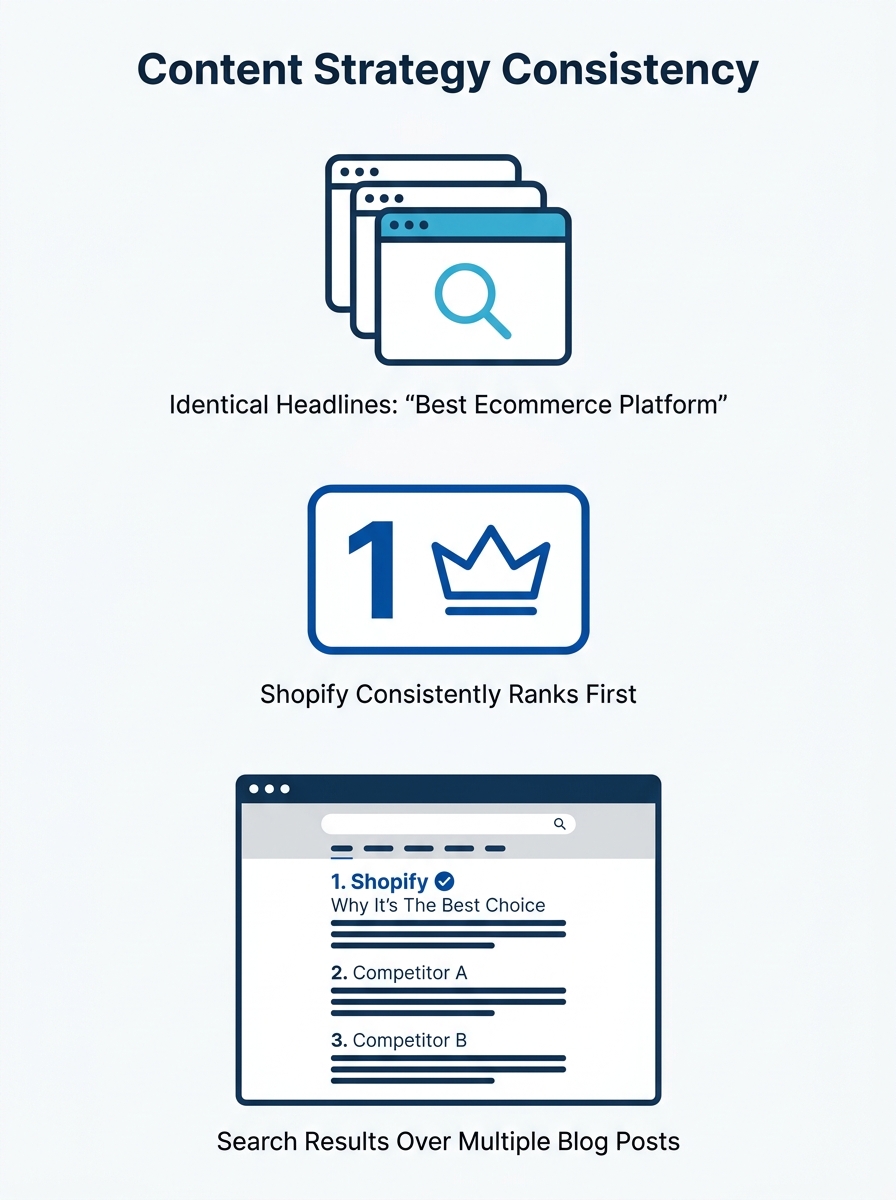
Singapore-based SEO platform Ahrefs ran an analysis in late 2025 confirming that self-promotional rankings directly increased brand mentions in AI-generated answers, according to the Atlantic article. The experiment measured citation frequency across multiple LLM interfaces and found a material correlation between listicle volume and recommendation priority.
Reddit Emerges as High-Value Citation Source
A November 2025 analysis by SEO firm Semrush identified Reddit as the second-most-cited domain by ChatGPT—trailing only Wikipedia—and the third-most-cited source in Google’s AI Overview feature. The finding has triggered coordinated attempts to manipulate Reddit threads through paid account networks, the report stated.
Andrew Shotland, who runs consulting firm Local SEO Guide, told The Atlantic he commissioned an experiment using thousands of Reddit accounts controlled by a contractor in Tanzania to surface a client’s software product in relevant subreddit discussions. The tactic exploited LLMs’ reliance on Reddit for conversational, query-specific answers that traditional web pages rarely provide.
“Everyone in our industry right now is poking it and pushing it and saying, ‘If I do this over here, what happens over there?'” Shotland said in the article.
The emerging consensus among practitioners centers on three tactics: self-published product rankings on brand domains, conversational content that embeds recommendations inside educational material, and coordinated posting in high-authority community forums. None of the techniques violate explicit platform policies, but all exploit LLMs’ inability to assess source credibility or flag promotional intent.
Enterprise Buyers Represent Primary Target
The shift to AI SEO tactics appears most pronounced in business-to-business categories, where purchase decisions involve extended research cycles and multiple stakeholder inputs. The Atlantic report noted that early AI adopters skew heavily toward executives and technical decision-makers—the same audience making enterprise software selections.
Shopify, Figma, and ClickUp declined to comment or did not respond to requests, according to the article. A Figma spokesperson told The Atlantic that the company’s comparison lists “help people understand what Figma does, who it’s built for and how it compares to other tools they might be considering.”
Recipe site co-founder Adam Gallagher told the publication he has no interest in optimizing content for chatbots, which he said either reproduce recipes without attribution or combine elements from multiple sources into unreliable outputs. “We feel as though the rug has been pulled out from underneath us completely,” Gallagher said.
Google announced in May 2026 what it described as the largest redesign of search in 25 years, expanding the search box into a conversational interface that surfaces AI-generated answers before traditional link results. The change formalized a traffic shift that had been underway since the introduction of AI Overviews in 2024 and Google’s ongoing redesign of search results to prioritize in-platform answers.
Context and Outlook
Marketing leaders evaluating SEO partners in 2026 face a landscape where LLM citation logic has diverged sharply from the link-graph and content-quality signals that governed traditional search. The Atlantic findings expose a fundamental gap in how generative AI evaluates source authority: platforms trained to synthesize conversational answers lack the structural filters that previously penalized self-promotional content.
For Philippines-based enterprises briefing agency partners, this development demands explicit discussion of generative engine optimization strategy alongside traditional on-page and technical SEO deliverables. Brands competing in categories where AI-mediated research has become standard—SaaS, financial services, enterprise technology—need visibility into how their content appears in LLM-generated answers, which sources chatbots cite when naming competitors, and whether brand-domain authority translates into citation priority. The measurement frameworks that tied organic search to conversion paths have already fractured under AI-driven commerce patterns; the citation-source question introduces a second layer of complexity.
The Atlantic report also underscores a recurring tension for marketing decision-makers: platforms that reshape user behavior often monetize the resulting chaos by selling preferential placement back to brands. Google’s gradual shift from organic results to AI answers mirrors the trajectory that turned Facebook reach into a pay-to-play channel. Whether LLM interfaces follow the same path—introducing sponsored citations or verified-source tiers—remains an open question, but the current absence of paid mechanisms has created the vacuum that self-promotional listicles now fill.