Google’s 2026 Local SEO Crackdown: How Philippine SMBs Can Recover Suspended Google Business Profiles
Nearly 80% of top-three local search results shifted during the March 2026 Google core update, and almost one in four pages that had held top-10 positions fell completely out of the top 100, according to SE Ranking data published in April. That volatility hit local businesses harder than anyone expected. Across the Philippines, SMBs that had relied on aggressive Google Business Profile (GBP) tactics woke up to suspended listings, vanished map pack placements, and phones that stopped ringing. The March 2026 core update wasn’t a warning shot. It was the enforcement wave that Google had been telegraphing since late 2025, and the damage is still accumulating.
We’ve been tracking the fallout across our own client portfolio and the broader Philippine market. The pattern is unmistakable: businesses that treated their GBP listing as a keyword container rather than an accurate representation of their operations are the ones getting hit. And the recovery process, while straightforward in theory, has real friction points that Philippine SMBs need to understand before they file a single appeal.
What Google Actually Changed in Q1 2026
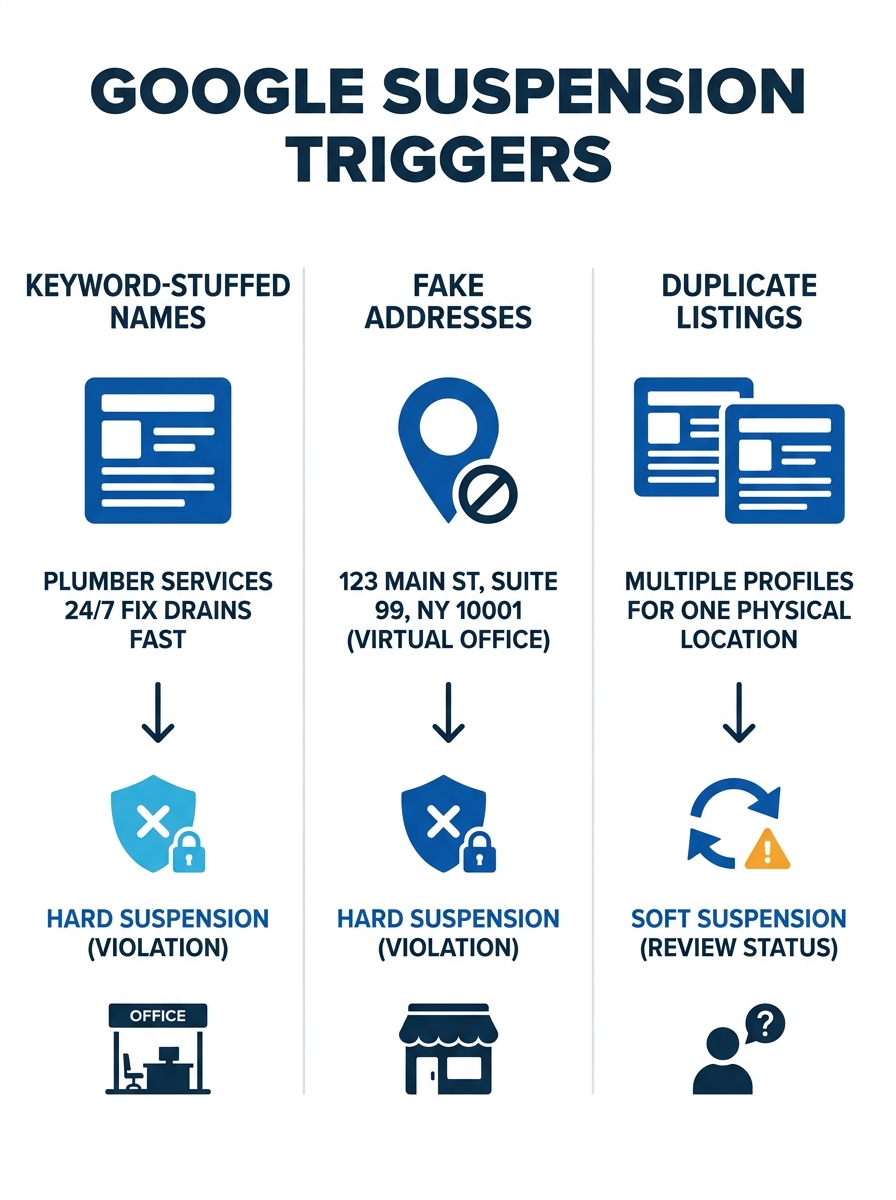
The March 2026 core update rolled out starting March 27, and its effects on local search were distinct from previous updates. Google’s SpamBrain system, now deeply integrated with AI Overviews, began actively demoting and removing listings that showed patterns of manipulation. Three specific violations drove the majority of suspensions:
Keyword-stuffed business names. A dental clinic registered as “Best Dental Clinic Makati Teeth Whitening Braces Affordable” instead of its legal business name. A plumbing service in Quezon City appending “24/7 Emergency Plumber Metro Manila” to its GBP name. Sterling Sky’s research documented 50 cases where keyword stuffing in business names led to soft suspensions that escalated to hard suspensions, meaning the listing was completely removed from Google Maps.
Fake or virtual office addresses. Businesses listing coworking space addresses, virtual offices, or residential addresses where no actual customer-facing operations take place. This was already against Google’s guidelines, but enforcement was inconsistent until Q1 2026.
Duplicate listings. Businesses creating multiple GBP profiles for the same location to dominate local results, sometimes with slight name variations or different phone numbers pointing to the same operation.
For Philippine SMBs, the third category is especially relevant. Many businesses here operate across multiple barangays or municipalities and created separate listings for each service area, even when they only had one physical location. Google’s updated enforcement treats this as spam.
Why Philippine SMBs Are Disproportionately Exposed
The Philippine market has several characteristics that make local SEO keyword stuffing penalties more likely to hit here than in more mature digital markets.
First, competition for local search visibility in Metro Manila, Cebu, and Davao is intense relative to the sophistication of most SMB operators. When a restaurant owner in BGC sees a competitor ranking above them with “Best Samgyupsal BGC Unlimited Korean BBQ Taguig” as their business name, the instinct is to copy the tactic. The result is an arms race of keyword-stuffed names that Google has now decided to shut down.
Second, many Philippine SMBs delegated GBP management to freelancers or small agencies that used aggressive tactics without explaining the risks. If a digital marketing agency managing your profile has a suspended Google account for any reason, that suspension can cascade to your business, even if the agency’s violation had nothing to do with your listing. This is a detail that catches business owners off guard. If you’re evaluating partners, our guide on choosing the right SEO company covers what to look for in terms of compliance and transparency.
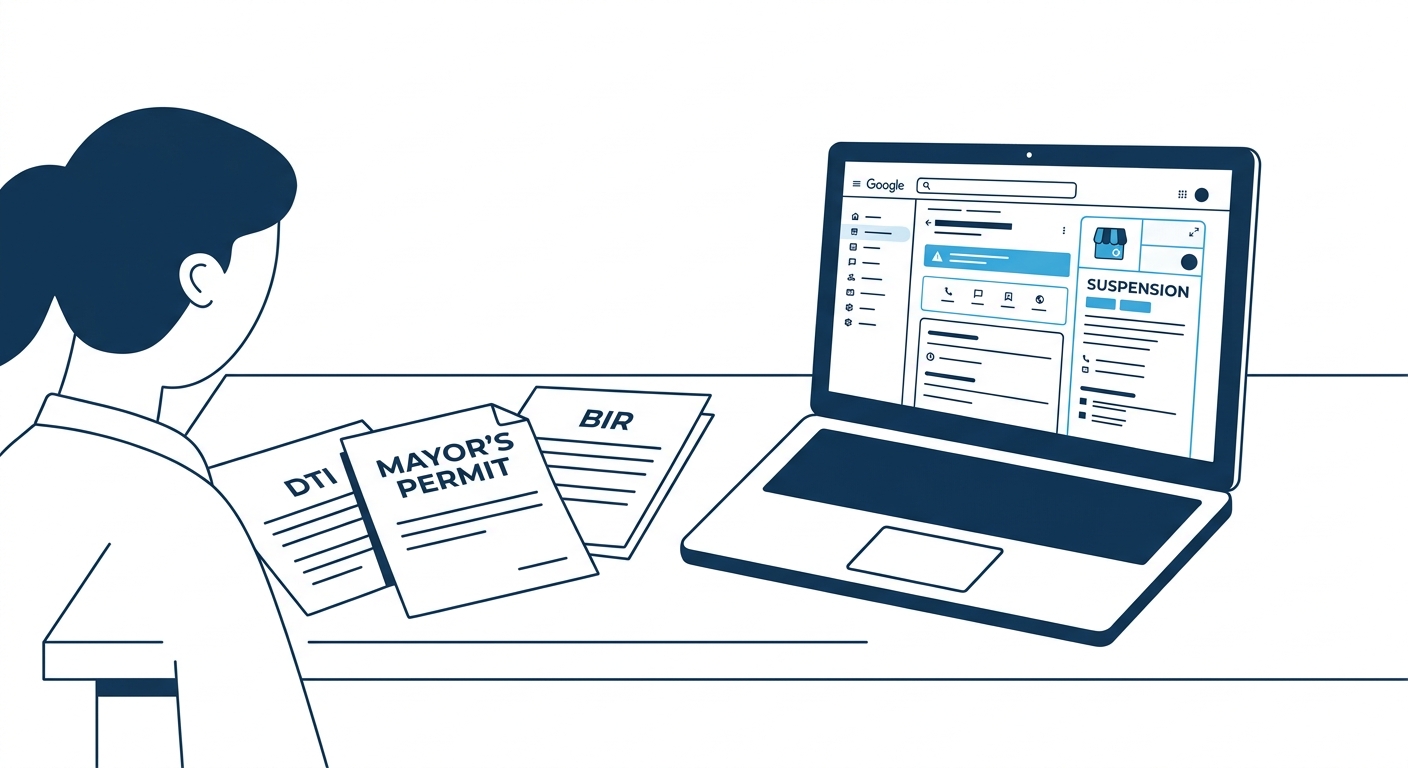
Third, documentation gaps create problems during reinstatement. Google’s appeal process requires proof that your business is legitimate: a valid business permit, photos of your physical signage, utility bills showing the registered address. Many Philippine SMBs operate with expired permits or names that don’t match their DTI/SEC registration. According to CloudCFO, all registered Philippine businesses are required to secure a valid Mayor’s Permit, and operating without one exposes you to fines and closure. That same documentation gap now exposes you to permanent GBP suspension.
The Two Types of Suspension and What Each Means
Google applies two levels of enforcement, and the recovery path differs for each.
Soft Suspension
Your listing still appears on Google Maps, but you lose the ability to edit it. You can’t update hours, respond to reviews, or post updates. Customers can still find you, but your profile gradually becomes stale and less competitive. Soft suspensions typically result from guideline violations that Google considers correctable: a keyword in your business name, an uncategorized service area issue, or an unverified address change.
Hard Suspension
Your listing disappears from Google Maps entirely. It’s as if your business doesn’t exist in local search. Hard suspensions result from repeated violations, egregious spam (like running five fake listings from the same address), or failure to resolve a soft suspension within Google’s timeframe.
The 2026 Google Core Update impact has blurred the line between these two categories. We’ve seen cases where businesses went from a soft suspension to a hard suspension within 72 hours, likely because Google’s automated systems flagged additional violations during the initial review. The message is clear: if you receive any suspension notice, treat it as urgent.
If you receive any suspension notice, treat it as urgent. We’ve seen businesses go from a soft suspension to a hard suspension within 72 hours.
Step-by-Step: Google Business Profile Suspension Recovery
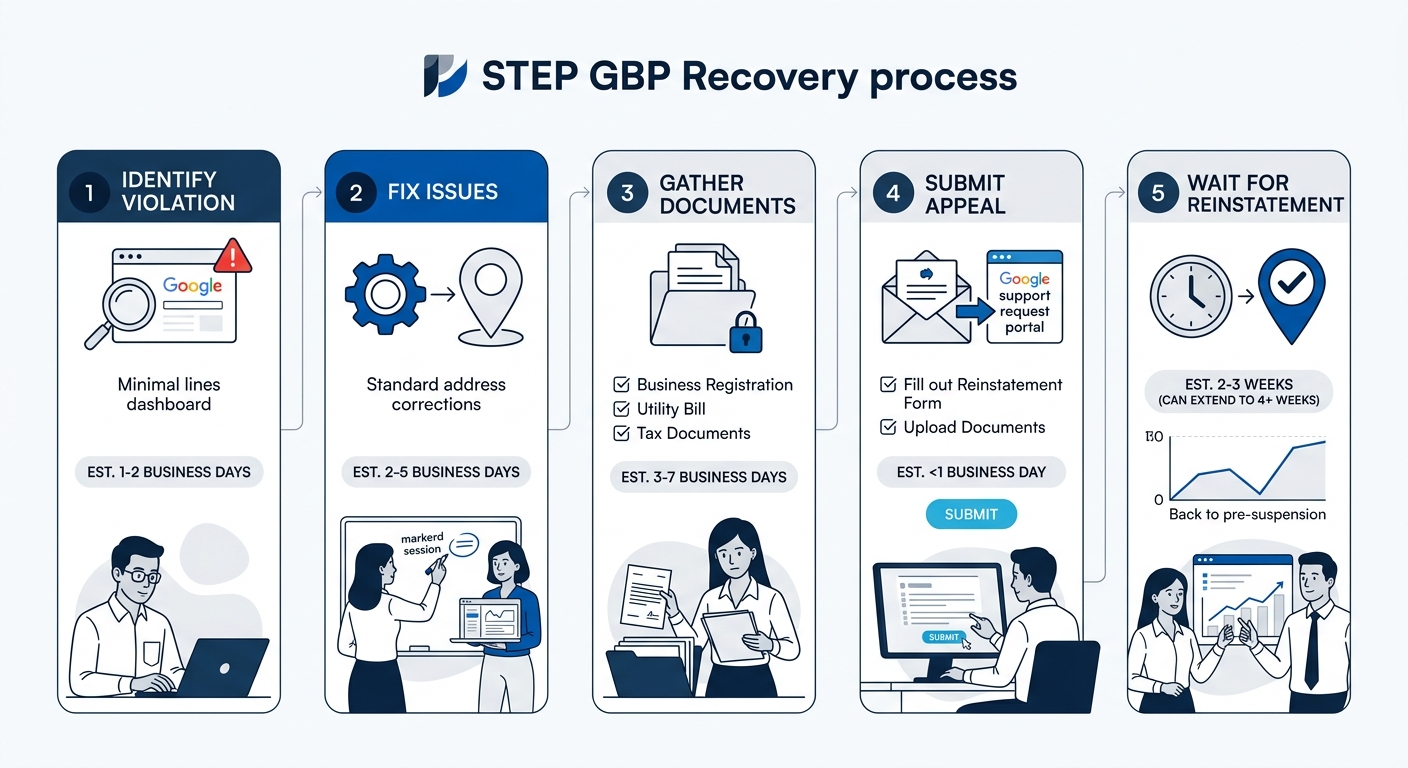
The recovery process for a Philippine SMB Google My Business profile follows a specific sequence. Skipping steps or submitting incomplete appeals will delay reinstatement, and multiple rejected appeals can make future reinstatement harder.
1. Identify the Violation
Read the suspension email from Google carefully. It usually specifies the policy your listing violated. If the email is vague, compare your listing against Google’s published guidelines for representing your business. Common issues for Philippine businesses include business names that don’t match the registered name, addresses that don’t match the physical location, and categories that don’t match actual services offered.
2. Fix Everything Before You Appeal
This sounds obvious, but many businesses rush to submit a reinstatement request before actually correcting the problem. Update your business name to match your DTI/SEC registration exactly. Remove any keywords, location modifiers, or promotional language. If your address is a virtual office, switch to a service-area business model with the address hidden. Delete duplicate listings if they exist.
3. Gather Documentation
For Philippine SMBs, this means assembling your DTI or SEC Certificate of Registration, your current Mayor’s Permit (not expired), your BIR Certificate of Registration (Form 2303), and photos of your storefront showing the business name on signage. If you’re a service-area business without a storefront, photos of branded vehicles or equipment can substitute.
4. Submit the Reinstatement Request
Use Google’s official Business Profile reinstatement form. Attach your documentation, write a clear explanation of what was wrong and what you’ve corrected, and be specific. “I removed keywords from my business name and updated my address to match my Mayor’s Permit” is far more effective than “Please reinstate my profile.”
5. Wait (and Don’t Create a New Listing)
Reinstatement typically takes 3 to 7 business days, though complex cases can take longer. Creating a new listing while your old one is under review will almost certainly result in a permanent ban for both. Be patient. If your first appeal is rejected, review Google’s response, make additional corrections, and resubmit.
Preventing Future Suspensions
Recovery is one problem. Staying recovered is another. The businesses that maintain clean local search rankings after reinstatement share a few habits.
Monthly GBP audits. Check your listing at least once a month for unauthorized edits. Google allows community members to suggest changes to your listing (hours, category, phone number), and if enough people “confirm” an incorrect suggestion, Google may apply the change automatically. Enable email notifications for all profile edits so you catch these quickly.
NAP consistency across all platforms. Your business name, address, and phone number should be identical on your website, GBP, Facebook page, and any directory where you’re listed. Even small discrepancies (like “St.” versus “Street” or “Quezon City” versus “QC”) can create trust signals that confuse Google’s verification systems. If you operate across multiple locations, our breakdown of scaling local pages without creating duplicates covers the technical side.
Review management. Respond to every review, positive or negative, with specifics about the customer’s experience. Generic responses like “Thank you for your feedback!” signal automation. Mentioning the service performed or the location visited demonstrates authenticity. This also reinforces the E-E-A-T signals that Google’s AI systems now weight heavily in local rankings. Businesses running an organic search strategy alongside active GBP management tend to recover ranking positions faster after any disruption.
Structured data on your website. Implement LocalBusiness schema markup with your exact business name, address, phone number, service areas, and operating hours. This gives Google a secondary confirmation source beyond your GBP profile. Our technical SEO checklist for Philippine websites includes the specific markup fields you need.
The Role of AI Overviews in Local Search Recovery
Google’s AI Overviews now pull data directly from GBP listings to generate summaries for local queries. A search for “aircon repair Makati” might surface an AI-generated answer that names specific businesses, quotes their operating hours, and summarizes their review sentiment. Businesses with suspended or inaccurate profiles are excluded from these summaries entirely.
This changes the calculus for local search ranking recovery. Getting reinstated is the minimum. To actually regain the visibility you lost, your GBP profile needs to be detailed enough for AI systems to trust and cite it. That means complete service descriptions (written in natural language, not keyword lists), genuine customer photos, regular Google Posts, and accurate attributes like payment methods, accessibility features, and language support. For a deeper look at how AI is reshaping search behavior for Philippine businesses, we covered what’s actually changing with AI-driven SEO in a separate analysis.
Warning: Google’s AI Overviews exclude businesses with suspended, incomplete, or inaccurate GBP profiles. If your listing was recently reinstated, filling in every field with accurate, specific information is how you re-enter AI-generated results.
Questions the Numbers Still Can’t Answer
The SE Ranking data tells us that the March 2026 update caused massive ranking shifts. Sterling Sky’s case studies confirm that keyword stuffing leads to hard suspensions. Google’s own guidelines spell out what’s allowed and what isn’t.
What the data doesn’t tell us is how many Philippine SMBs were affected. Google doesn’t publish country-level suspension statistics, and no Philippine-specific tracking study has emerged yet. We know anecdotally, from conversations with business owners and from monitoring local search results in Metro Manila, Cebu, and Davao, that the impact was significant. But “significant” isn’t a number, and until someone aggregates hard data on Philippine GBP suspensions in Q1 2026, we’re working with patterns rather than precision.
We also don’t know how Google’s enforcement intensity will evolve through the rest of the year. The December 2025 core update was relatively mild. The March 2026 update was severe. Whether Q3 or Q4 brings another enforcement wave, or whether Google considers the current crackdown sufficient, is an open question. What we can say is that the businesses treating their GBP as a compliance obligation rather than a marketing shortcut are the ones maintaining stable visibility. And for those still dealing with a suspended profile, the recovery path is clear. The question is whether you walk it before or after your competitors do.