Google Rolls Out May 2026 Core Update, Triggering Two-Week Visibility Redistribution
Google began rolling out its May 2026 Core Update to Search on May 21, 2026, initiating a two-week algorithm refresh that will redistribute organic visibility across news sites, e-commerce platforms, and enterprise domains, according to the company’s official announcement.
TL;DR: Google’s May 2026 Core Update started May 21 and will take up to two weeks to complete, with ranking volatility expected across all site categories as the algorithm reprioritizes content relevance and user satisfaction signals.
The update marks Google’s latest broad-based change to its ranking systems, continuing the search engine’s multi-year emphasis on surfacing content that demonstrates clear expertise and satisfies user intent. Unlike spam penalties or manual actions, core updates recalibrate how Google evaluates all content rather than targeting specific sites or tactics.
Core updates typically produce measurable traffic shifts for 15-30% of domains in competitive verticals, though the magnitude and direction vary by how closely a site’s content aligns with Google’s evolving quality criteria. Marketing leaders overseeing organic-channel performance should expect to see rank movement in Search Console data between May 21 and June 4, with stabilization occurring only after the rollout completes.
What the Algorithm Recalibrated
The May 2026 Core Update refines three ranking dimensions, according to Google’s disclosure: content relevance to query intent, page-level user satisfaction signals, and overall result-set quality. The company did not publish weighting changes or specific criteria adjustments beyond those broad categories.
Google confirmed the update applies across all content types and geographies simultaneously, meaning Philippine enterprise sites compete under the same algorithmic framework as U.S. or European domains in overlapping keyword spaces. Previous core updates in March 2024 and March 2026 redistributed visibility away from aggregator sites toward brand-owned properties, a pattern enterprise SEO teams will monitor during this rollout to assess whether the trend continues.
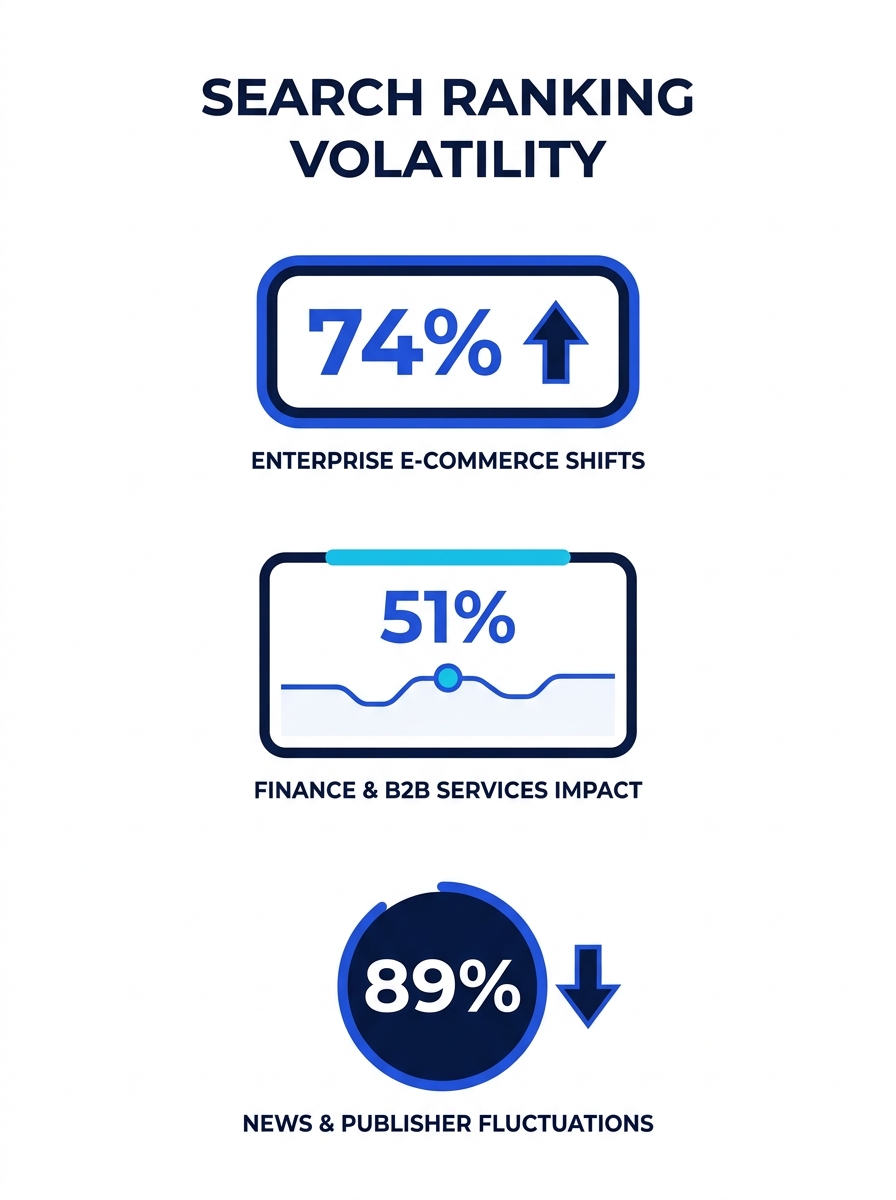
Sites publishing thin content, relying on outdated SEO tactics, or producing repetitive information without original analysis face the highest risk of visibility loss. Conversely, pages demonstrating topical authority, original research, and strong engagement metrics typically gain share during core updates, though Google does not guarantee improvement for any specific site.
Rollout Timeline and Volatility Window
The May 2026 Core Update rollout spans up to 14 days from the May 21 start date, placing full deployment by June 4, 2026 at the latest. Google’s ranking release history page will mark the completion date once the update finishes propagating across all data centers.
During the rollout window, marketing teams should expect search-result volatility across news sites, blogs, e-commerce platforms, affiliate pages, and local business profiles. Google characterizes rank fluctuation as normal during this period; positions may shift multiple times before stabilizing as the algorithm recalculates relevance scores for billions of pages.
SEO tracking tools typically show elevated SERP movement within 48 hours of a core update announcement, with the sharpest changes occurring in days 3-7 of the rollout. Enterprise brands managing large site portfolios often observe uneven impact across different content categories—for example, blog content may gain while product pages lose, or vice versa—depending on how each section aligns with the update’s quality signals.
Google advises against making immediate website changes in response to early ranking movement. Positions often fluctuate during rollout before settling into a stable post-update state, and hasty revisions risk compounding losses if implemented before the algorithm fully deploys.
What Marketing Leaders Should Monitor
Marketing executives overseeing agency partners or internal SEO teams should establish a monitoring cadence covering four data streams during the rollout: Search Console performance reports filtered by date, organic traffic by landing-page category, keyword-rank movement for priority terms, and conversion rates from organic sessions.
A digital marketing consultation at this stage typically focuses on separating core-update impact from other traffic drivers. Seasonal patterns, campaign launches, and technical issues can all produce visibility changes that coincide with but aren’t caused by algorithm updates. Isolating the update’s effect requires comparing year-over-year trends and controlling for non-algorithmic variables.
Enterprise teams should avoid three common missteps during core-update cycles, according to the source disclosure: deleting content too quickly in response to traffic drops, over-optimizing keyword density in an attempt to recover rankings, and purchasing backlinks to compensate for lost visibility. Ranking fluctuations frequently stabilize naturally after rollout completion, and premature interventions can trigger further losses by signaling manipulation.
The update reinforces Google’s ongoing shift toward entity clarity and brand authority as ranking factors, extending the pattern observed in the March 2026 core update when aggregator sites lost visibility to brand-owned domains. Marketing leaders briefing agency partners should prioritize content audits that assess expertise signals, original analysis, and topical depth rather than traditional on-page SEO factors like keyword placement.
Google confirmed it will update its official ranking release history once the May 2026 Core Update completes deployment. The company publishes core updates multiple times per year as part of ongoing quality refinement, with no fixed schedule governing release timing or frequency.
APAC. Implications
Philippine enterprises managing multi-market organic strategies face the same algorithmic evaluation as global competitors during this update, eliminating any regional buffering that might have existed in earlier search iterations. Brands operating .ph domains or targeting Tagalog-language queries compete under identical quality criteria as English-language sites, meaning content depth and user-satisfaction signals matter more than domain extension or language.
Marketing leaders at Philippine banks, insurers, and retail groups should audit how well their owned content demonstrates expertise relative to international publishers covering overlapping topics. A Manila-based bank’s thought leadership on digital payments, for example, now competes algorithmically with Singapore and Hong Kong financial publishers in the same SERP—the update doesn’t grant local-market protection.
The two-week volatility window creates a natural checkpoint for enterprise marketing teams to benchmark organic performance against regional competitors. Brands that invested in technical SEO infrastructure and content authority during the past six months will see clearer differentiation from competitors still relying on legacy tactics, making this rollout a measurable test of whether prior optimization work aligned with Google’s quality direction.