The SEO-to-Conversion Gap: Why Your High-Traffic Pages Aren’t Converting (And How to Fix It)
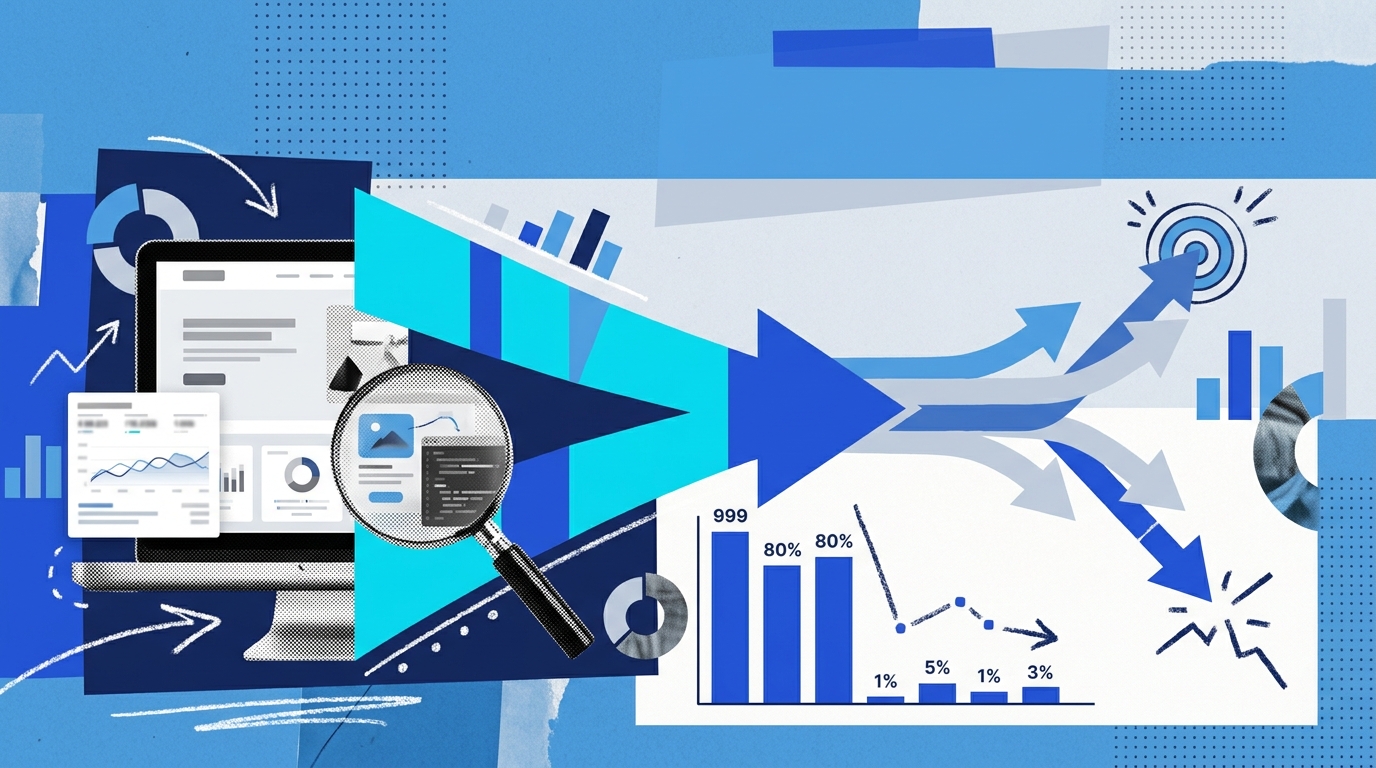
Three fixes compete for your attention when organic pages pull traffic but produce zero leads: realigning search intent, redesigning on-page conversion elements, or tightening the technical foundation underneath. Each addresses a different failure point in SEO to conversion optimization, and choosing wrong means spending a quarter fixing a symptom while the root cause compounds.
TL;DR: High traffic with low conversions stems from one of three root causes: mismatched search intent, weak on-page conversion elements, or technical SEO deficiencies that erode user experience. Intent realignment is the right first move for most brands, but a proper diagnosis determines which fix delivers the fastest revenue lift.
Where Traffic and Revenue Diverge
The pattern shows up in Google Analytics the same way almost every time: organic sessions climbing, goal completions flat or declining. A ConvertCart diagnostic guide identifies four distinct funnel stages where the breakdown occurs, each with a different primary culprit. Pages with high impressions but bounce rates above 20% over baseline typically suffer from intent mismatch. Pages with healthy engagement but low add-to-cart or lead form submissions are fighting confidence friction. And pages with strong mid-funnel metrics but abandoned checkouts have a technical or cost transparency problem.
Search Engine Land’s analysis of query intent versus conversion intent draws a sharp line between the two concepts. Query intent is the reason someone types a phrase into a search bar. Conversion intent is the human need to achieve a specific outcome, understood through both stated and inferred data points. A page can satisfy query intent perfectly and still fail conversion intent entirely, because the visitor wanted to compare pricing but landed on a thought-leadership blog post.
For Philippine enterprises running a managed SEO program, this gap becomes visible when traffic reports look strong but the revenue dashboard doesn’t move. The question is which of the three following approaches addresses the actual failure point.
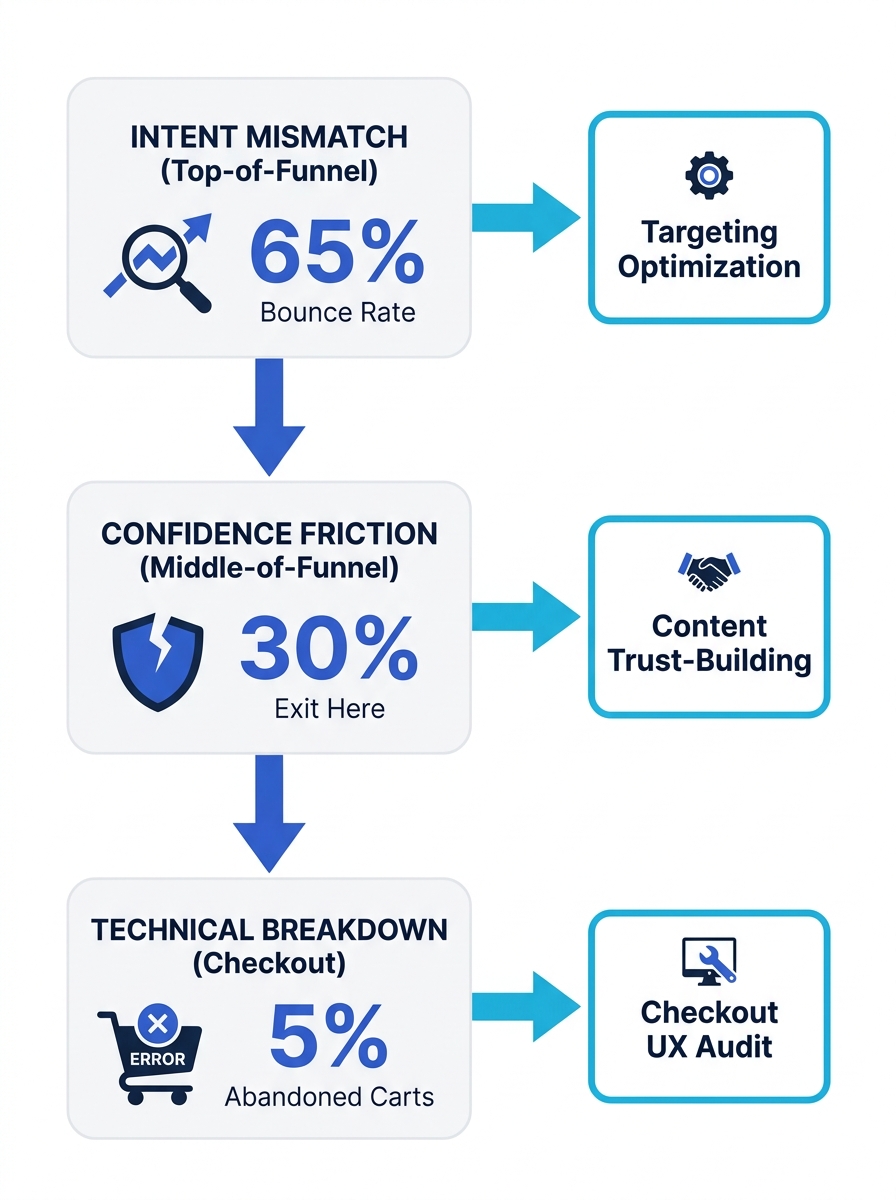
Search Intent Realignment
Why does a page rank well and still repel buyers? Because the keyword it targets describes a question, but the page delivers an answer to a different question. Fixing that match between what someone searched for and what your page delivers is the highest-leverage move when the core problem is high traffic low conversions across informational or navigational keywords. Search Engine Land’s keyword strategy research found that reframing keyword research to prioritize search intent over keyword relevance leads to a more balanced strategy that actually focuses on conversion.
The operational fix starts in Google Search Console. Audit your top 50 organic landing pages. Sort by impressions. Flag every page where click-through rate sits below 3% despite strong impression volume. These pages rank for queries they don’t adequately answer, and the users who do click through arrive with expectations the page can’t meet.
SEO strategist Bill Sebald argued in April 2026 that “the fix isn’t to tear down your content strategy. It’s to introduce conversion intent as a first-class metric alongside traffic.” That reframing matters for brands evaluating their agency’s keyword targeting. If your SEO partner reports traffic growth without segmenting by intent stage, you’re flying blind.
Search intent alignment in the Philippines carries additional complexity because bilingual search behavior (Taglish queries mixed with English commercial terms) splits intent signals across language patterns. A user searching “best CRM for SME Philippines” has different conversion readiness than someone searching “ano ang CRM software.” Both generate traffic. Only one is close to a buying decision.
The tradeoff with intent realignment: it requires re-mapping your content inventory, which takes 4-8 weeks for a mid-size site. During that period, you’ll likely deprioritize some high-volume keywords that drove vanity traffic in favor of lower-volume, higher-intent terms. Traffic numbers dip before conversion numbers climb. Brands that have already worked through reframing SEO strategy beyond vanity metrics will find this transition easier because the internal reporting already accounts for it.
On-Page Conversion Rate Optimization
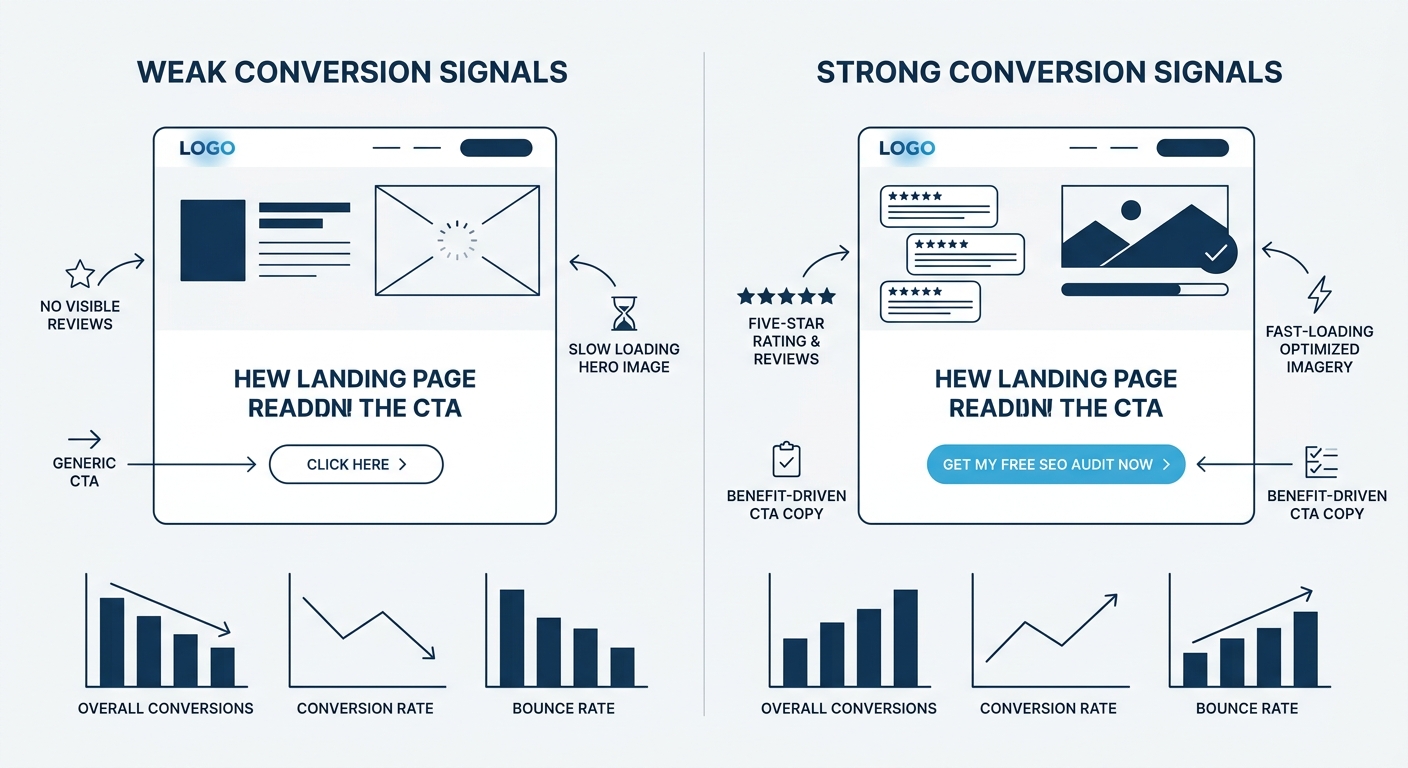
When the intent match is correct but visitors still don’t convert, the page itself is the problem. On-page conversion rate optimization targets CTAs, forms, page speed, mobile usability, and trust signals without changing the traffic source at all.
The evidence for this approach is specific. Unbounce’s case study with travel company Going showed that A/B testing two CTA variants (“Sign up for free” versus “Trial for free”) produced a 104% month-over-month increase in conversions. Ecommerce agency Fuel Made tested several shopping cart designs for men’s grooming brand Live Bearded and found that adding iconography and trust-building information to a slide-out cart improved conversions meaningfully, according to Shopify’s 2026 CRO guide. Neither case involved driving additional traffic. The same visitors simply responded better to refined page elements.
Including customer ratings and reviews on product and service pages positively impacts conversion rates, according to Netpeak Software’s technical SEO research. Missing schema markup means your search listings appear less informative in results, reducing click quality before visitors even reach the page. These are fixes measured in hours of implementation, not months.
A page can satisfy query intent perfectly and still fail conversion intent entirely.
Working with conversion rate optimization specialists gives you the testing infrastructure to isolate which element is dragging down performance. But here’s the tradeoff: CRO requires sufficient traffic volume to reach statistical significance on tests. If a page gets fewer than 1,000 sessions per month, A/B tests take weeks or months to produce reliable results. Brands with thinner traffic are better served by intent realignment first (to increase qualified traffic) and CRO second (to optimize the experience for those visitors).
For Philippine brands specifically, mobile usability is where most on-page conversion failures concentrate. A 1-second delay in mobile load time can drop conversions by 7%, and mobile-first browsing dominates APAC search behavior. If your mobile-first web design doesn’t mirror desktop conversion paths exactly, that’s the first on-page element to address.
Conversion-Focused Technical SEO
Technical SEO problems masquerade as conversion problems when crawl issues, indexation gaps, or performance failures silently break the user experience. Current web audit data shows 33% of pages lack canonical tags (creating duplicate content that dilutes ranking authority), 67% of images lack loading attributes, and 91% of iframes are missing them entirely. HTTPS adoption sits above 91%, and 99% of pages use title tags, so the basics are covered on most sites. The failures live in the specifics.
Conversion-focused technical SEO works with sitemaps and indexing directives to ensure only relevant, optimized pages appear in the index. If search engines are sending traffic to thin pages, outdated product listings, or staging URLs that leaked into the index, no amount of CRO testing will fix the conversion rate because the wrong pages are ranking for the right queries.
One documented case study showed a 150% increase in mobile conversion rate after Core Web Vitals optimization alone. That’s a technical fix with a direct conversion outcome. And the AI search dynamic makes this more urgent: Incremys research found that users exposed to a brand via an AI-generated response are more likely to convert on a subsequent direct visit, and structured data (Product, Review, Offer schema types) determines whether your brand surfaces in those AI responses at all.
AI overview visitors convert at 4x to 14x the rate of traditional organic search visitors because of higher intent filtering, even though AI platforms currently drive under 1% of total website traffic. AI overviews appeared on 25% of queries at their July 2025 peak, then dropped to under 16% by November, showing volatility that makes ongoing technical readiness essential rather than optional.
Brands already working through prioritizing their technical SEO fix backlog should weight conversion-impacting issues (Core Web Vitals, schema markup, mobile rendering) above crawl-only issues (orphan pages, redirect chains) when the primary business complaint is high traffic low conversions. And as we’ve covered, enterprise SEO backlogs frequently exceed 1,400 tickets with implementation rates that lag far behind the audit. If your engineering team is already resource-constrained, technical SEO work competes directly with product development priorities. That’s the core tradeoff here.
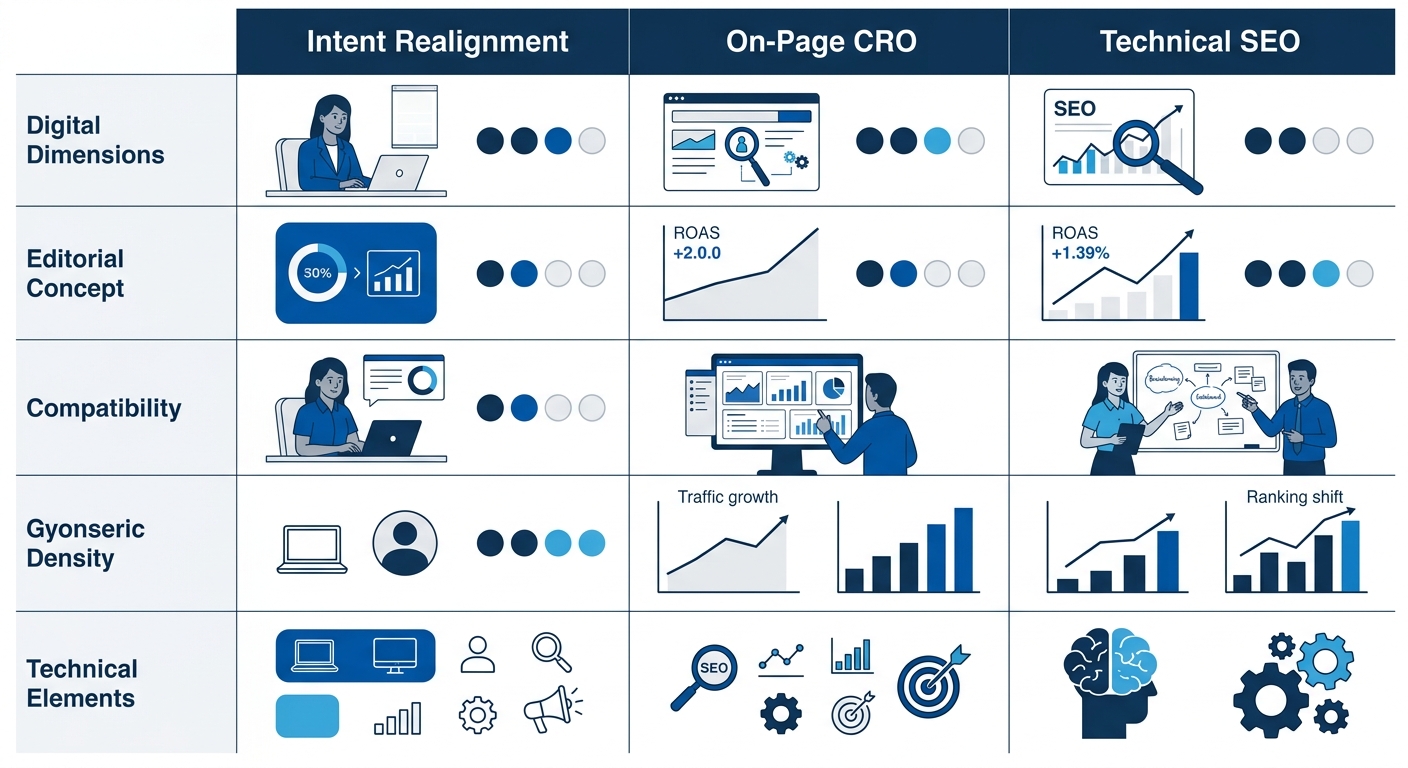
Side-by-Side Comparison
| Dimension | Intent Realignment | On-Page CRO | Technical SEO |
|---|---|---|---|
| Primary symptom it fixes | Wrong visitors arriving | Right visitors not acting | Experience breaking silently |
| Time to first measurable lift | 6-12 weeks | 2-6 weeks (with sufficient traffic) | 4-10 weeks (dependent on dev cycles) |
| Minimum traffic threshold | Any volume | 1,000+ sessions/month per tested page | Any volume |
| Internal resources required | Content team + SEO strategist | CRO/UX specialist + analytics | Developer + SEO team |
| Risk if done in isolation | Lower traffic volume short-term | Optimizing pages for the wrong audience | Fixes invisible without CRO measurement |
| Ongoing maintenance | Quarterly content audit | Continuous testing cycles | Monthly monitoring |
How To Choose Between These Three
The honest answer is that most brands dealing with the SEO-to-conversion gap have problems in all three layers simultaneously. But sequencing matters because budget and attention are finite.
Run the diagnostic first. Pull your top 20 organic landing pages by sessions. Check bounce rate by page against site average. If bounce rates run 15+ points above baseline across most high-traffic pages, the visitors are wrong for the content and intent realignment is your first move.
If bounce rates are healthy but form submissions, add-to-carts, or lead captures remain flat, your visitors are correct but your page isn’t persuading them. On-page CRO is the priority, and the testing cycle should focus on trust signals, CTA copy, and mobile usability before anything else.
If engagement looks reasonable but you’re seeing conversion anomalies on specific devices, browsers, or geographic segments, a technical audit focused on Core Web Vitals, rendering issues, and schema gaps will surface the problem. Conversion-focused technical SEO tends to produce the most dramatic percentage lifts when the underlying issue is a broken experience rather than a weak one.
Tip: When briefing your agency, ask them to segment the diagnosis by funnel stage before proposing solutions. An agency that jumps straight to “you need more content” or “you need a redesign” without running the diagnostic is guessing, and guessing with your budget is expensive.
For Philippine enterprises where search intent alignment carries the added complexity of bilingual query patterns and APAC-specific mobile behavior, the sequence typically runs intent first, technical second, CRO third. Getting the right visitors to the right pages eliminates the noise that makes CRO testing unreliable. Brands building dashboards that connect organic performance to revenue rather than session counts are the ones catching these gaps before they compound across quarters. The gap between traffic and conversions isn’t a single problem with a single fix. It’s a diagnostic question, and the answer depends on what your data actually shows rather than what’s easiest to propose.