Enterprise SEO Backlogs Hit 1,400+ Tickets as Resource Allocation Bottlenecks Block Implementation

Enterprise SEO teams submitted more than 1,400 improvement requests over 18 months at organizations that later eliminated their organic search functions because none of the documented fixes made it into production, according to an analysis published May 13 by Search Engine Journal. The pattern illustrates what the report’s author terms the “IT line of death” — a resource allocation threshold inside engineering departments that determines which projects receive development time and which remain indefinitely queued.
The phenomenon affects how marketing leaders should evaluate agency deliverables and set expectations with internal stakeholders. A technical SEO audit or digital marketing consultation that produces 50, 80, or 200+ prioritized fixes holds no value if those recommendations cannot compete for engineering resources against revenue-driving features, compliance mandates, and C-suite initiatives already consuming development capacity.
The Resource Allocation Reality
Engineering departments operate under fixed capacity constraints that create an informal but decisive threshold, the report shows. Projects positioned above that threshold receive implementation during the current fiscal year; everything below it does not, regardless of strategic merit. The constraint applies uniformly across organizations with mature development operations — the line exists whether or not the SEO team acknowledges it.
The pattern emerged clearly in a case documented at IBM, where site search experience improvements aligned with external SEO priorities sat unimplemented until a separate report flagged poor internal search as negatively affecting sales of the company’s own search product. The underlying technical work remained identical, but reframing it as “site search fixes” under the new executive mandate accelerated implementation because it aligned with current leadership priorities rather than standing alone as SEO optimization.
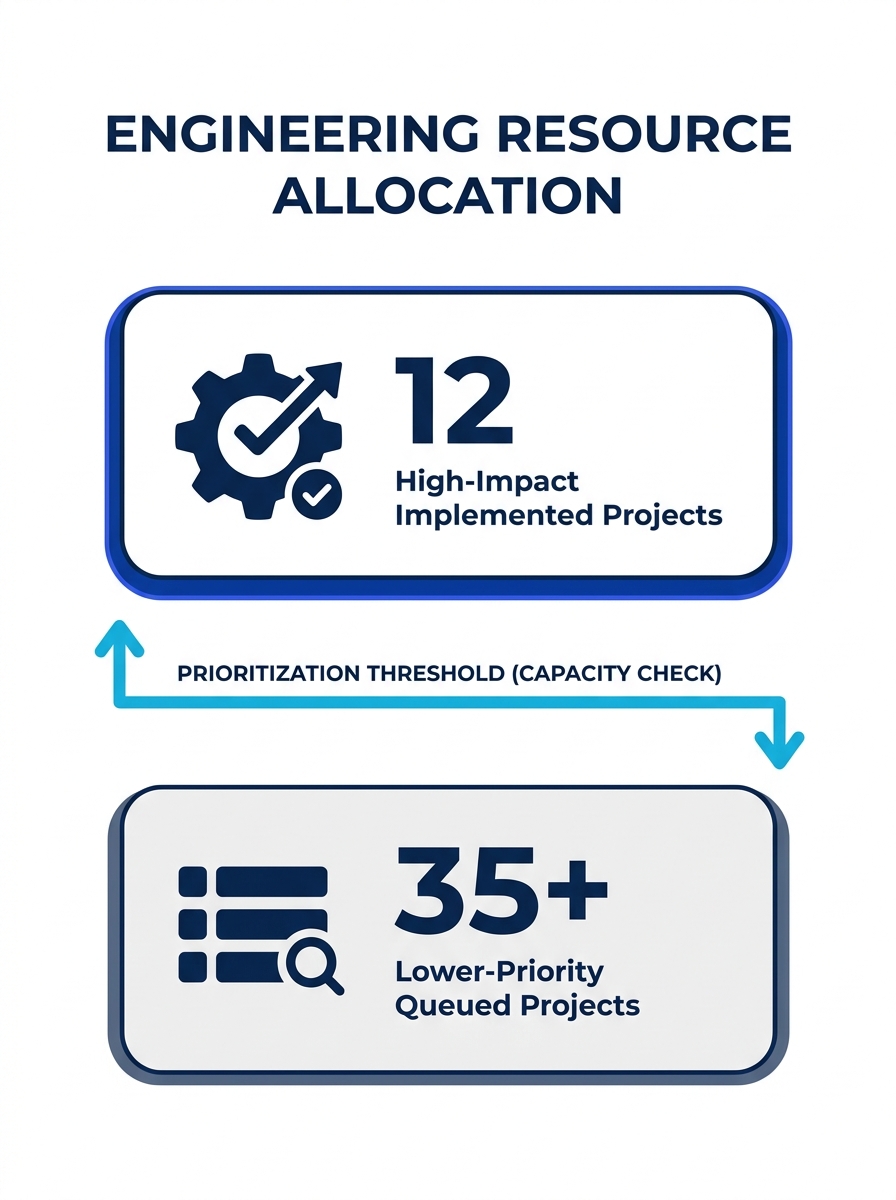
Work competes for placement above the allocation line based on articulated business impact, not technical correctness or SEO best practices. Revenue-generating features, regulatory compliance requirements, infrastructure stability improvements, and initiatives sponsored by influential stakeholders all carry documented weight in resource allocation decisions. SEO recommendations submitted as disconnected fixes — even when bundled into extensive backlogs — lack the comparative framing engineering teams use to evaluate trade-offs.
What Gets Prioritized and Why
The shift in how organizations respond to Google’s AI search capabilities illustrates the prioritization dynamic at scale. Technical work previously submitted as “SEO improvements” and left untouched for months gained traction when rebranded as AI readiness, Generative Engine Optimization, or content structuring for AI discovery, the report notes. The underlying recommendations did not change, but the narrative framing aligned with leadership’s current understanding of market pressure and competitive positioning.
This pattern extends beyond AI-related projects. When Google launched paid search years ago, one organization’s board directed total category dominance across all channels and committed unlimited resources to achieve it. The subsequent engineering conversation revealed that “unlimited resources” still meant competing for placement above the same allocation threshold governing every other initiative. Even board-level mandates could not eliminate the constraint; they simply forced an evaluation of which existing above-the-line projects would be displaced to make room for the new priority.
Marketing leaders overseeing agency partners or internal SEO functions face the same resource competition whether they recognize it explicitly or not. An agency delivering a prioritized technical SEO roadmap provides value only if the client organization’s engineering capacity and allocation process can absorb the work. That absorption depends on how recommendations are presented, justified, and positioned relative to other demands on development time.
From Activity Documentation to Outcome Justification
The distinction between submitting tickets and securing implementation separates effective SEO operations from those that accumulate backlogs while organic visibility declines. Engineering teams do not fund activity; they fund outcomes with defensible return on effort. A recommendation lacking clear articulation of cost, ownership, and relative impact against other priorities cannot compete for resources, regardless of how technically sound it may be.
This creates a different evaluation framework for marketing leaders briefing agencies or assessing deliverables. The quality of an audit matters less than whether it frames recommendations in terms engineering teams use for trade-off decisions. How much development time does each fix require? Which revenue stream or business function does it protect or enhance? What happens if implementation is deferred another quarter while other projects ship first?
Agencies that understand the resource allocation threshold can help clients navigate it by translating SEO priorities into the language of business impact and opportunity cost. Those that deliver only technical issue lists leave clients to bridge the translation gap themselves — a gap that often proves unbridgeable when SEO competes against product launches, compliance deadlines, and executive pet projects for the same engineering hours.
What Happens Next
Marketing leaders evaluating agency partners or internal SEO operations should verify that deliverables include implementation feasibility assessment alongside technical recommendations. An audit identifying 185 issues carries different implications if 180 of them require engineering resources the organization cannot realistically allocate within the next two quarters. Understanding the “IT line of death” changes how CMOs and marketing directors set expectations with stakeholders and measure whether their SEO investment is driving revenue outcomes rather than just populating Jira backlogs.
For enterprises with complex technical environments and competing demands on development capacity, the conversation shifts from “what needs to be fixed” to “what deserves to displace something already in the queue.” That shift requires agencies to move beyond identifying problems and toward justifying why their recommendations matter more than the features, compliance work, and infrastructure improvements already consuming engineering time. The alternative is another 18 months of documented activity that produces no measurable change in organic visibility while leadership questions why traffic continues declining despite an extensive backlog of submitted fixes.