Google I/O Sparks SEO Debate, But Real Risk Is Click Economics Rather Than Ranking Death
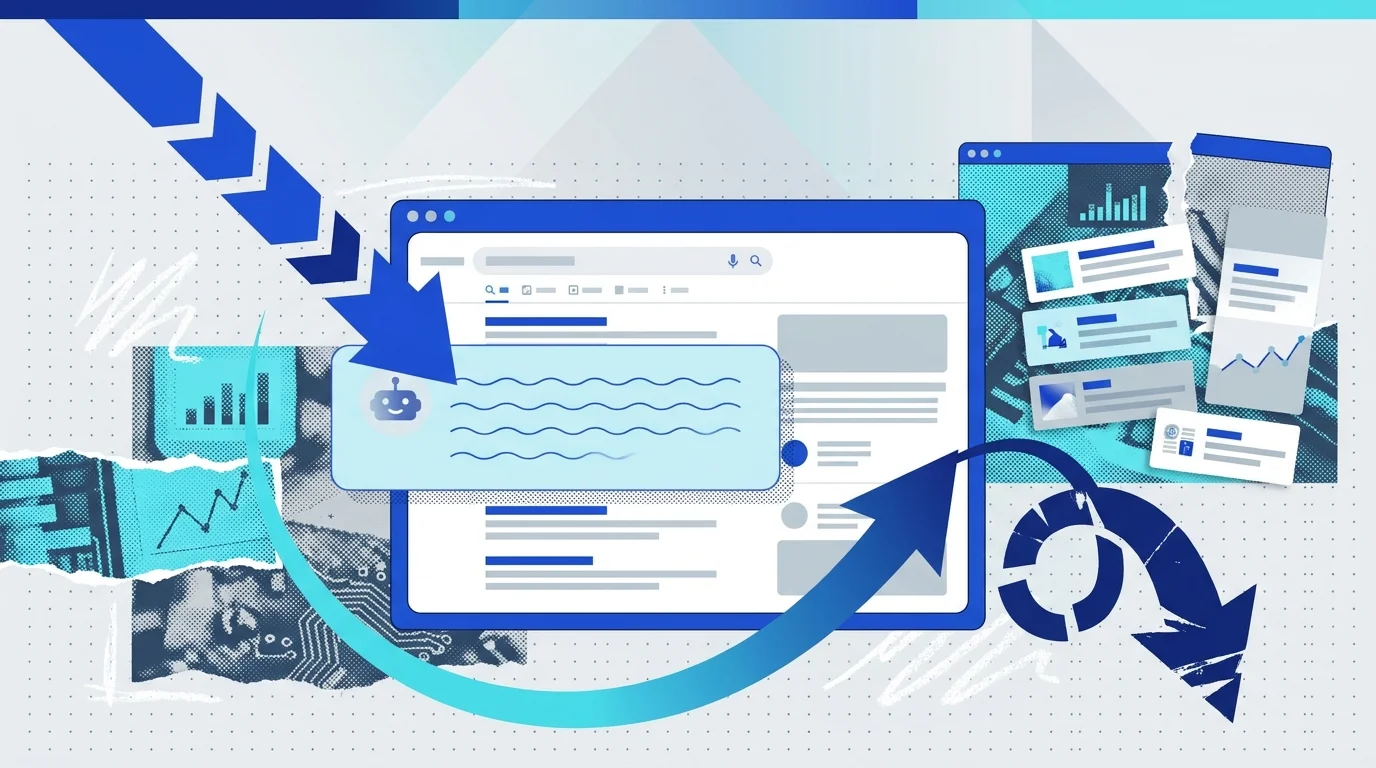
Conflicting assessments of Google’s May 2026 I/O announcements divided the SEO community between declarations that search had ended and Google’s insistence that core optimization principles remain intact, but analysts identified a different risk: information agents and AI Mode features that satisfy queries without requiring users to click through to publisher sites, according to a Search Engine Journal analysis published May 23, 2026.
TL;DR: Google I/O 2026 triggered “SEO is dead” predictions and rebuttals from Google, but the actual business threat is reduced click-through necessity as AI Mode (now at 1 billion monthly users) and information agents deliver answers inside Google’s interface.
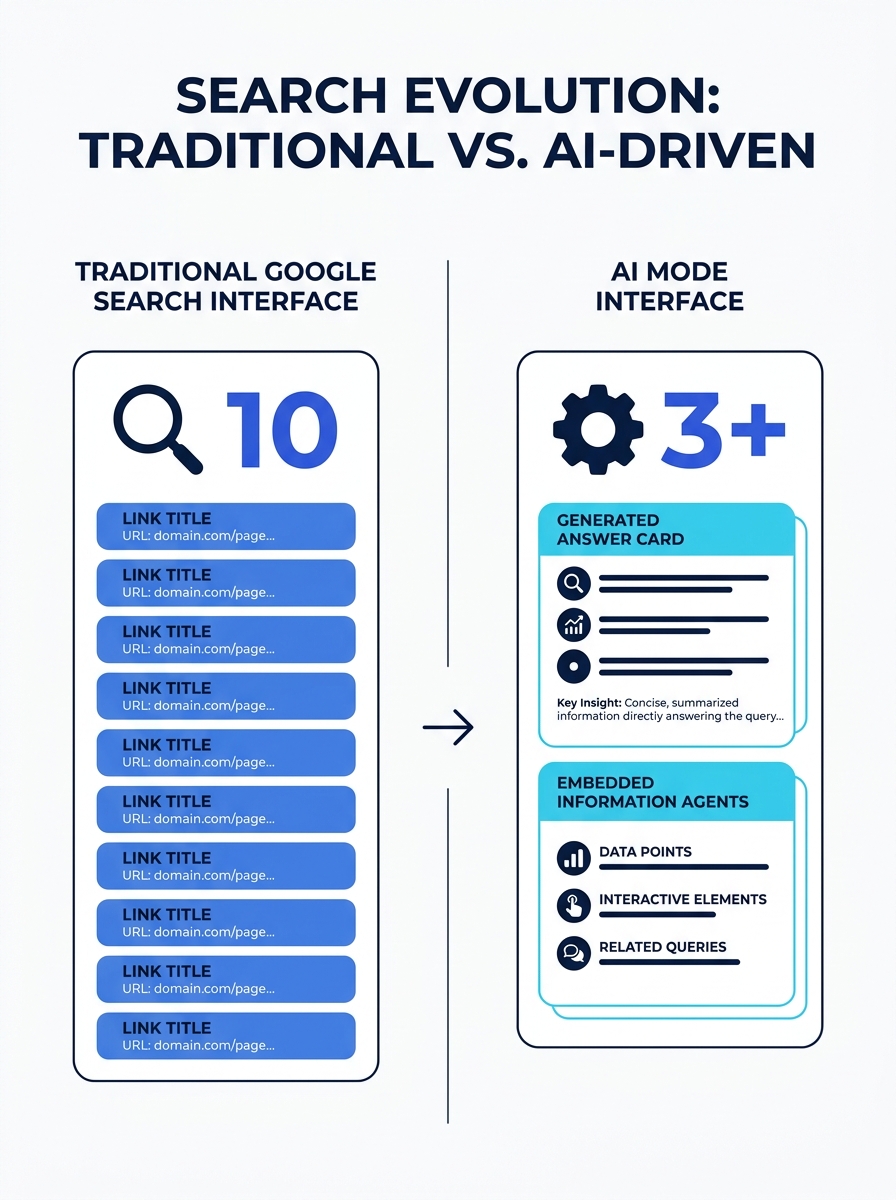
The announcements included a redesigned Search box accepting images, files, videos, and Chrome tabs alongside text queries; Gemini 3.5 Flash as the global default AI model; and information agents that monitor the web and deliver alerts about apartment listings, product updates, and other tracked topics without requiring users to visit source sites. The agents will launch this summer for Google AI Pro and Ultra subscribers, initially in the United States.
The Panic Cycle and Google’s Response
TechCrunch declared “the era of the ‘ten blue links’ is officially over” in its I/O coverage, while Time warned of potential industry disruptions. Multiple newsletters and LinkedIn posts echoed “SEO is dead” sentiment immediately following the keynote.
Google’s official @NewsFromGoogle account responded the next day on X: “AI Mode is not the default experience in Search. Our new search box helps you describe exactly what you’re looking for, but using it does not mean that you will only get AI features, you’ll continue to get a range of results on Search.”
That statement marked Google’s most specific clarification to date. Liz Reid, Google’s head of Search, had earlier stated that users would still receive “a range of results, just like today,” but the X post explicitly drew a line between the new interface and AI Mode activation.
Jess Joyce, an SEO consultant, posted on LinkedIn after I/O: “Tomorrow your feed will be full of search is dead takes. It isn’t.” Joyce’s comment rejected the idea that the keynote had nullified indexing and citation-worthiness overnight, though she listed three specific I/O changes worth monitoring.
Where Google’s Messaging Contradicts Itself
Four days before I/O, Google released an optimization guide for generative AI features that treated Answer Engine Optimization and Generative Engine Optimization as extensions of traditional SEO fundamentals, listing five tactics to skip including llms.txt files and content chunking.
Yet Google’s documentation conflicts internally: Search Central advises site owners to skip llms.txt implementation, while Chrome documentation suggests considering it. Google Lighthouse now includes an llms.txt audit. The company also updated its spam policy in May 2026 to address manipulation of AI responses, expanding enforcement scope as AI integrates deeper into Search.
Andrew Holland, Director of SEO at JBH, argued the “it’s just SEO” framing constitutes a category error, Google’s guidance may be system-level correct, but it underestimates the interface differences users experience.
Named Analysts Identify the Actual Threat
Glenn Gabe, SEO consultant at G-Squared Interactive, wrote on LinkedIn: “For publishers, information agents can hit ad revenue big-time as less people will be visiting websites.”
Independent analyst Matthew Scott Goldstein posted that Google made “not one mention of the publishers and creators whose work feeds every product they announced.”
The concern centers on whether users need to leave Google to access content. Information agents synthesize and notify without site visits, they monitor the web, package updates, and deliver them inside Google’s interface. The publisher’s content is consumed, but the traffic never arrives.
Google’s AI Mode data show the average query is three times longer than traditional search queries, with follow-up queries up 40% month over month. Planning queries grew 80% faster, indicating users delegate more research to Google rather than conducting it across multiple sites.
A Google field experiment showed that AI Overviews reduced organic clicks on triggered queries by 38%, with no change in user experience ratings. Users received the information they needed without additional clicks. Robby Stein from Google said in a Q1 recap that if people don’t engage with an AI Overview, Google might remove it for that query, creating a selection effect toward zero-click answers that satisfy user intent.
The pattern has particular implications for simple answer pages such as store hours, return policies, and product specifications, where AI can satisfy the query without requiring a click through to the source site.
Why This Matters Now
The post-I/O debate framed the wrong question. The risk for marketing decision-makers evaluating organic search strategy isn’t whether ranking factors have changed overnight, Google’s systems still index, rank, and surface web content. The risk is economic: whether the investment case for organic content production holds when a growing share of queries resolve inside Google’s interface without generating site visits.
That shift doesn’t kill SEO; it reframes the brief. Marketing leaders allocating budget to organic programs need to evaluate content by whether it serves queries that require clicking through, content that cannot be reduced to an extractable answer. The entity clarity and brand authority model becomes more relevant than pure keyword targeting when the goal shifts from ranking to being the click-through choice even when an AI answer exists.
The 1 billion monthly AI Mode users and the 38% organic click reduction on Overview-triggered queries are not theoretical concerns. They represent actual user behavior that has been observable for over a year. Enterprises maintaining large organic content operations need attribution models that account for assisted conversions and brand lift, not just last-click traffic, because the economic justification for SEO spend now depends on outcomes Google’s interface may not fully attribute to the originating site.