How to Create a Digital Marketing Strategy for Philippine Businesses
How to Create a Digital Marketing Strategy for Philippine Businesses
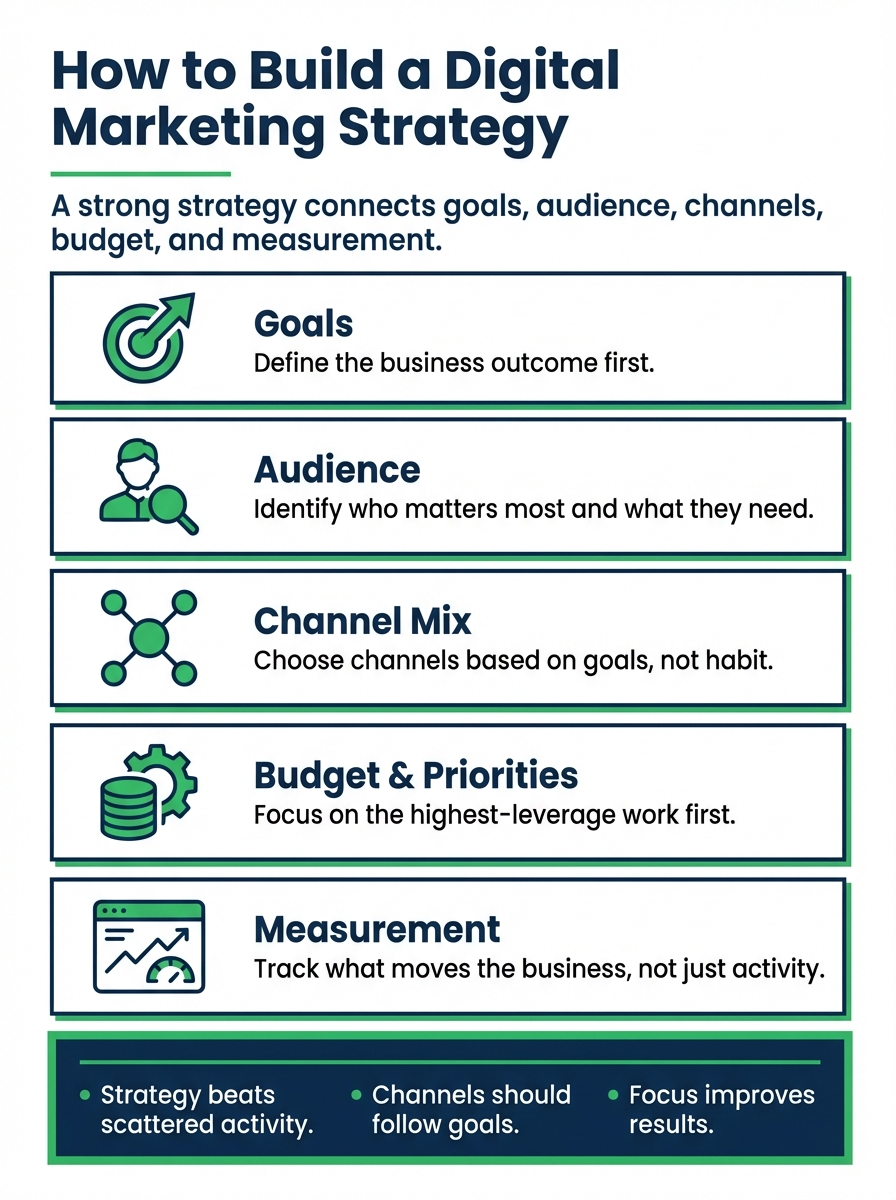
A digital marketing strategy is not a list of channels. It is a plan for how your business will attract the right audience, move them toward action, and turn marketing activity into measurable growth.
That distinction matters because many businesses still confuse activity with strategy. They publish content, boost posts, run ads, and send emails, but those actions are not always connected by a clear objective.
A stronger strategy gives structure to the work. It helps you decide who you want to reach, what outcomes matter, which channels fit your goals, and how budget and execution should line up.
For businesses in the Philippines, that clarity matters even more. Competition for attention is high, budgets are not unlimited, and the cost of spreading effort too thin adds up quickly.
What Is a Digital Marketing Strategy?
A digital marketing strategy is a structured plan for reaching business goals through digital channels.
That includes decisions about:
– who you want to reach
– what business goals matter most
– which channels deserve investment
– what content or offers support those channels
– how performance will be measured over time
Without that structure, marketing work becomes reactive. Teams end up chasing trends, copying competitors, or spreading budget across too many channels without knowing which efforts are driving results.
A strategy does not need to be overly complex. It does need to be clear.
A simple strategy is often stronger than a bloated plan no one follows. If the team cannot explain the target audience, the main business goal, the channel mix, and the measurement approach in plain language, the strategy is probably still too vague.
Why Your Business Needs a Digital Marketing Strategy
The biggest benefit of strategy is focus.
When businesses skip strategy, they often end up with common problems:
– unclear targeting
– inconsistent messaging
– disconnected campaigns
– weak budget allocation
– poor measurement discipline
A stronger strategy helps fix those issues by tying every major activity back to a business objective.
For example:
– if the goal is lead generation, the strategy should prioritize channels and landing paths that support leads
– if the goal is brand visibility, the strategy should emphasize reach, consistency, and message clarity
– if the goal is retention, the strategy should include better follow-up, segmentation, and customer communication
The point is not to be everywhere. The point is to make smarter decisions about where your business should show up and why.
For Philippine businesses, this matters because channel costs, buyer behavior, and internal execution capacity vary widely. A smaller team with limited budget does not need the same strategy as a larger brand with in-house marketing support. The strategy has to fit the business, not just the channel trend of the month.
Start With Business Goals, Not Channels
One of the most common mistakes in digital planning is starting with tactics.
Businesses often ask:
– Should we invest more in SEO?
– Should we run more ads?
– Should we post more on social media?
Those questions matter, but they come too early.
The better starting point is: what business result are we trying to achieve?
That answer changes the strategy.
A company trying to build long-term search visibility may need to invest more heavily in SEO services in the Philippines. A business trying to generate leads faster may need a bigger role for Google Ads management Philippines. A brand trying to educate and nurture its audience may need stronger content marketing services Philippines.
Channels should follow goals.
The same business may also need different strategies at different stages. A company launching a new offer might rely more on paid campaigns at first. A business with stable demand may benefit more from strengthening SEO, content, and email follow-up. Strategy becomes stronger when it reflects the business stage, not just the channel menu.
Know Your Audience Before You Build the Plan
A digital marketing strategy gets stronger when audience decisions are specific.
That means looking beyond broad assumptions and asking:
– who is most likely to buy?
– what problem are they trying to solve?
– how do they search, compare, and decide?
– what message would feel relevant to them?
This is where segmentation becomes important. Truelogic’s guide to digital marketing segmentation is useful here because strategy improves when the audience is broken into meaningful groups rather than treated like one generic market.
A business with multiple customer types should not rely on one message, one landing page, or one channel mix for all of them.
Better audience work also improves budget efficiency. When the target is clearer, messaging gets stronger, landing pages get sharper, and channel selection becomes easier. Strategy improves because waste goes down.
Choose the Right Channel Mix
A good strategy does not require every channel. It requires the right channels.
SEO and Organic Search
Search matters when your audience is actively looking for solutions, services, or information.
That makes SEO especially useful when the business wants:
– long-term visibility
– demand capture
– stronger non-paid acquisition over time
But SEO works best when it is tied to strong content, clear site structure, and realistic expectations.
Content Marketing
Content helps businesses educate the market, answer buyer questions, support SEO, and build authority over time.
That is why content plays a central role in many good digital strategies. It supports discovery, conversion, and retention when it is done well.
A clearer content marketing strategy often turns scattered publishing into a real growth asset.
Paid Search and PPC
Paid media is useful when speed matters, when demand already exists, or when the business needs to support specific offers or lead goals.
The key is not just running ads. It is using PPC where it fits the strategy.
A stronger paid search plan works best when keyword targeting, landing pages, and conversion goals are aligned. That is why Google Ads management Philippines should be treated as part of the broader plan, not as a disconnected traffic source.
Social Media
Social media is useful for brand visibility, audience engagement, and content distribution. It can also support lead generation when the offer and audience fit are strong.
What it should not be is the default answer for every business just because it feels active.
A strategy should define what role social actually plays. In some businesses it supports awareness and community. In others it helps amplify content and paid campaigns. The role should be intentional.
Email Marketing
Email is often underused in strategy planning.
For many businesses, it is one of the most direct ways to nurture leads, re-engage existing contacts, and build repeat value over time.
That is why a stronger email marketing strategy often belongs in the plan, especially when the business already has traffic and leads but lacks follow-through.
Build Around Priorities, Not Perfection
A digital marketing strategy should not try to solve everything at once.
A stronger plan usually identifies:
– the most important audience segment
– the most important business goal
– the highest-leverage channels
– the key offers or content assets needed to support them
This is what keeps strategy practical.
Instead of asking how to do everything, ask:
– what should we do first?
– what should support that work?
– what should wait until later?
That prioritization matters as much as the channel mix itself.
A phased plan is often easier to execute than a complete one. Businesses get better results when they commit to a sequence: fix the foundation, strengthen the best channels, then expand. Strategy becomes more useful when it respects execution limits.
Connect Strategy to Budget and Execution
A strategy without budget discipline is still incomplete.
Teams need to know what they want to do and what they can realistically support.
That is where planning around effort, timing, and investment becomes important. Truelogic’s guide to digital marketing budget planning is useful here because strategy gets stronger when the business understands what each part of the plan will require.
A realistic strategy should define:
– priority channels
– expected outputs
– supporting content/assets
– measurement cadence
– ownership and execution pace
Execution planning matters because strategy is not just about ideas. If the business cannot maintain the content volume, optimize the landing pages, review campaign data, or follow up with leads, the strategy will break down even if the plan looks good on paper.
Common Digital Marketing Strategy Mistakes
Starting With Tactics
If the first question is “Should we post more?” the strategy is already too shallow.
Targeting Everyone
Broad targeting usually weakens the message and the offer.
Spreading Budget Too Thin
A business does not need every channel active at once. It needs the channels most likely to move the target audience.
Ignoring Measurement
A strategy should make it easier to know what is working, not harder.
Separating Strategy From Execution
A good strategy must still translate into campaigns, content, landing pages, and reporting. If it stays too abstract, it will not change outcomes.
Truelogic Takeaways
- A digital marketing strategy is a plan, not a channel list.
- Goals should come before channels.
- Audience clarity improves every part of the strategy.
- The right channel mix depends on business objectives, not habit.
- Strategy works best when budget, execution, and measurement are connected.
Final Thoughts
A good digital marketing strategy helps a business make better decisions before it spends more money or launches more campaigns.
It brings structure to targeting, channel choice, budget allocation, and measurement. It also helps teams focus on the work most likely to move the business forward.
For Philippine businesses, that focus is often the difference between scattered digital activity and a system that produces growth.