Google’s March Core Update Redistributed Visibility From Aggregators to Brand Sites

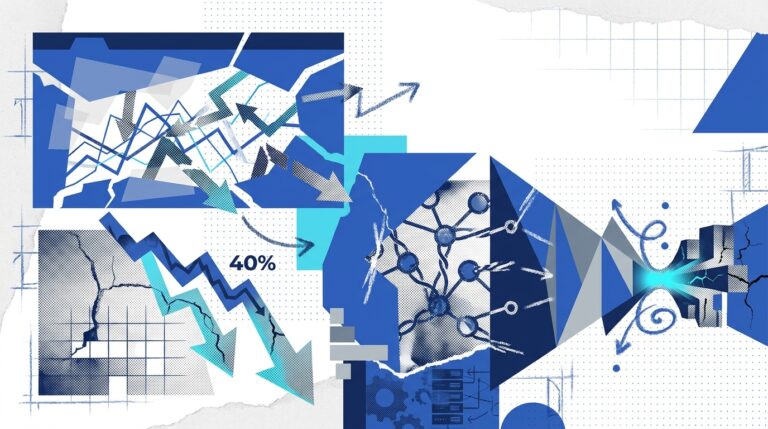
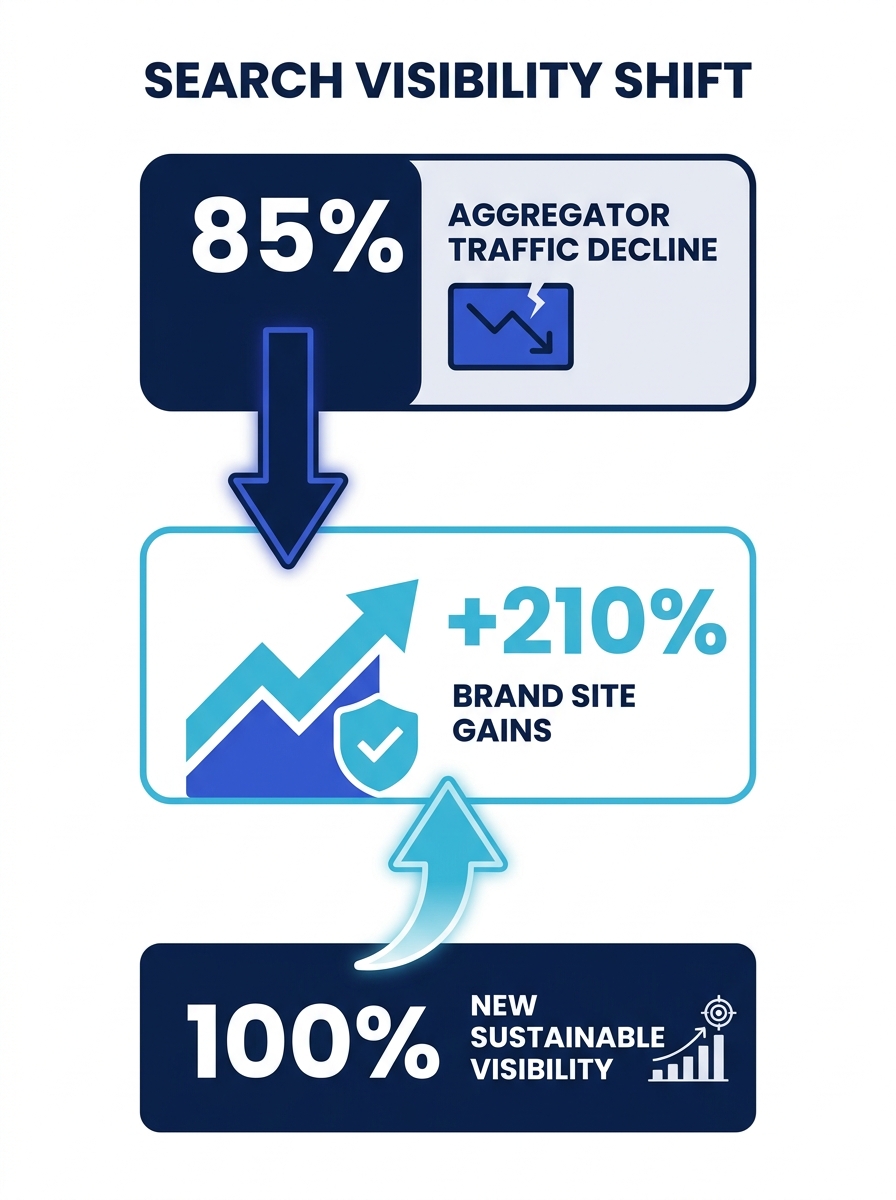
Google’s March 2026 core update redistributed search visibility from aggregator platforms and user-generated content sites to first-party brand domains and government sources, according to an analysis of over 2,000 websites tracked through the update window.
Lily Ray of Amsive examined visibility shifts between March 27, when the rollout began, and April 8, when it completed, using SISTRIX Visibility Index data and categorizing domains with Google Product Taxonomy tags, according to Search Engine Journal. The pattern appeared across travel, jobs, health, finance, and entertainment sectors: platforms that aggregate or comment on content lost ground, while sites that create or own the content gained.
The shift marks a measurable correction in how Google weights authority signals, favoring what Amsive described as “the company that owns the thing” over “the platform people use to talk about the thing.” SISTRIX measures keyword visibility rather than organic traffic directly, so other factors including click-through behavior and conversion paths can diverge from these rankings.
YouTube and Reddit Led Visibility Declines
YouTube recorded the largest single-domain drop in the dataset, losing 567 visibility points—roughly 30 percent larger than Wikipedia’s 435-point decline during the December 2025 core update. Ray noted that YouTube’s visibility fell back to its pre-March level rather than to a new low, suggesting the update reversed a short-term surge.
Reddit lost 64 points, Instagram 48, and X 46. The pattern held across aggregator categories: review platforms, job boards, and content curation sites saw material losses while brand-operated properties and government domains gained.
Category-Level Patterns in Travel, Jobs, and Health
In travel, online travel agencies and aggregator platforms declined while hotel chains and government tourism sites rose. TripAdvisor fell 45 points, Yelp 33, Expedia 33. Hilton gained four points, Hotels.com 3.6, Trivago 3.2. The National Park Service site gained 9.9 points and airport websites recorded large increases.
Jobs and education followed a similar trajectory. Job board aggregators declined while employer career pages and government employment sites gained. Indeed lost 18 points, ZipRecruiter 13. The Bureau of Labor Statistics site gained 5.4 points, USAJobs.gov rose 16 percent, Disney Careers 59 percent, CVS Health Careers 45 percent.
Health results split along authority lines. GoodRx gained 55 percent (9.5 points) and NIH.gov added 9.3 points, but Cleveland Clinic dropped 12 points, WebMD nine, and Mayo Clinic six. The data suggests Google weighted institutional medical sources over consumer health publishers, though this interpretation remains speculative without confirmation from the search engine.
Some Major Losers Recovered After Update Window
Ray observed that several high-profile losers regained visibility shortly after the April 8 completion date. Reddit and Indeed both saw visibility bounce back, indicating the loser rankings capture the update window but not where domains settled in the weeks following.
This bounce-back pattern complicates any single-snapshot assessment of which site types permanently lost or gained from the update. Marketing leaders evaluating their own sites should track visibility across a longer window than the 12-day rollout to understand whether changes held.
Alignment With Independent Research
The findings align with a Zyppy analysis of over 400 sites published earlier in April 2026. Cyrus Shepard’s research showed that sites offering products or services enabling task completion tended to gain organic traffic, supporting Amsive’s conclusion despite different methodologies. Shepard measured correlations with third-party traffic estimates while Amsive tracked SISTRIX visibility during the update window.
A SISTRIX analysis of German search data found similar results: online shops and utility sites lost ground while official websites and brand-operated properties proved more resilient. The cross-market consistency suggests the update applied algorithmic changes broadly rather than targeting specific niches.
Google has not detailed what changed in the March core update. The company confirmed the rollout window but provided no technical explanation for the visibility redistribution. Marketing teams briefing SEO agencies on technical SEO audits should treat the Amsive data as one visibility snapshot from the March-April period rather than a confirmed algorithmic cause.
Context and Outlook
Philippine marketing leaders overseeing SEO engagements should brief agency partners to audit visibility changes across the March 27 to late-April window, particularly if brand sites compete with aggregator platforms in travel, real estate listings, job boards, or health information. The pattern suggests Google weighted first-party expertise and content ownership more heavily, which affects how brands position themselves against third-party review sites or comparison engines.
This shift does not eliminate the value of appearing on aggregator platforms—reviews, job listings, and directory presence still drive discovery and social proof—but it changes the strategic calculus for organic investment. Brands that historically relied on aggregator visibility to capture bottom-funnel search may need to reweight content budgets toward owned properties and authoritative signals. Agencies should be prepared to explain how SEO strategy extends beyond traffic metrics to measure whether first-party visibility translates to qualified leads and conversion paths.
The bounce-back pattern Ray documented means any immediate response should account for post-update stabilization. Marketing directors evaluating whether to reallocate budgets based on March-April drops should wait for at least 30 days of post-rollout data before concluding a permanent shift occurred. The next core update will clarify whether this aggregator-to-brand pattern represents a sustained algorithmic direction or a one-time correction.