Google Expands AI Search Link Visibility as Core Update Data Shows Aggregator Decline
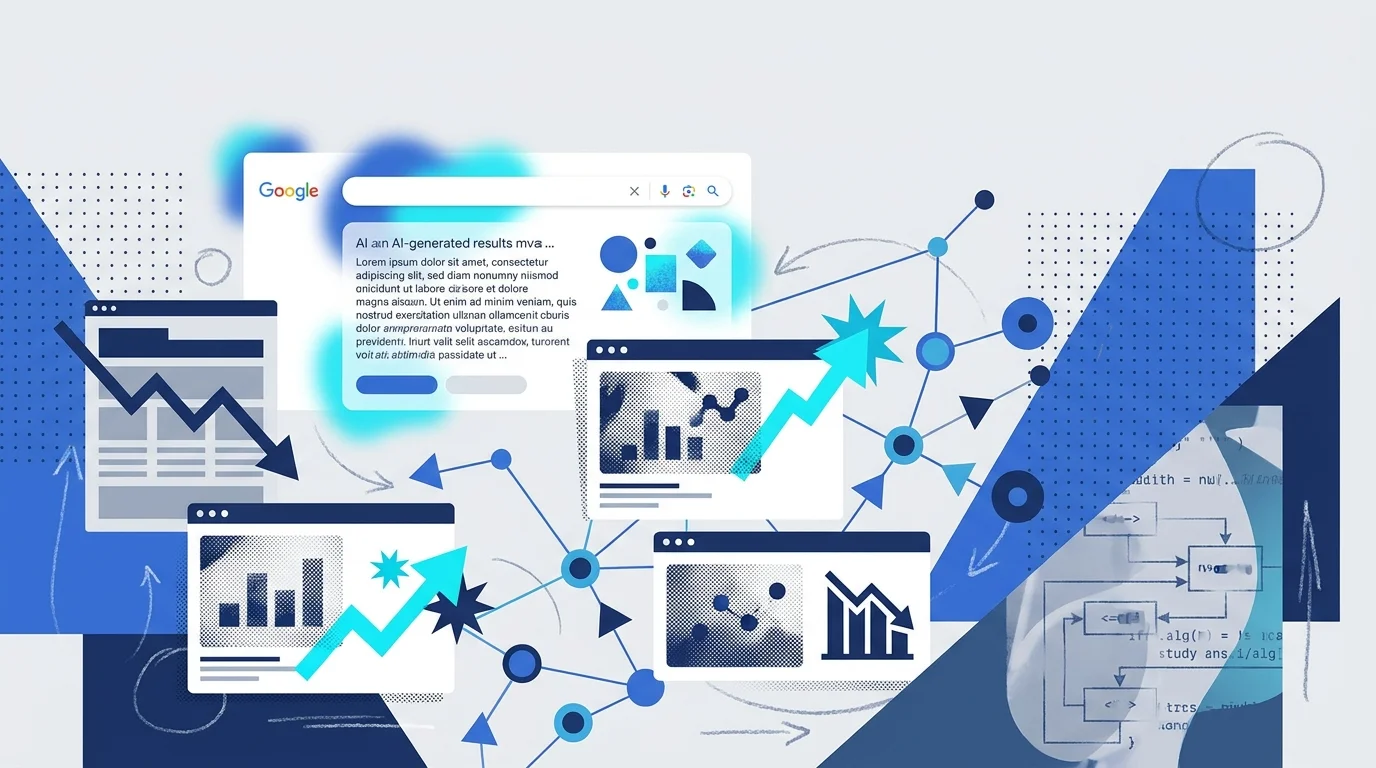
Google rolled out five changes to how links appear in AI Overviews and AI Mode while industry analysis revealed that aggregator platforms lost material search visibility in the March 2026 core update, according to Search Engine Journal’s weekly SEO roundup published May 8.
The updates introduce inline citations placed directly next to supporting text, additional links at the end of AI-generated responses, previews from public forum discussions, and desktop hover previews. Previously, most AI Overview citations clustered at the bottom of responses where they competed with one another and often went unnoticed.
Core Update Analysis Points to First-Party Brand Gains
Amsive examined over 2,000 domains using SISTRIX Visibility Index data following Google’s March core update. The analysis, led by Lily Ray, VP of SEO and AI Search at Amsive, found that user-generated content platforms and aggregators lost US search visibility while first-party brand sites and government domains gained.
YouTube recorded the largest single-domain drop at 567 SISTRIX visibility points—roughly 30% larger than Wikipedia’s December decline. Reddit lost 64 points, Instagram 48, and X 46. In the travel vertical, online travel agencies including TripAdvisor, Yelp, and Expedia declined while hotel chains gained ground. Ray noted that some platforms, including Reddit and Indeed, rebounded after the rollout window closed.
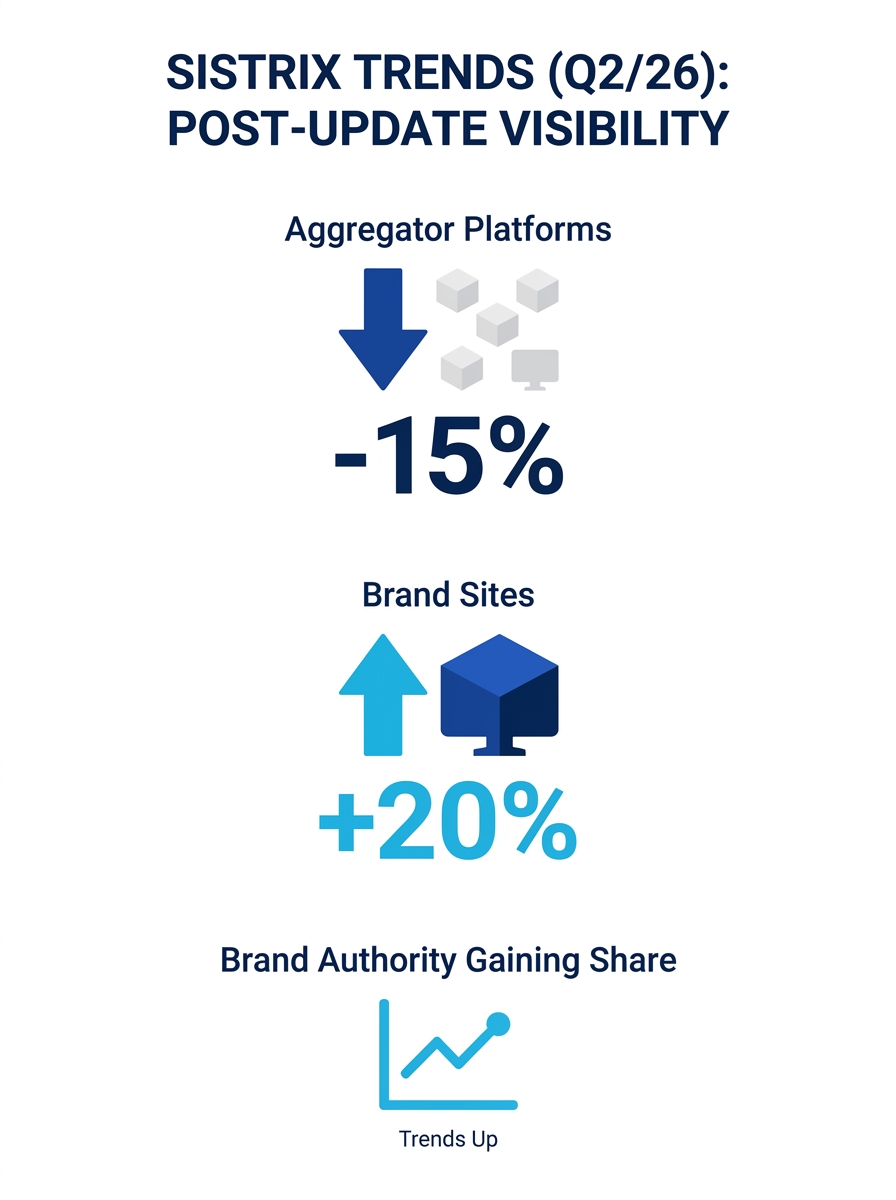
The data pattern shows domains owning products or services tended to gain visibility while platforms aggregating or discussing those offerings tended to lose it. Amsive characterized the shift as Google favoring “the company that owns the thing” over “the platform to discuss it,” though that interpretation reflects the agency’s view rather than Google’s stated intent.
Marketing leaders evaluating post-update performance should benchmark these category breakdowns against their own verticals. If a brand operates in travel, health, finance, or jobs, the Amsive dataset indicates whether the update affected the vertical broadly or a specific site individually. The March core update’s redistribution from aggregators to brand sites marked a continuation of Google’s multi-year pattern of elevating direct-source content.
Inline Citations Change Click Mechanics in AI Results
The inline link placement inside AI-generated answers could alter click distribution for pages cited in those results. Until this update, citations appeared primarily at the bottom of AI responses where they competed for attention. Positioning links adjacent to the text they support provides clearer attribution and potentially higher click-through rates for individual sources.
The addition of previews from public discussions introduces a new surface for content from Reddit, forums, and similar platforms. If a brand or product is discussed on those platforms, that content may now appear alongside AI-generated answers with the brand name attached, raising considerations around reputation monitoring and community engagement strategy.
Preferred Sources Expands Beyond English Markets
Google updated its Search Central documentation to reflect that the Preferred Sources feature now operates in all languages supported by Google Search. The feature allows users to designate publishers they want to see more frequently in Top Stories and Google Discover feeds.
Publishers can add a downloadable button to their sites—now available in translated versions—to let users set their preference. The feature functions as a user-controlled signal that works alongside Google’s existing ranking systems.
The expansion holds particular relevance for non-English markets where the feature was previously unavailable, limiting options for multilingual publishers operating across APAC, Europe, and Latin America.
Mueller Flags SEO Gaps in AI-Coded Sites
Google Search Relations team members John Mueller and Martin Splitt discussed vibe-coding websites in a recent Search Off The Record episode. Both found that AI coding tools could produce functional sites quickly but noted that getting SEO implementation correct required specific technical direction.
Mueller said vague prompts such as “add some SEO” produced vague results, comparing the experience to working with a developer who lacks search specialization. The sites Mueller built using Claude Code and Gemini CLI produced reasonable HTML structure but did not make informed decisions about canonicals, sitemaps, or crawlability without explicit instructions.
Mueller had previously reviewed a vibe-coded Bento Grid Generator on Reddit and identified issues with crawlability, obsolete meta tags, and content stored in JavaScript files that search engines could not access. The pattern suggests these tools handle front-end structure adequately but require detailed prompts to address technical SEO fundamentals that affect indexing and ranking.
Reading Between the Lines
The inline citation shift inside AI Overviews creates a testing window for brands that already appear in AI-generated answers. Marketing leaders should monitor whether link placement adjacent to supporting text drives measurable traffic changes compared to the previous bottom-of-response cluster. If citation click-through rates improve, the change rewards brands that establish entity clarity and topical authority strong enough to trigger AI citations in the first place.
The aggregator decline in the March core update reinforces a multi-quarter trend: Google appears to be devaluing platforms that compile or comment on products and services while elevating the brands that own them. For enterprise marketing teams, this creates strategic clarity. Investment in owned content infrastructure and domain authority carries more weight than placement on third-party discussion platforms or aggregator sites, particularly in verticals where OTAs, review platforms, and user-generated content hubs previously dominated results.
The Preferred Sources expansion into all languages shifts part of visibility control to users themselves, creating a channel that operates independently of algorithmic changes. Brands publishing in non-English markets should evaluate whether adding the Preferred Sources button generates enough user opt-ins to influence Discover distribution, particularly in markets where branded search intent and direct audience relationships already drive meaningful traffic.