Google Ads Changes Target CPA and ROAS Enforcement Starting August 17

Target CPA and Target ROAS campaigns in Google Ads will enforce stated performance targets more strictly starting August 17, ending a period when budget-constrained campaigns could significantly outperform their configured thresholds without triggering bid adjustments, according to an analysis published by Measured, an AI-powered marketing effectiveness platform.
TL;DR: Google’s bidding logic will move budget-constrained campaigns more consistently toward their stated Target CPA or Target ROAS, potentially reducing performance for campaigns currently outperforming targets unless advertisers adjust those targets before the August 17 deployment.
The change affects how Google interprets performance signals in campaigns using Target CPA (Cost Per Acquisition) or Target ROAS (Return on Ad Spend) bidding strategies when budgets limit delivery. Under the previous behavior, campaigns that delivered conversions below the target CPA or revenue above the target ROAS could maintain that outperformance indefinitely. The updated logic treats the configured target as a direct instruction rather than a flexible guideline.
How the Bidding Logic Shifts
Campaigns running Target CPA optimize bids to acquire as many conversions as possible at a specific average cost, treating each conversion as equally valuable. Target ROAS campaigns optimize to maximize revenue based on a target percentage return for each dollar spent. Both strategies have historically allowed performance to drift from the configured target when budget constraints prevented Google from scaling delivery.
The August 17 update changes that dynamic. Google’s bidding system will now move budget-limited campaigns more consistently toward the stated target, Measured’s analysis shows. Performance that previously exceeded targets may converge back toward the original CPA or ROAS figures unless marketing leaders adjust those targets before the change takes effect.
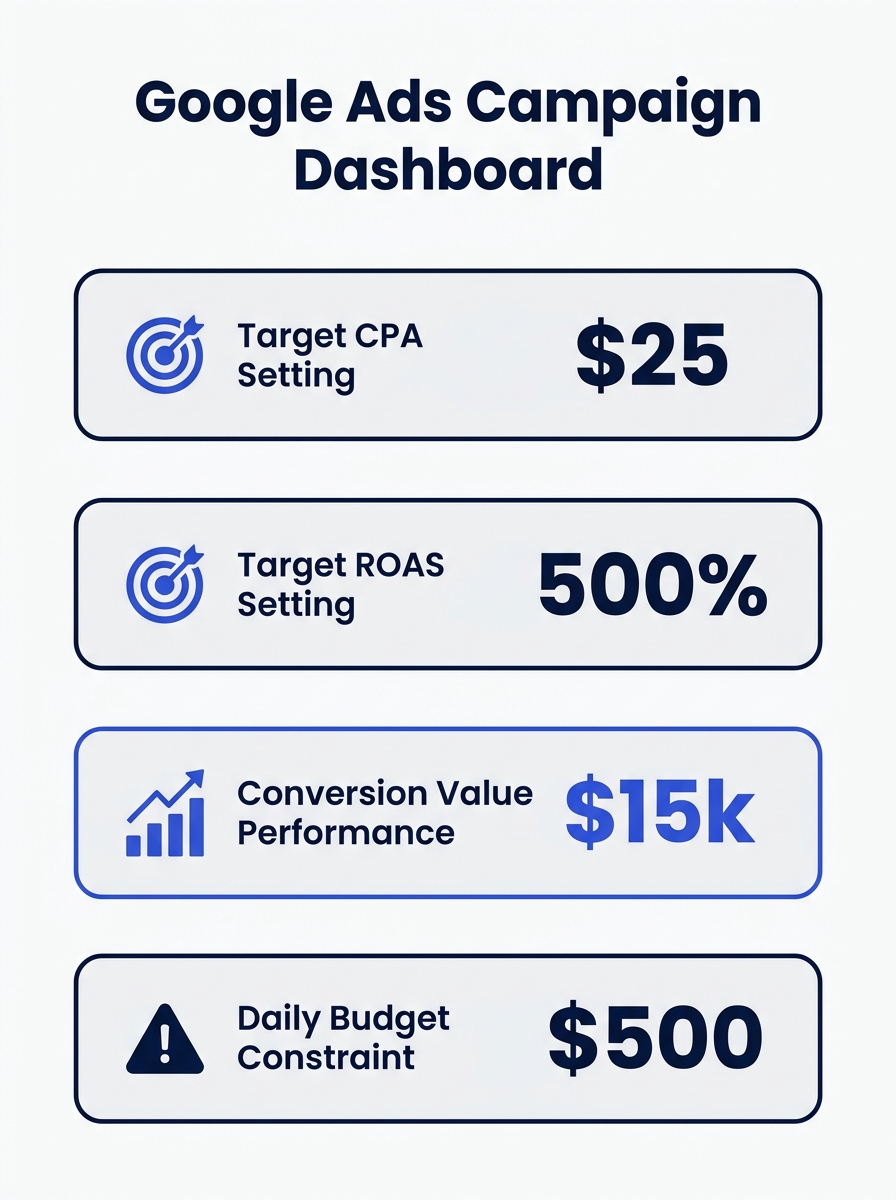
This represents a shift from treating targets as operational guardrails to treating them as direct performance instructions. Campaigns that have been functioning with targets set months or years ago—numbers that worked operationally but were not regularly reviewed—will begin behaving differently.
What Marketing Leaders Need to Review
The update is less about adjusting a bid setting and more about revisiting what the target represents in the context of current business objectives. A target that once served as a safety threshold may now dictate where and how additional volume is acquired, potentially changing placement mix, audience distribution, and customer quality even if campaign-level metrics appear stable.
Measured’s guidance emphasizes that more conversions or higher platform-attributed ROAS may not translate into incremental economic growth. Shifts in placements or audience composition could keep top-line efficiency metrics steady while altering marginal returns and the actual value delivered by new customers.
Marketing teams managing Google Ads management programs should document current spend levels, target settings, conversion volume, and inventory mix for affected campaigns before August 17. That baseline allows teams to measure whether changes in campaign behavior after the update represent incremental gains or simply redistribution of existing performance.
The recommendation is to adjust targets with intent rather than leaving legacy settings in place. Teams should evaluate incremental outcomes as Google’s new targeting behavior settles over the following conversion cycles, particularly for campaigns where budget constraints have historically limited scale.
Incrementality Measurement Becomes Central
The change makes incrementality measurement—understanding whether campaign adjustments generate new customers or reallocate existing demand—more important for evaluating paid media performance. Platform-reported metrics may remain consistent while the underlying customer acquisition dynamics shift.
Marketing leaders overseeing media buying services across multiple channels will need to monitor not just whether Google Ads campaigns hit their stated targets, but whether those targets still align with cross-channel ROI thresholds and marginal contribution goals. This follows earlier Google Ads changes this year that have increased focus on target compliance across the platform.
What Happens Next
Philippine enterprises running budget-constrained Google Ads campaigns—common in competitive categories like banking, insurance, and retail where daily budgets limit exposure—face a three-day window to audit current performance against configured targets. Marketing directors should prioritize campaigns where actual CPA runs significantly below the stated target or actual ROAS runs significantly above it, as these will experience the most material behavior change.
The August 17 deployment is mandatory and applies globally across all Google Ads accounts. There is no opt-out. Brands that defer target adjustments will see campaign behavior shift automatically, with no opportunity to preserve current performance levels through inaction.
For marketing leaders evaluating or briefing PPC management services, the update underscores the operational difference between setting a target and managing toward business outcomes. Agencies managing paid media programs will need to demonstrate not just adherence to platform-reported efficiency metrics, but evidence that target adjustments drive incremental customer value rather than simply reallocating spend within existing performance bands.