The PPC Metrics That Matter: How to Measure PPC Campaign Success
Pay-per-click (PPC) campaigns are a vital part of online marketing, especially for businesses aiming to attract more leads and customers. A large number of advertisers consider PPC a crucial component of their marketing strategy—and for good reason.
Google data shows that businesses typically earn about twice their ad spend in revenue. PPC advertisers are also significantly more likely to see meaningful increases in web traffic compared to those who rely on organic efforts alone.
However, measuring success can be tricky. Without a clear understanding of what to track and how to analyze your data, even a well-funded campaign can underperform.

This guide walks you through the essential PPC campaign metrics that teach you how to measure PPC performance, scale success, and ensure that your ad spend is working as hard as you are.
Why Measuring PPC Success Matters
Running a PPC campaign without proper measurement is like driving blind—you can spend, test, and guess, but you won’t know what’s actually moving the needle.
Accurate measurement tells you three critical things:
By tracking key PPC success metrics, you can identify which strategies deserve more budget and which ones need improvement.
Key PPC Metrics to Track for Better ROI
If you want to know how to measure PPC campaign success, it is imperative to understand that your PPC ROI starts with knowing which numbers to focus on. These PPC metrics serve as the foundation of every successful campaign analysis.
What is Conversion Rate and Why Does It Matter?
Your conversion rate shows the percentage of visitors who complete a desired action, such as filling out a form, subscribing, or making a purchase.
To calculate it, divide the number of conversions by the total number of ad clicks, then multiply by 100.
For example, if your ad receives 100 clicks and generates 5 conversions, your conversion rate is 5%.
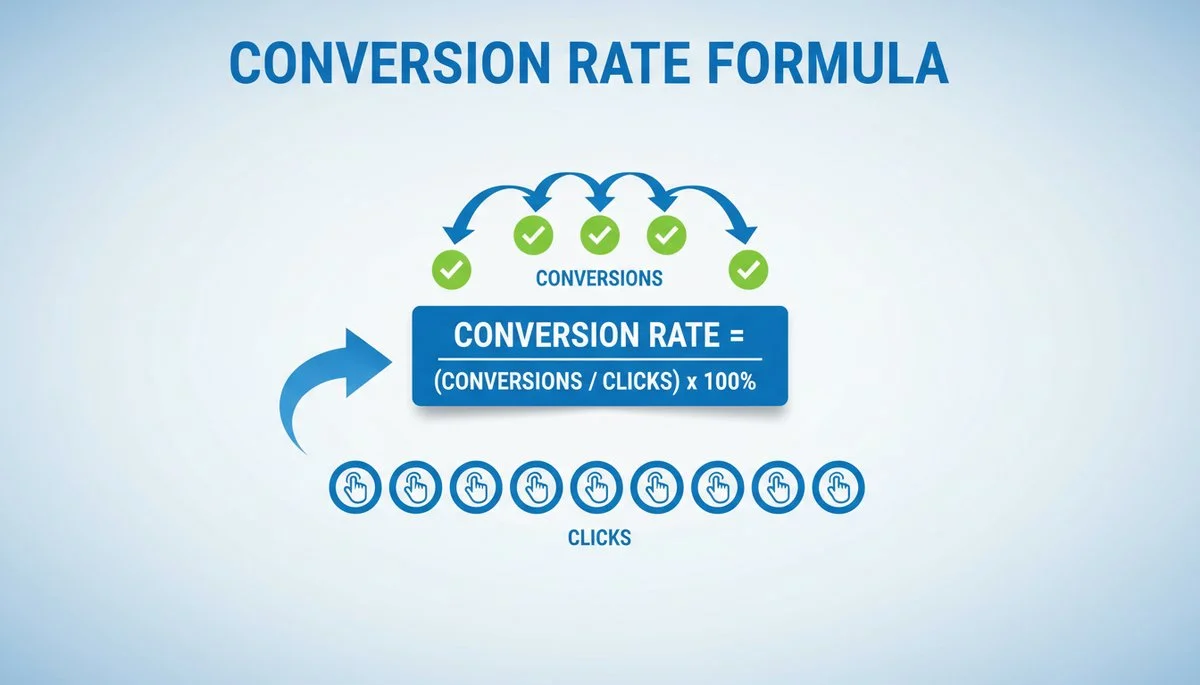
A higher conversion rate indicates that your ad copy, landing page, and call-to-action are effectively driving users to act.
How Do You Calculate Cost Per Conversion?
Cost per conversion tells you how much you’re paying for each successful conversion. It’s one of the most direct indicators of profitability.
To calculate this, divide your total campaign spend by the number of conversions.
If you spend ₱10,000 and generate 50 conversions, your cost per conversion is ₱200.
Lower cost per conversion means you’re getting better value for your ad spend—an essential factor in long-term PPC efficiency.
What Does Click-Through Rate Tell You About Your Ads?
Click-through rate (CTR) measures the percentage of people who click on your ad after seeing it. It’s a strong indicator of how compelling and relevant your ad is to your target audience.
To calculate CTR, divide the number of clicks by the number of impressions, then multiply by 100.
For example, if your ad gets 1,000 impressions and 100 clicks, your CTR is 10%.

A high CTR signals that your ad copy and targeting are capturing interest, while a low CTR may mean your messaging or audience targeting needs refinement.
How Does Quality Score Affect PPC Performance?
Quality Score measures how relevant and useful your ads, keywords, and landing pages are to users. Google uses this score to determine your ad position and cost per click.
The score ranges from 1 to 10, with higher scores leading to better placements and lower costs. It’s influenced by three factors: ad relevance, expected click-through rate, and landing page experience.
Improving your Quality Score often results in more exposure at a lower cost. Focus on crafting ads that match user intent, maintain keyword consistency, and deliver a landing page that fulfills the promise of your ad.
How Do You Measure Return on Investment (ROI)?
Return on investment (ROI) tells you whether your PPC campaigns are profitable. It compares your campaign’s total revenue against its total cost.
To calculate ROI, subtract your total ad spend from total revenue, then divide by total ad spend.

For example, if you spend ₱50,000 and earn ₱150,000, your ROI is 200%.
A higher ROI means your ads are generating strong returns, while a low ROI suggests a need to refine your targeting, creative, or landing experience. Consistently tracking google ads roi helps you pinpoint where your campaigns deliver true value.
What is Cost Per Click and Why is it Important?
Cost per click (CPC) measures how much you pay for every click on your ad. It’s one of the most important PPC campaign metrics because it affects both your reach and profitability.
To calculate CPC, divide your total ad spend by the number of clicks received.

For instance, if you spend ₱5,000 and get 2,500 clicks, your CPC is ₱2.
A lower CPC means you’re generating more traffic for the same budget. The key is balance—you don’t just want cheap clicks, but qualified clicks that convert.
What Do Impressions Tell You About Reach?
Impressions measure how often your ad appears on a search engine results page (SERP) or other ad placements. This metric gives you a sense of your campaign’s visibility—how many people are seeing your message, even if they don’t click.
While impressions alone don’t equal engagement, they provide valuable insight into how wide your reach is. Reviewing impression data helps you assess whether your targeting is broad enough or if your ads are competing effectively in the auction.
How Does Ad Position Affect Performance?
Ad position determines where your ad appears on the SERP, which directly influences visibility and click-through rate.
Higher ad positions generally drive more clicks and conversions, but they can also come with higher costs. Lower positions may deliver cheaper clicks but fewer conversions.
You can view your average ad position in your PPC platform’s dashboard. Consistently high positions signal good ad relevance and Quality Score, while declining positions may mean it’s time to revisit your bids or ad quality.
What Does Cost Per Thousand Impressions (CPM) Measure?
Cost per thousand impressions (CPM) tracks how much you pay for every 1,000 times your ad is displayed. This metric is particularly important for display and video campaigns, where the goal is often brand awareness rather than direct conversions.
To calculate CPM, divide your total campaign cost by the number of impressions, then multiply by 1,000.
For example, if you spend ₱10,000 and receive 1,000,000 impressions, your CPM is ₱10.
A lower CPM means you’re reaching more people for your budget, but remember—awareness campaigns should still align with engagement or conversion goals to measure overall effectiveness.
Why Track Engagement Rate in PPC Campaigns?
Engagement rate measures how many users interact with your ad, such as clicking, liking, commenting, or sharing. It’s especially valuable in social and video campaigns, where interaction signals audience interest.
To calculate engagement rate, divide total engagements by total impressions, then multiply by 100.
If your ad gets 1,000 impressions and 100 engagements, your engagement rate is 10%.
A higher engagement rate suggests your content resonates with your audience. If engagement is low, rework your creative or targeting to better match user intent.
How to Use These Metrics to Optimize Your Campaigns
Tracking your PPC success metrics is only the first step. The real value comes from interpreting the data and turning it into action.
Start by identifying which metrics align most closely with your goals. If your objective is brand awareness, prioritize impressions, CPM, and engagement rate. If it’s conversions or sales, focus on ROI, cost per conversion, and Quality Score.
Review your data regularly to spot trends. Are click-through rates climbing but conversions dropping? That could signal landing page friction. Are impressions strong but CTR low? Your ad copy might not be resonating.
Every metric tells part of the story—and together, they reveal where to adjust bids, improve creative, or refine targeting for better performance.
Optimization isn’t about chasing one “perfect” number. It’s about using data as a guide to keep improving results over time.
Final Thoughts
Measuring your PPC campaign’s success isn’t just about numbers on a dashboard. It’s about understanding what those numbers say about your audience, your strategy, and your growth potential.
By focusing on the right metrics, you’ll gain more than just data—you’ll gain clarity on what truly drives profit.
The best-performing PPC marketers aren’t the ones who spend the most; they’re the ones who measure the smartest.
So before launching your next campaign, ask yourself: Are you tracking what matters most, or just what’s easiest to measure?
Because in digital marketing, the brands that measure smarter are the ones that scale faster.