Real Estate Brands That Win at Digital Marketing in the Philippines

Real Estate Brands That Win at Digital Marketing in the Philippines
Real estate buyers do not move in a straight line. They discover a project, compare locations, look at price points, scan amenities, leave, come back, and often ask around before they ever fill out a form.
That is why digital marketing matters so much in property. A real estate brand is not just competing on location or inventory. It is competing on visibility, trust, clarity, and follow-through.
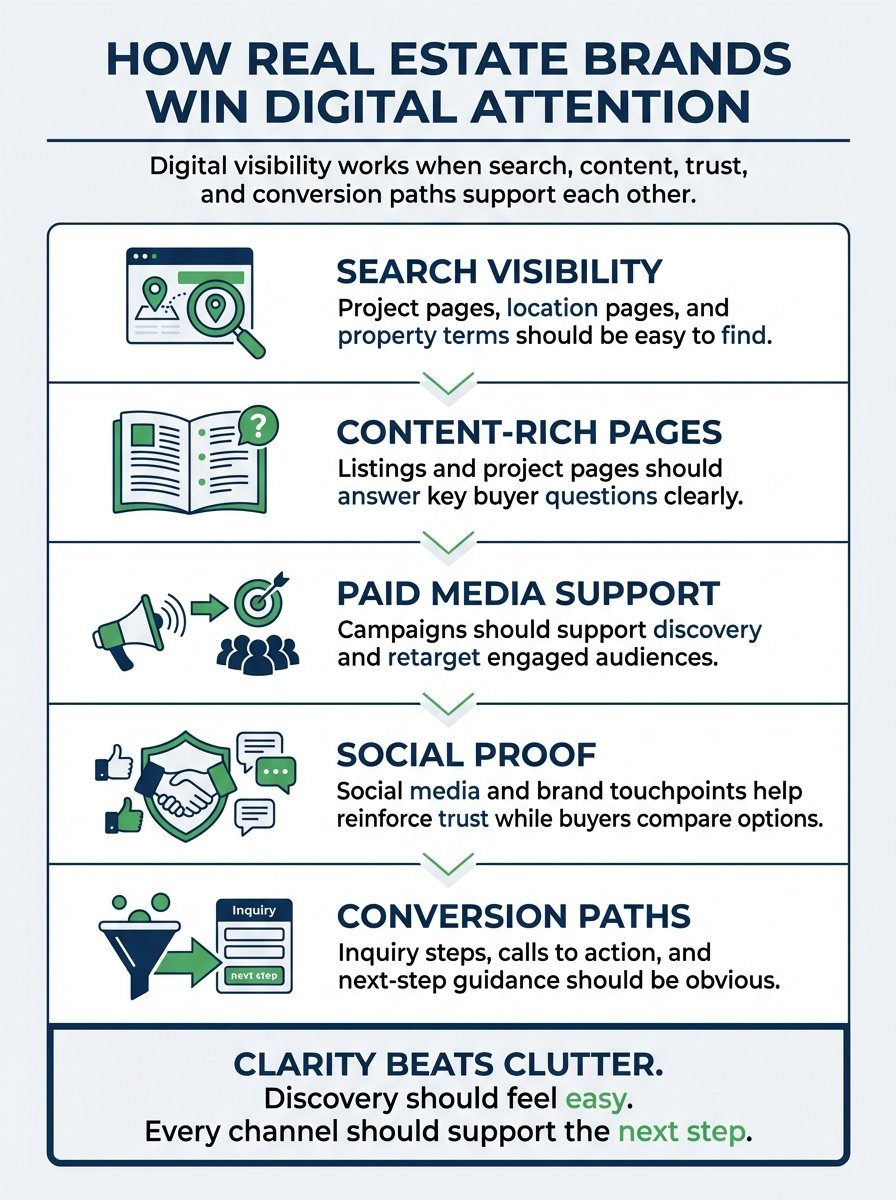
The brands that win online usually do a few things well at the same time: they make projects easy to find, make listings easy to understand, keep the brand visible across channels, and make the next step obvious.
This article looks at what strong real estate digital marketing actually looks like in the Philippine market, using visible examples from brands and platforms people already know.
Why Digital Marketing Matters for Real Estate Brands
Property decisions are high-consideration decisions. Buyers and renters need more than a quick product page. They need confidence.
For real estate brands, that usually comes from a mix of:
- strong search visibility for project and location terms
- clear property or project pages
- helpful supporting content
- social proof and recurring visibility
- a smoother path from discovery to inquiry
A real estate brand that is hard to find, hard to understand, or hard to contact will lose attention fast. That is why digital work in this category has to connect brand, performance, and user experience.
If the goal is stronger visibility from search, the foundation still starts with search engine optimization. If the goal is a fuller brand presence across content and channels, it also needs the right mix of content marketing and social media marketing.
What Strong Real Estate Digital Marketing Looks Like
Search-Friendly Project and Location Pages
Many property decisions start with a location, a property type, or a project name. That means real estate brands need pages that are easy to discover through search and easy to use once a visitor arrives.
Good pages usually do a few things well:
- they make the project or offer obvious
- they show the right details without forcing users to hunt for them
- they create clear pathways to related listings, projects, or next steps
That is where strategy matters. A scattered website structure makes campaigns harder to scale. A clearer structure supports better discovery, better landing pages, and better internal linking.
Content That Helps Buyers Compare Options
Real estate content should not stop at glossy project descriptions. Buyers compare neighborhoods, property types, payment options, and long-term value. The brand that helps them compare intelligently usually earns more trust than the brand that only pushes visuals.
That is why content planning matters in property marketing. Brands need useful supporting pages, not just sales pages. Truelogic’s guide to building a digital marketing strategy is a useful reminder that channel execution works better when the content path is planned in advance.
Paid Media That Supports Discovery, Not Just Awareness
Property marketing often needs paid media support because buyers do not always convert in one visit. Paid campaigns can keep developments, listings, and brand messages visible while the buyer is still evaluating options.
The key is using paid media to support the funnel, not to patch a weak website. Better landing pages, stronger messaging, and sharper audience segmentation make paid search campaigns more effective.
Segmentation That Matches Buyer Intent
A first-time condo buyer does not behave like a commercial tenant. A family looking for a house and lot does not behave like an investor comparing pre-selling opportunities.
That is why real estate brands need sharper targeting and messaging. Truelogic’s article on digital marketing segmentation applies cleanly here: when the audience is defined better, the content and channel mix usually gets better too.
Real Estate Brands and Platforms Worth Studying
Megaworld: Strong Brand-Led Project Presentation
Megaworld, as a major Philippine property developer, shows how a large real estate brand can use its digital presence to reinforce scale, location, and estate positioning.
The lesson here is not that every real estate company should copy a large developer’s look. It is that project and estate presentation needs to feel intentional. A strong real estate website should make it easy to understand what the brand is offering, where those offerings sit in the market, and why a user should keep exploring.
For smaller real estate brands, the takeaway is simple: clarity beats clutter. Users should understand the project, the place, and the next step fast.
Lamudi Philippines: Search-Led Property Discovery
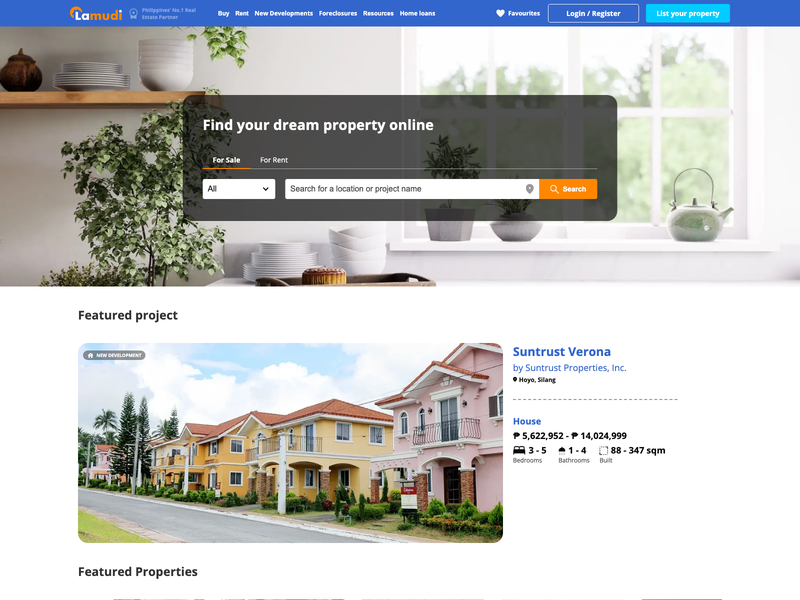
Lamudi Philippines is a strong example of what search-led property discovery looks like. The platform puts listings, locations, filters, and project visibility at the center of the user experience.
That matters because a lot of real estate demand starts with browsing, not brand loyalty. People search by city, budget, property type, or development stage. A platform that supports that behavior well creates momentum.
The strategic lesson for real estate brands is not that every company needs a marketplace-style site. It is that discovery must be easy. Even a developer or broker site should make it easy to move between property types, projects, and inquiry paths.
Ayala Land: Brand Storytelling and Estate Positioning
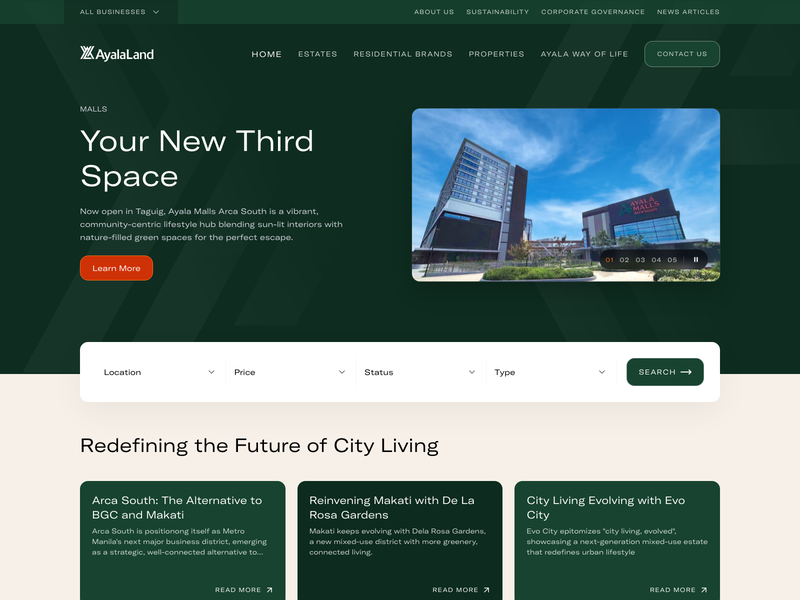
Ayala Land shows another side of strong digital presence. Its site does more than present inventory. It also builds a broader narrative around locations, estates, communities, and the brand’s role in shaping them.
That kind of storytelling matters in real estate because people do not just buy square meters. They buy access, convenience, status, neighborhood fit, and future value.
For marketers, the lesson is that not all real estate content should read like a listing. Some pages should help the brand frame the bigger story around the development, the area, or the lifestyle it supports.
Real Estate Marketing Strategies That Work Better Online
Build Better Landing Paths
Do not force every visitor through the same page. Real estate brands need landing paths for different search intents, audience segments, and campaign sources.
That means:
– location-focused pages
– project-focused pages
– offer or property-type pages
– campaign landing pages when needed
If budget allocation is part of the challenge, Truelogic’s article on digital marketing budget planning is a useful reference point.
Make Social Media Support the Search Journey
Social media matters in real estate, but not only because it increases reach. It helps reinforce credibility, keeps projects visible, and gives buyers more brand touchpoints while they are still thinking.
The strongest approach is usually not random posting. It is a content system where social media supports active campaigns, search demand, and project storytelling. Truelogic’s guide to social media best practices is relevant here because real estate brands often need consistency more than volume.
Use Content to Reduce Friction
Many inquiries die because users still have unresolved questions. Content can remove friction before sales has to step in.
Useful real estate content can include:
– location guides
– project comparisons
– property-type explainers
– financing or process primers
– lifestyle and community content tied to developments
The point is not to publish for the sake of publishing. It is to answer the questions buyers already have.
Common Mistakes Real Estate Brands Make Online
Treating the Website Like a Brochure
A polished-looking site is not enough if discovery is weak and next steps are unclear.
Sending Paid Traffic to Weak Pages
Paid media can amplify a bad experience just as easily as a good one.
Publishing Content Without a Content Path
If blog content, project pages, and campaigns do not support each other, traffic leaks.
Using the Same Message for Every Audience
Property seekers, investors, tenants, and families do not evaluate offers the same way.
Truelogic Takeaways
- Real estate digital marketing works best when brand, search, content, and conversion paths support each other.
- Strong project pages and location pages make discovery easier.
- Marketplace-style discovery patterns offer useful lessons even for non-marketplace brands.
- Real estate content should answer comparison and decision questions, not just describe properties.
- Segmentation and landing-page clarity matter more than broad, generic messaging.
Final Thoughts
The real estate brands that win online are usually not the loudest. They are the clearest.
They make it easy to discover projects, easy to compare options, and easy to take the next step. They treat digital marketing as a connected system rather than a collection of isolated tactics.
For property brands in the Philippines, that is the real opportunity: build a digital presence that helps people decide, not just browse.