Social Media Marketing for Resorts: What Actually Drives Attention and Bookings
Social Media Marketing for Resorts: What Actually Drives Attention and Bookings
Resorts have an advantage on social media. They already have the kind of visual material people want to look at: destinations, rooms, views, amenities, experiences, and guest moments.
But attractive content alone is not enough.
A resort social media strategy has to do more than look good. It has to help potential guests imagine the stay, trust the brand, compare the experience, and move closer to booking.
That is where many resort brands fall short. They post beautiful photos, but the content does not build a clear booking path. It generates attention without enough intent.
A stronger social media strategy for resorts should support the full journey: inspiration, consideration, trust, and conversion.
Why Social Media Matters for Resorts
Hospitality is highly visual, emotional, and experience-led. Social platforms fit that well because they help brands show what a stay feels like before a guest ever arrives.
That matters for resorts because social media can help with:
– brand discovery
– trust-building
– destination appeal
– seasonal demand generation
– offer amplification
– retargeting and repeat interest
In many cases, a resort is not just selling a room. It is selling atmosphere, status, convenience, relaxation, and the promise of a specific experience. Social content helps translate those ideas faster than plain promotional copy can.
That is why a stronger social media marketing strategy matters for hospitality brands. The work should not stop at posting. It should help move attention toward intent.
It also matters because resort demand is rarely flat. A property may need one type of content during peak vacation planning and another during quieter periods when offers, events, or local getaways need a stronger push. Social media becomes more useful when it reflects those changing moments instead of running on autopilot.
What High-Performing Resort Social Content Looks Like
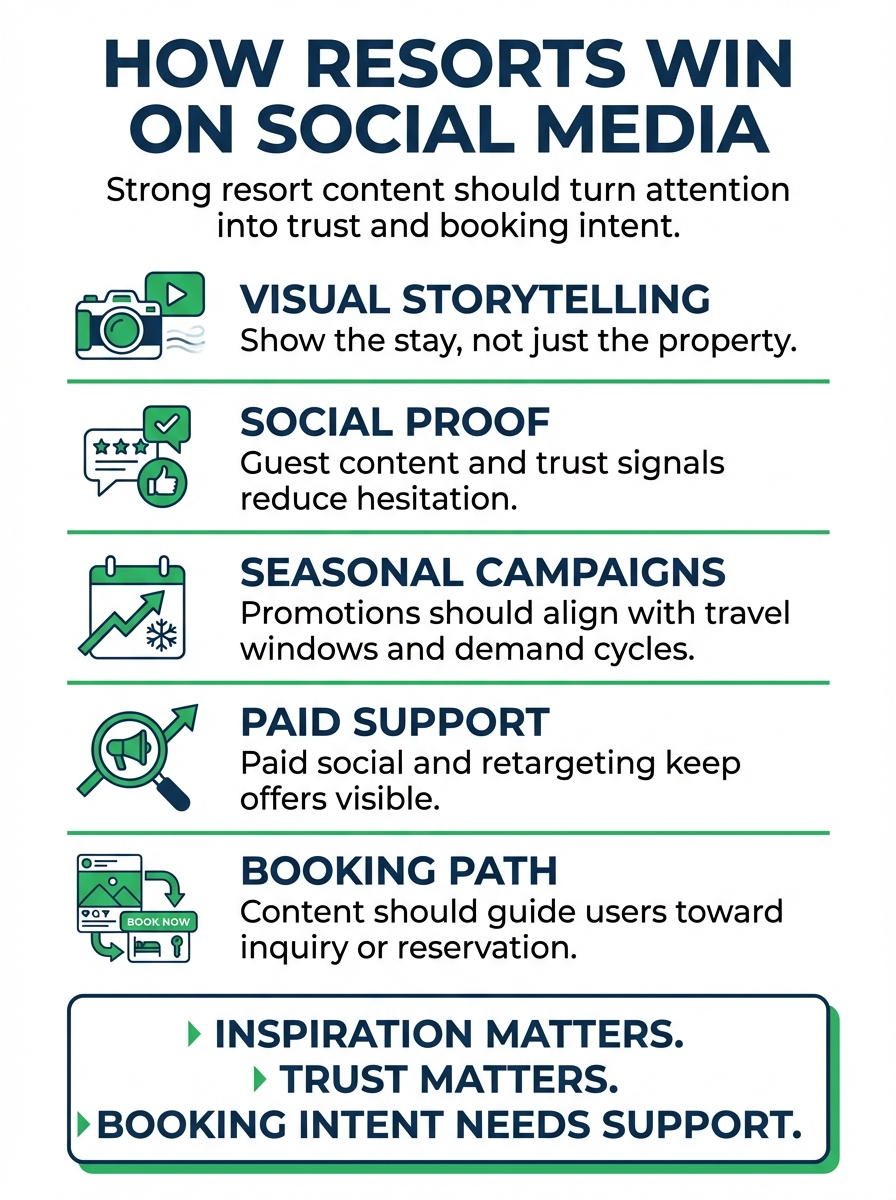
Strong resort content usually does three things well.
It Makes the Experience Easy to Imagine
Good hospitality content reduces distance between scrolling and imagining. The more easily a guest can picture themselves at the property, the stronger the content becomes.
That means the content should do more than show polished exteriors. It should help people feel the stay through:
– room context
– dining and amenity experience
– beachfront or location atmosphere
– moments that feel personal, not generic
It Builds Trust
Travel decisions are high-consideration decisions. Guests want signals that the property is credible, current, and worth the price.
That is why social strategy should include:
– recent content
– proof of guest activity or real on-site moments
– highlights of service and experience
– content that answers likely hesitation points
It Supports Booking Intent
Resort content works best when it connects inspiration to action.
A strong post can highlight an offer, a seasonal stay idea, a room type, a local attraction, or a guest benefit. But the strategy should also make the next step clear.
That is where many social calendars underperform. They entertain without guiding users toward inquiry or booking.
The content does not need to sound pushy. It does need to reduce friction. Guests should understand what to do next, why the offer matters, and why now may be a better time to book.
Content Pillars Resorts Should Use on Social Media
A better resort social strategy usually mixes several content types rather than repeating the same polished asset format.
1. Experience-Led Visual Content
This is the most obvious content pillar, but it still matters.
Use it to show:
– views
– amenities
– room experiences
– dining moments
– spa and leisure features
– destination atmosphere
The key is variation. If every post feels like the same generic resort shot, the brand starts to blur into competitors.
A good visual strategy should show different angles of the stay: quiet luxury, family convenience, food, service, scenery, and moments that feel shareable. The goal is not just beauty. It is memorability.
2. Guest-Centered Content and Social Proof
Potential guests trust other guests.
That is why user-generated content, testimonials, reviews, reposted guest moments, and behind-the-stay perspectives can be so effective. They create a stronger layer of credibility than polished brand visuals alone.
This does not mean reposting everything. It means curating social proof that reinforces the guest experience and the kind of stay the resort wants to be known for.
For resorts, this can be especially powerful because people often need reassurance before they spend on travel. Social proof lowers uncertainty in a way promotional copy alone cannot.
3. Seasonal and Offer-Based Content
Resorts live in cycles: peak travel windows, school breaks, long weekends, wedding periods, local holidays, and promotional seasons.
A strong content plan reflects that reality.
Instead of posting in a flat routine, the strategy should highlight:
– seasonal travel moments
– package offers
– family or couple escapes
– local-event timing
– urgent but credible reasons to consider a stay now
This is where paid support often helps. Organic content creates interest. Paid distribution helps the right offer reach the right audience at the right time.
4. Local and Destination Content
Many guests are not just buying the property. They are buying the destination around it.
That is why resort brands benefit from content about:
– local attractions
– nearby experiences
– travel moments around the stay
– destination mood and context
This kind of content also supports a broader content marketing strategy because it gives the brand more angles to speak from than pure room promotion.
Destination content also helps extend the content calendar. Instead of repeating property shots, the brand can connect the stay to local experiences that make the resort feel more complete and desirable.
What Resort Brands Can Learn From Strong Hospitality Presentation
Large hospitality brands often show how digital experience can support desire and trust.
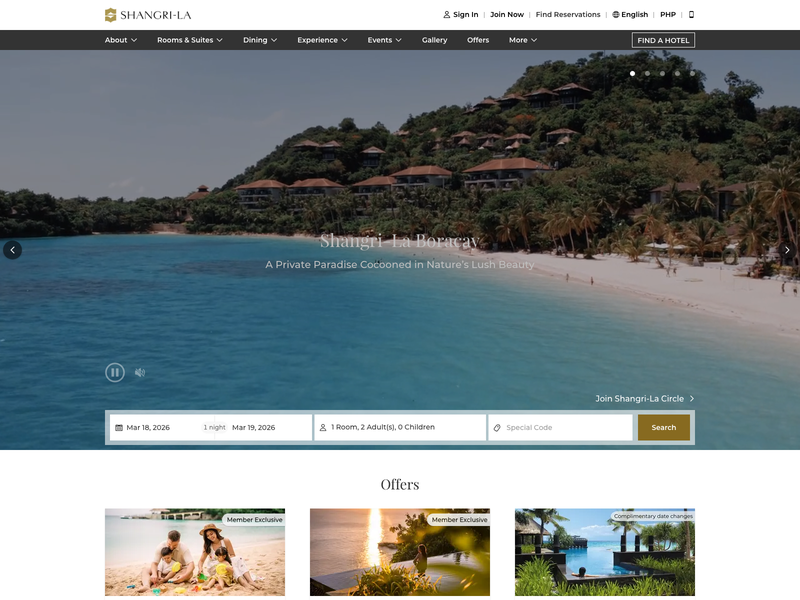
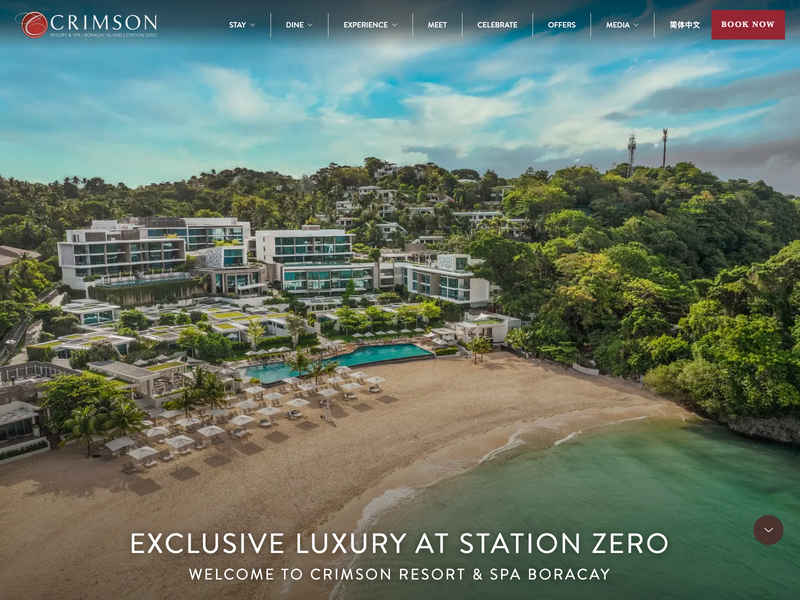
For example, the visible presentation on sites like Shangri-La Boracay and Crimson Resort & Spa Boracay reinforces atmosphere, visual quality, and stay appeal. The lesson is not that every resort should copy luxury-brand design. The lesson is that social content should reflect a clear experience promise.
If a resort’s social presence feels disconnected from the actual property experience, the content loses power. The strongest brands make the promise feel consistent across channels.
Paid Social and Retargeting Matter More Than Many Resorts Realize
Organic content is important, but it rarely does the full job alone.
Resorts often need paid support for:
– seasonal campaigns
– package promotion
– retargeting people who viewed rooms or offers
– keeping the brand visible during the consideration window
A user may discover a property once, compare several options, leave, and return later. A stronger paid strategy helps the brand stay present during that delay.
That is where Google ads management and paid social can complement each other instead of operating in separate silos. Paid search captures intent. Paid social helps build it, reinforce it, and re-engage it.
A practical resort strategy often works best when organic content, boosted visibility, and remarketing are planned together. Otherwise, the brand ends up with content that looks active but does not consistently support bookings.
Email and Follow-Up Still Matter
Social media can create attention. It does not replace follow-up.
For resorts, conversion often improves when social activity connects to:
– inquiry capture
– remarketing audiences
– email nurture sequences
– offer reminders
– stay-related follow-up
A resort brand that generates interest but has weak follow-up leaves money on the table. That is why stronger email marketing often belongs in the wider hospitality strategy, especially for promotions, repeat guests, and limited-time offers.
This is also where segmentation matters. A honeymoon offer, a family package, and a local staycation promotion should not all be pushed with the same message. A better resort strategy uses audience context to shape both content and follow-up.
Common Social Media Mistakes Resorts Make
Posting Only Beautiful Photos
Attractive visuals matter. A feed made entirely of polished beauty shots eventually becomes repetitive.
Ignoring the Booking Journey
If content inspires but does not support the next step, performance weakens.
Using the Same Message All Year
Seasonality matters in hospitality. Campaign timing should reflect that.
Treating Social Media as a Standalone Function
The strongest strategy connects social with content, paid media, remarketing, and follow-up.
Forgetting Audience Segmentation
Families, couples, luxury travelers, local staycation guests, and event-driven travelers do not all respond to the same message. A stronger strategy accounts for those differences. That is why audience segmentation matters even in hospitality.
Truelogic Takeaways
- Resort social media should do more than look beautiful.
- The best content helps guests imagine the experience and trust the brand.
- Social proof and guest-centered content strengthen credibility.
- Seasonal campaigns and paid support help connect content to booking intent.
- Resorts perform better when social media works as part of a wider marketing system.
Final Thoughts
Social media marketing for resorts works best when it is tied to the guest journey.
A stronger strategy uses visual storytelling to build desire, social proof to build trust, and paid support plus follow-up to move attention closer to inquiry and booking.
The goal is not to post more. The goal is to make social media contribute more clearly to the business.