Best SEO Tools for Small Businesses
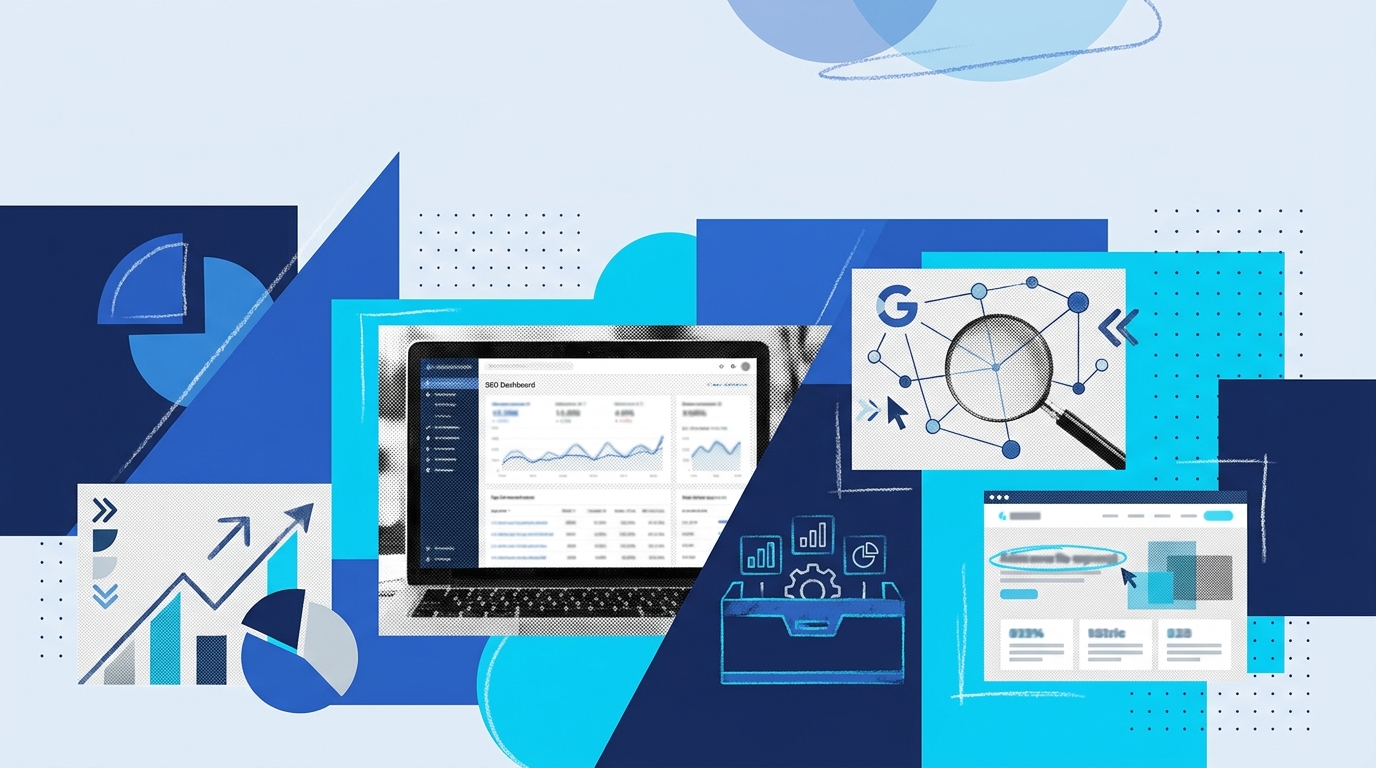
Google Search Console and GA4 cover the majority of what a small business requires for SEO diagnostics, and they cost nothing. The remaining gaps in keyword research, competitor analysis, and backlink monitoring fill effectively with seo tools small businesses can get for under $50 per month, including SE Ranking, Mangools, and Ubersuggest.
Free Tools That Most Small Businesses Install and Then Ignore
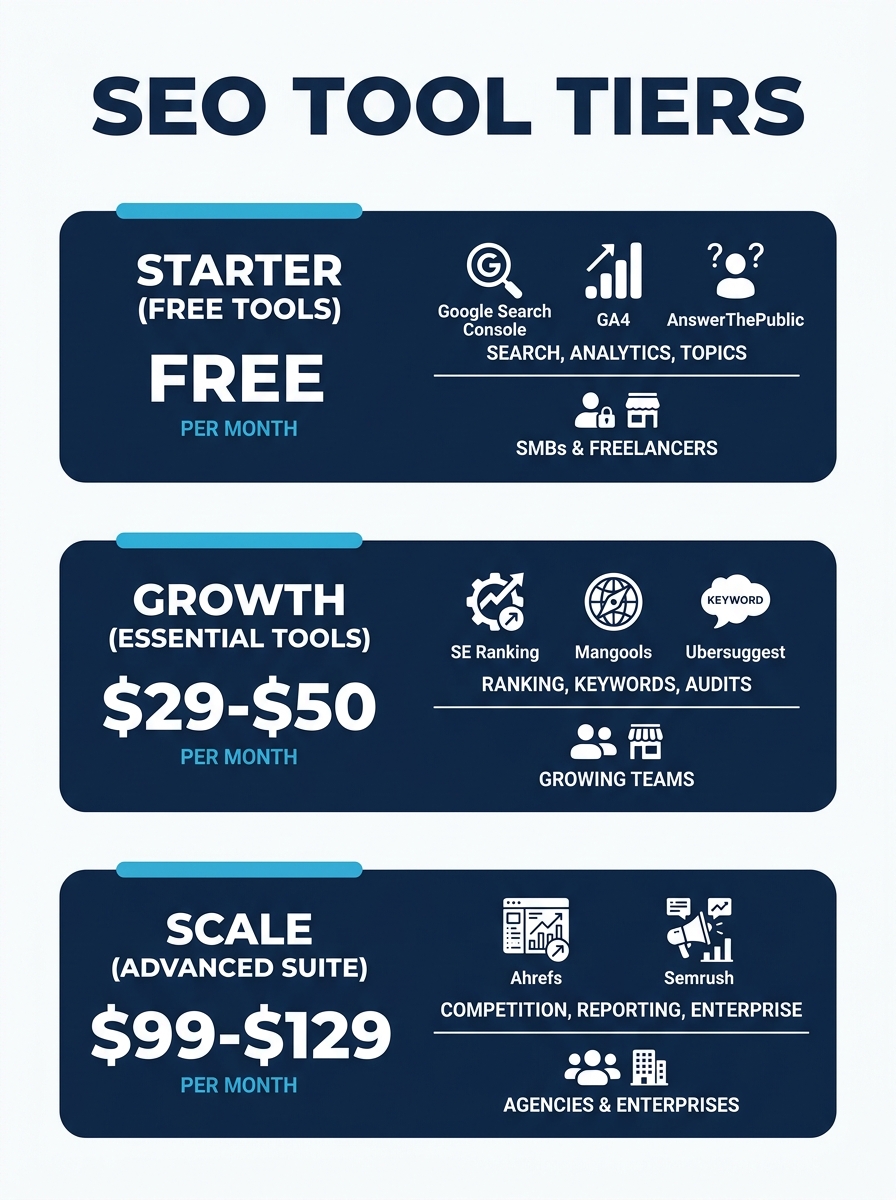
Google Search Console provides click data, impression counts, average position tracking, and index coverage reports for every URL on a site. GA4 layers on user behavior data: session duration, engagement rate, and conversion tracking. Together, these two free platforms answer the diagnostic questions that small businesses encounter most often, including which pages attract clicks, which keywords drive impressions, and where technical errors block indexing. According to a 2026 breakdown by Poppy Marketing and Consulting, these free tools form the foundation even for businesses that later upgrade to paid suites.
The persistent problem is underuse. GSC’s Performance report surfaces keyword opportunities that paid tools charge monthly fees to approximate, yet a surprising number of small business owners check it once during setup and never return. When a page shows 2,000 impressions but only 15 clicks, that gap signals a title tag or meta description problem requiring no additional software to diagnose. Knowing how to triage technical SEO fixes starts here, with data Google already hands you for free. Businesses that skip this step and jump straight to a paid keyword tool are paying for answers they already have.
AnswerThePublic and Ubersuggest both offer limited free tiers that complement GSC and GA4. AnswerThePublic generates question-based keyword variations around a seed term, useful for identifying content gaps a blog or FAQ page can fill. The U.S. Chamber of Commerce’s guide to free SEO tools highlights similar free options for small business owners new to search optimization. Free accounts typically cap at 3 to 5 searches per day, which works fine when managing a single website with a focused service area. The constraint is volume, not quality: the data these tools return is the same data their paid plans surface.
For local businesses in the Philippines, Google Business Profile functions as a de facto SEO tool on its own. Consistent NAP (name, address, phone) data, regular review responses, and weekly post updates all feed signals that affect local pack rankings. A small restaurant or clinic that maintains its GBP listing with accurate hours, fresh photos, and service descriptions gets more local visibility than one spending on a keyword tool it never opens. This is especially true after Google’s May 2026 core update, which practitioners reported redistributed visibility toward entities with strong, consistent signals across Google properties.
Budget Tools and the $29-to-$50 Sweet Spot
SE Ranking runs $44 per month, Ubersuggest $29 per month, and Mangools $29 per month. All three deliver keyword research, rank tracking, site audits, and basic competitor analysis. The meaningful differences lie in interface preferences, backlink index depth, and how each platform handles keyword clustering. For a business running one or two domains, any of the three covers the full cycle from keyword discovery through rank monitoring without requiring a second subscription.
KWFinder from Mangools is particularly well-suited for small businesses because it surfaces keyword difficulty scores alongside search volume, helping users identify terms they can realistically compete for. The Mangools suite bundles five tools under a single login: KWFinder, SERPChecker, SERPWatcher, LinkMiner, and SiteProfiler. That coverage handles everything from initial research through ongoing monitoring. For a Philippine SMB running a services site and a blog, this kind of bundled access eliminates the friction of switching between three or four separate dashboards to assemble a single keyword brief.
Ubersuggest has built a specific following among practitioners who run client-facing audits. One SEO consultant documented her workflow after testing three budget tools, noting she still uses Ubersuggest for client SEO audits despite subscribing to more expensive platforms, because the way it structures keyword variations makes clustering and prioritization faster. The tool generates hundreds of keyword variations for any seed term, organized so users can pick the version that’s easiest to rank for. When a small business has limited hours per week to dedicate to SEO, that kind of sorting matters more than whether the tool indexes 40 billion pages or 50 billion.
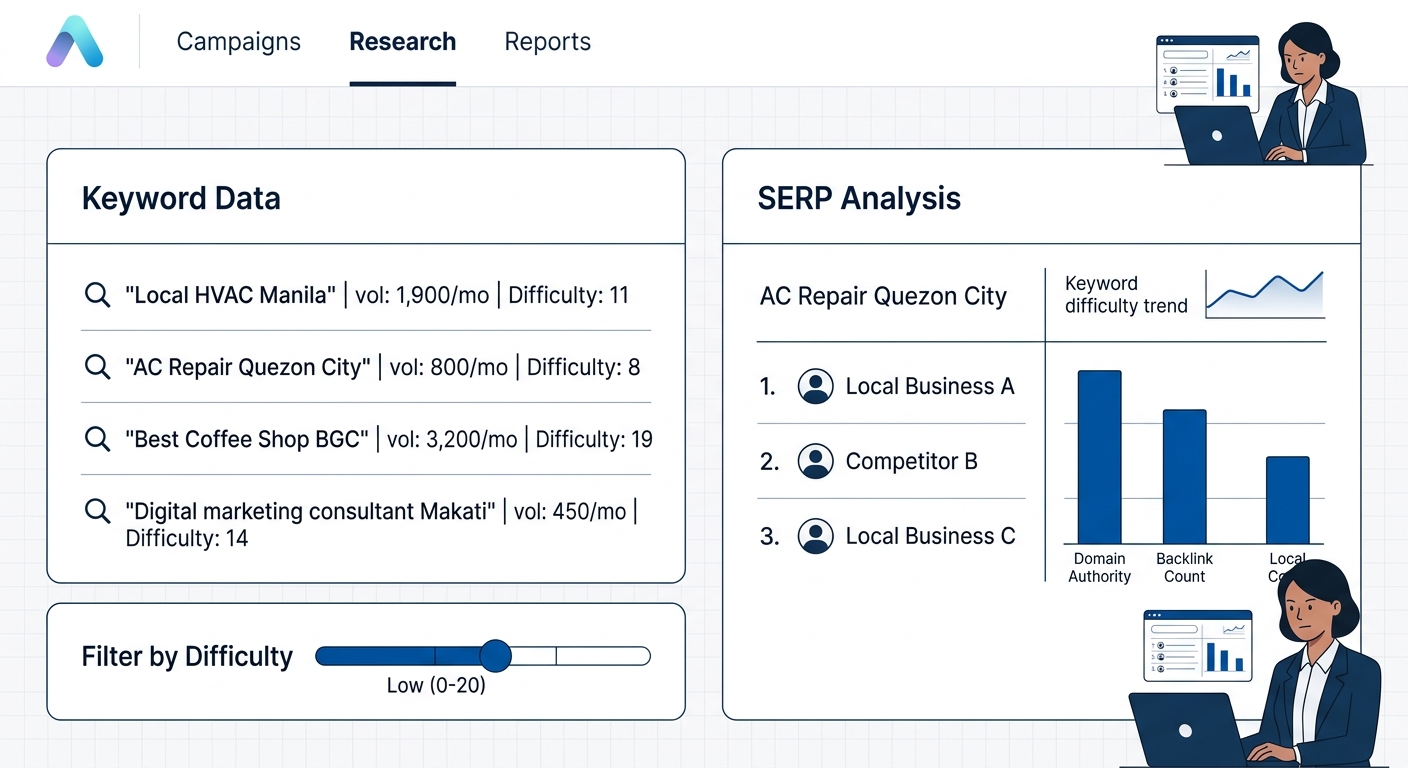
There’s a framework worth applying before committing to any of these subscriptions: evaluate the tool on coverage, action density, and time fit. Coverage asks how many of the diagnostic questions you actually face the tool can answer. Action density asks how many of those answers translate into specific changes you can make to your site, content, or link profile. Time fit asks whether the learning curve matches the hours you’ll realistically spend in the tool each month. A $44/month platform that covers 90% of your needs but sits unused because its interface takes 4 hours to learn delivers less value than a $29/month tool that covers 70% of your needs and takes 30 minutes to start using. Small businesses consistently over-index on feature breadth and under-index on actual usage patterns.
Professional Platforms and the Scale Question
Ahrefs at $129 per month and Semrush at comparable pricing represent the professional tier. Both platforms maintain massive backlink indexes, support multi-site management, offer content gap analysis, and now include AI visibility tracking features designed to monitor brand mentions in AI-generated answers from platforms like ChatGPT and Perplexity. That last capability matters: current data shows AI Overviews reduce traditional organic clicks by over 34%, meaning that showing up in an AI-generated answer can be worth more than a position-five ranking on a standard results page.
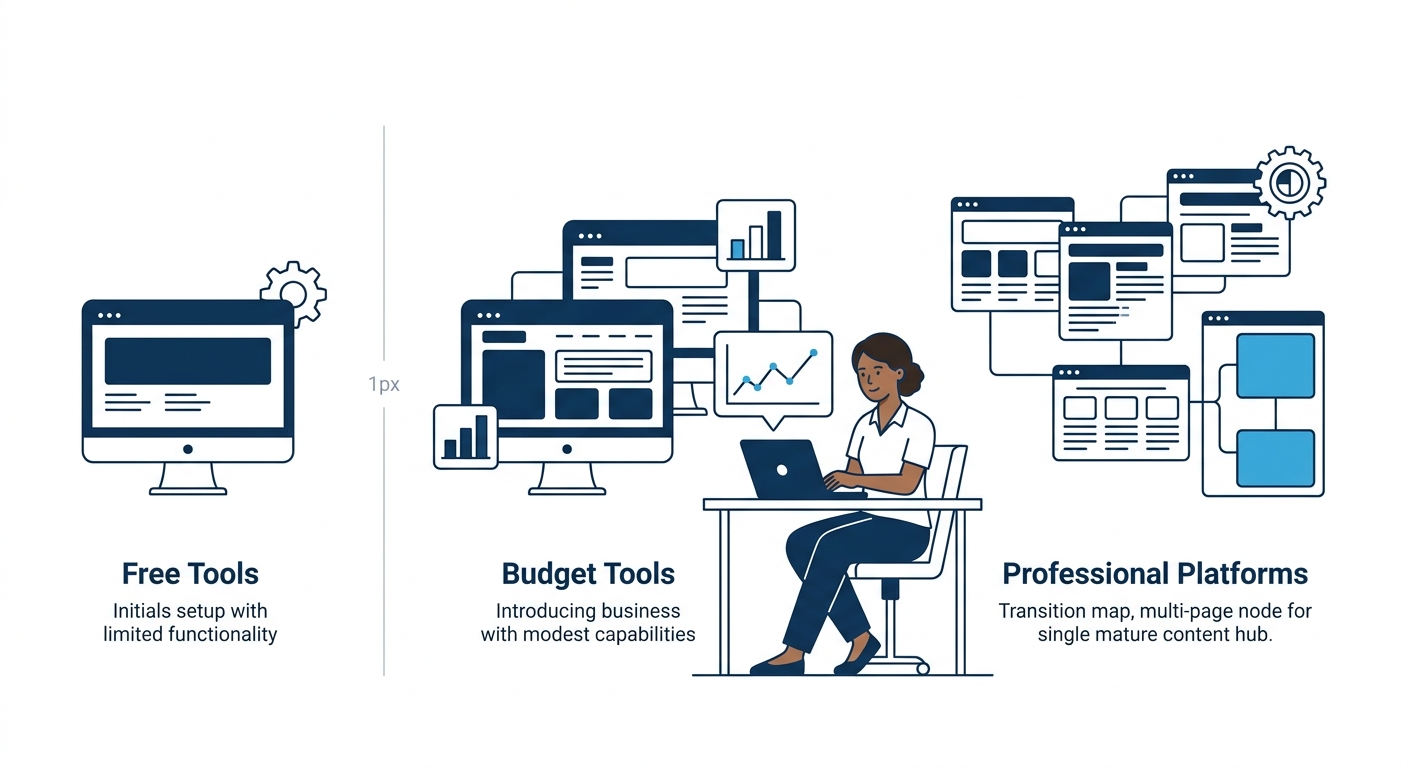
The question for small businesses is whether that capability justifies the cost. A company managing 5 or more client websites, or a growing ecommerce operation with thousands of product pages, will extract real value from the backlink depth, the crawl limits, and the competitive analysis features these tools provide. If you’re an agency offering B2B digital marketing services or managing digital marketing for online retailers, the professional tier pays for itself through workflow efficiency. But a single-location service business with a 20-page website and a blog won’t use 80% of what these platforms offer, and the unused 80% costs the same as the useful 20%.
Evaluate every SEO tool on three axes: how many diagnostic questions it answers, how many of those answers lead to specific site changes, and whether the learning curve fits the hours you’ll actually spend using it.
There’s also a timing component. Businesses that reach 50 or more indexed pages, publish content weekly, and compete in categories with established players reach a natural inflection point where GSC and a budget keyword tool no longer surface enough competitive intelligence. At that stage, the backlink gap analysis and content opportunity features in Ahrefs or Semrush start producing insights that budget tools miss entirely. The sign that you’ve hit this inflection point is when your existing tool shows you what you already know rather than surfacing something you didn’t expect. Understanding the relationship between high-traffic pages and actual conversions often requires the kind of segmented analysis only professional tools handle well.
The AI visibility dimension adds urgency to this timing question. Semrush and Ahrefs both introduced features in 2025 and 2026 that track whether a brand appears in AI-generated summaries across search engines and chat platforms. For businesses whose categories are heavily affected by AI Overviews, understanding this new surface area of visibility could be worth the premium. For businesses in categories where AI Overviews rarely trigger, the feature is interesting but not actionable. The right answer depends on running a few test queries in your core keyword set and seeing how often an AI-generated answer appears above the traditional results. If it happens on more than a third of your priority terms, the professional tools’ AI tracking features become relevant faster than you might expect.
What the Tool Decision Actually Reveals
The choice of SEO tools tends to function as a proxy for a more fundamental question: does this business have a process for acting on SEO data, or is it collecting data as a substitute for action? Small businesses frequently invest in tools before establishing even basic workflows for content updates, technical fixes, or internal linking improvements that compound organic growth. The tool then becomes a dashboard people glance at rather than a system that drives decisions.
This pattern explains why the free tier works so well for certain businesses and why the professional tier disappoints others. A business that checks GSC weekly, updates title tags based on impression-to-click ratios, and publishes one targeted piece of content per month will outperform a competitor paying $129 per month for a platform it opens quarterly. The tool is an input to a workflow, and without the workflow, the input goes nowhere. Businesses that produce long-form content between 1,500 and 2,500 words, answer specific user questions, and structure pages for both human readability and search engine extraction consistently outperform those chasing tool-derived keyword lists without a publishing cadence to support them.
What remains genuinely uncertain is how the AI visibility question will reshape tool requirements over the next 12 to 18 months. If AI-generated answers continue absorbing clicks at the 34% rate current data suggests, the free and budget tiers may lose some of their sufficiency for even small businesses, because monitoring your presence in AI answers requires data pipelines that Google Search Console doesn’t yet provide. That potential shift doesn’t mean every small business should upgrade today. It means the tool decision, which has been relatively stable for years, may need revisiting sooner than anyone comfortable with their current stack would prefer. The businesses best positioned will be the ones that have already built the habit of acting on whatever data their current tools provide, because adapting to a new tool is straightforward when you already know what questions you need answered. The harder transition is from having no process to having one, regardless of what software sits underneath it.