Marketing Leaders Running YouTube Ads Like Search Campaigns Face Four Structural Failures That Burn Budget Before Creative Ever Launches
Marketing teams running YouTube campaigns with the same attribution and creative strategies that work for Search advertising consistently burn through budgets without generating measurable return, according to an operational framework published August 26 by Search Engine Journal that identifies four structural gaps paid media leaders must address before launching video advertising.
TL;DR: YouTube campaigns fail when businesses apply last-click attribution models, recycle social creative, underfund initial testing budgets, or run complex offers that require extended consideration periods—four operational gaps that guarantee wasted spend before any creative runs.
The framework targets a persistent operational mistake: treating YouTube as an extension of existing Search or Meta accounts when the platform operates on fundamentally different demand-capture mechanics. Search captures users mid-decision already typing solutions into a query box; YouTube interrupts viewing sessions users chose to watch, rewarding patience over urgency.
The four failure conditions appear consistently across businesses that struggle with YouTube, according to the analysis. When these gaps exist, campaigns cannot secure meaningful budgets because early-stage performance reads poorly on attribution dashboards even when the channel drives downstream results.
Attribution Models That Credit Only Last Click Miss YouTube’s Downstream Effect
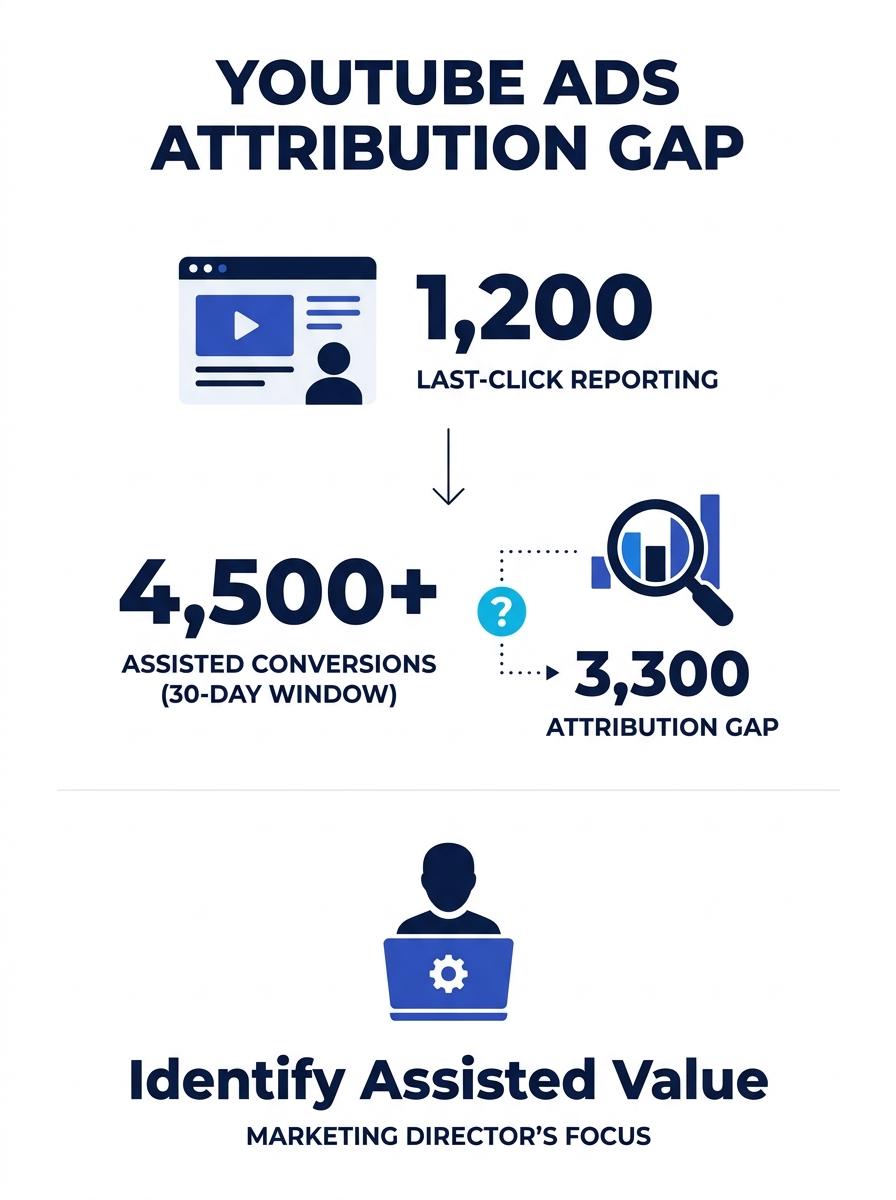
Reporting dashboards that rely strictly on single-touch or last-click conversion tracking judge YouTube poorly before campaigns launch, the framework shows. YouTube viewers rarely interrupt entertainment or information-seeking sessions to buy immediately, even when an offer resonates.
YouTube’s effect appears downstream instead: direct website visits rise over 14 to 30 days as viewers return on their own terms, branded search volume climbs as campaigns build category recall, and retargeting conversion times compress for prospects already sitting in funnels.
Google made Attributed Branded Searches globally available as a Google Ads reporting metric on June 29, 2026, after a limited beta the previous year. The metric tracks how many people exposed to an ad search for the promoted product within a one- to 30-day window, tying each additional branded search to increased sales.
Demand Gen’s view-through conversion optimization, released in April 2026, goes further by letting bidding prioritize post-impression conversions rather than requiring a click. Both tools exist because Google Ads’ own measurement team recognizes the gap between last-click reporting and actual channel contribution.
When advertisers measure channel value solely by immediate post-click form fills, YouTube reads as wasted spend on profit-and-loss statements while increasing the branded search and direct traffic that sits underneath every other channel’s reported wins, the analysis notes.
Creative Recycled From Social Feeds Fails YouTube’s Skip Mechanics
Uploading organic TikTok videos, Instagram Reels, or high-performing Meta ads straight into YouTube video campaigns is another common budget-wasting pattern. Feed environments run on passive, often-silent scrolling where creators have split seconds to earn attention before users move on; YouTube viewers explicitly wait for the five-second skip button while audio plays by default.
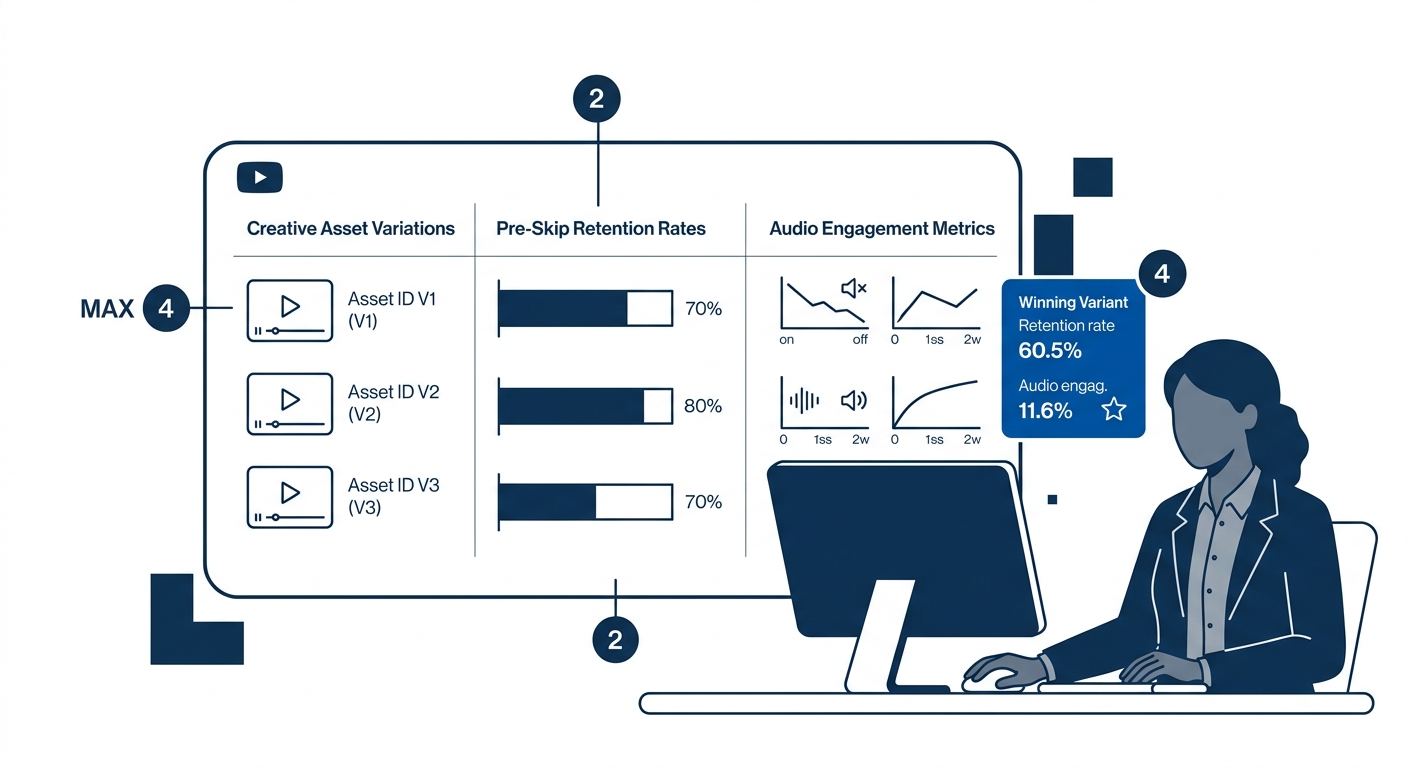
Creative built for one environment reads as noise in the other. Surviving YouTube’s skip button requires a platform-native structure: the first three seconds must state the problem clearly enough to attract the right buyer and filter out unqualified viewers, audio-first pacing must carry the hook immediately, and in-video directives must ask viewers to take action before the end screen because most viewers never reach that point.
Strong performance comes from retention and engagement built directly into creative designed for YouTube’s skip mechanics, not from assets repurposed after the fact. When teams lack bandwidth to produce video specifically for YouTube, campaigns get dismissed before core offers are introduced.
Underfunded Test Budgets Never Generate Signal Density For Algorithmic Calibration
Lower-funnel channels tolerate small test budgets and early reads on traction from a handful of high-intent clicks. YouTube does not. Google’s bidding algorithms need dense volumes of interaction data to calibrate who actually responds to messaging.
Underfunded daily budgets never generate enough signal density to exit initial calibration phases, producing extreme cost-per-action swings, inconsistent placement delivery, and premature campaign shutdowns before systems learn optimization patterns. Marketing leaders evaluating whether to allocate meaningful YouTube budgets must brief agencies on minimum viable testing thresholds that allow algorithmic learning to complete.
The framework notes that agencies running YouTube for enterprise clients typically advise 30-day minimum commitment windows at budget levels that generate statistically significant interaction volumes, rather than week-long micro-budget tests that yield inconclusive data.
Complex Offers Requiring Extended Research Cycles Compound Attribution Gaps
YouTube works poorly for offers that require extended consideration, comparison shopping, or multi-stakeholder approval before purchase decisions close. When viewers need weeks to evaluate options after seeing an ad, last-click attribution models credit whichever channel happens to touch the prospect last—rarely YouTube even when the initial campaign drove awareness.
The framework suggests YouTube fits best for businesses with tight consideration windows, straightforward value propositions, and measurement infrastructure that credits assisted conversions across 30-day windows. Marketing leaders briefing agencies should audit whether their typical sales cycle matches YouTube’s demand-generation timing before committing budget.
Enterprises with long B2B sales cycles or complex product ecosystems face particular challenges: YouTube may build brand awareness that eventually converts, but proving return on investment requires conversion rate optimization capabilities that track multi-touch attribution across quarters rather than weeks.
What Happens Next
Marketing leaders evaluating YouTube campaign proposals should brief agencies on four structural requirements before any creative gets produced or budget gets allocated: measurement infrastructure that tracks assisted conversions and branded search lift across 30-day windows, creative production dedicated specifically to YouTube’s pre-skip and audio-first format, testing budgets sized for algorithmic calibration rather than early read-outs, and offer complexity that matches tight consideration windows.
The operational gaps the framework identifies matter because they determine whether YouTube campaigns can generate interpretable performance data at all. Agencies pitching YouTube for clients with last-click attribution dashboards, recycled social creative, micro-budget tests, or complex multi-quarter sales cycles are pitching channels that cannot produce results the business is equipped to measure.
Enterprises with measurement infrastructure already tracking multi-touch attribution—typically those running sophisticated Meta and Google AI campaign automation that credits mid-funnel touches—hold structural advantages when expanding into YouTube. The platform’s Attributed Branded Searches and view-through conversion optimization tools reward businesses that built attribution systems beyond last-click before attempting video campaigns.