Trust Graph Architecture for Enterprise SEO: Building Discoverability Beyond Rankings in the AI Search Era

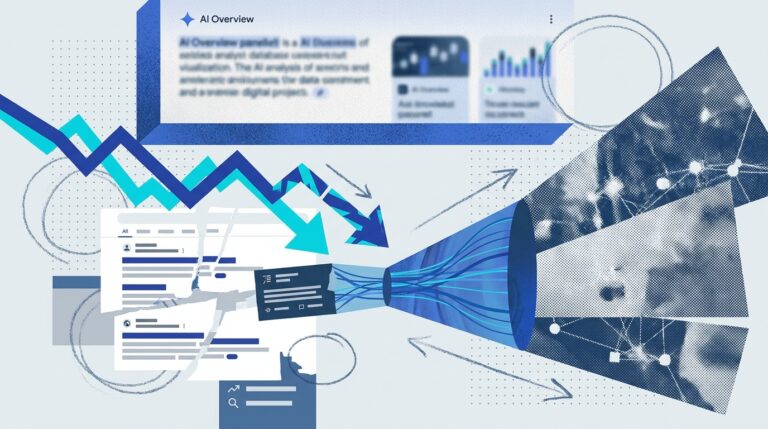
Ranking #1 on Google does not guarantee your brand gets cited when an AI system answers the same query. Google’s own data shows that pages earning citations inside AI Overviews aren’t always the ones holding the top organic position. Enterprise brands need a different architecture, one built on entity trust and semantic authority signals, to stay visible as AI search reshapes discovery.
TL;DR: AI search systems pull citations from knowledge graphs and entity associations, not from SERP rankings alone. Enterprise brands that treat trust graph SEO as infrastructure (consistent entities, structured data, third-party corroboration) earn citations in AI Overviews and LLM responses. Brands that only chase keyword positions don’t.
AI Search Systems Don’t Read SERPs the Way Brands Expect
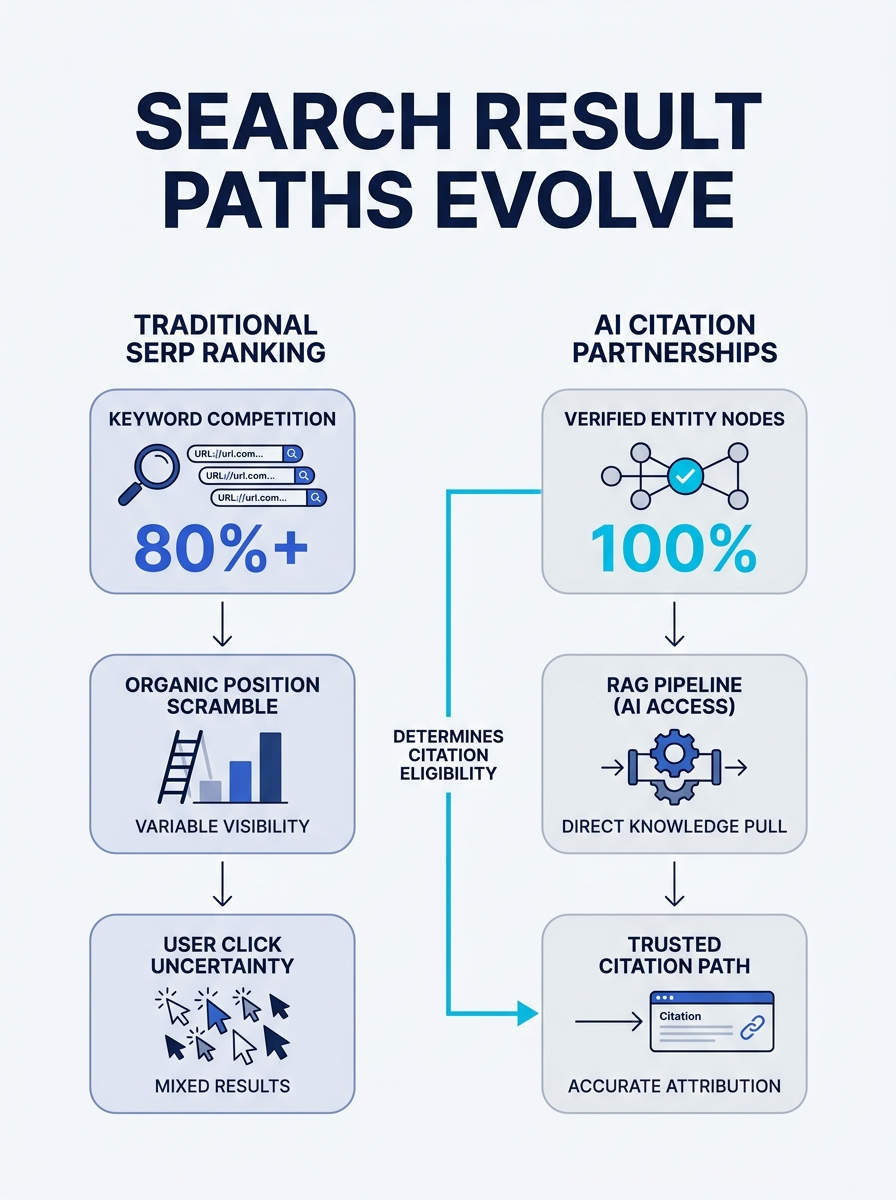
Google’s retrieval-augmented generation (RAG) pipeline pulls content from across the index. It does not work from a top-10 ranking list. According to SEOcrawl’s 2026 AI Overviews ranking analysis, Google reports AI Overviews are driving over a 10% increase in Search usage for the query types that trigger them. The pages earning those citations frequently sit outside position #1.
This distinction matters for enterprise teams. AI-generated referral traffic saw a 10x increase in the U.S. between July 2024 and February 2025. Visitors arriving through AI-generated answers browse 12% more pages per visit and show a 23% lower bounce rate compared to traditional organic traffic. These are high-intent users whose first interaction with your brand happened inside an AI response, not on a search results page.
The mechanism behind this is entity verification. Large language models cannot visit your office or test your products. BGBility’s SEO trust guide puts it plainly: “Large language models cannot test your real services physically, so they develop a relationship with Entity SEO to figure out whether you fit into their conversational responses.” The LLM checks whether your brand exists as a verified node in its knowledge graph. If it does, your content becomes citable. If it doesn’t, your content gets treated as unverified, regardless of where it ranks on a traditional SERP.
This is where the concept of content trust architecture becomes practical. Enterprise brands working with agencies on SEO for online stores or multi-market B2B visibility face the same challenge: building a verified entity presence that AI systems can confirm across multiple independent data sources.
Three Semantic Authority Signals That Determine AI Citations
Why do some enterprise brands get cited in AI Overviews while competitors with similar rankings don’t? The answer sits in three categories of semantic authority signals that AI retrieval systems weight during response generation.
Consistent Entity Data Across the Web
AI systems give priority to consistent business information across directories, maps, industry databases, and structured data on your own site. Yuliya Halavachova, in her 2026 entity authority guide, writes that “knowledge graphs are the ultimate source of entity authority. They are how AI systems verify your brand is real and trustworthy.”
For enterprise brands operating across the Philippines and Southeast Asia, this means every property listing, every Google Business Profile, every industry directory mention needs to resolve to the same verified entity. Inconsistencies fragment your trust graph. A brand with 15 office locations and 4 different name variations across directory listings creates 4 partial entities instead of 1 authoritative one.
Entity trust building, as ClickRank’s 2026 guide defines it, focuses on strengthening the credibility of a brand or organization by sending clear trust signals to search engines. Those signals include authoritative backlinks, consistent brand mentions, and structured data. The difference in the AI search era is that these signals now feed knowledge graphs directly, going well beyond traditional PageRank calculations.
Third-Party Corroboration
AI models assign higher confidence to claims about your brand when independent sources confirm them. Security Boulevard’s May 2026 analysis of entity authority in cybersecurity documented that AI models weight third-party corroboration, author entities, and community presence as distinct trust signals. This finding applies well beyond a single vertical.
An enterprise brand that appears in 3 independent industry reports, gets cited by 7 trade publications, and has executive bylines in 2 recognized media outlets builds a corroboration layer that a brand with 500 self-published blog posts cannot match. The corroboration principle connects directly to how enterprise brands should approach their internal linking architecture, too. Internal links signal to crawlers which entities and topics your site treats as authoritative. External corroboration confirms those signals through independent sources.
Content Extractability
“If the headers do not tell a coherent, logical story on their own, your semantic structure needs work,” Growth Rocket’s analysis of LLM ranking signals observes. “That is a proxy signal for how well an AI can parse your content’s intent.”
Your H2 hierarchy, your use of definition lists, your structured data markup, and your paragraph-level clarity all determine whether an AI system can extract a fact from your page and present it with attribution. Microsoft’s Azure AI Search documentation confirms that semantic ranking promotes matches closer to the intent of the original query, finding strings to use as captions and answers. If your content buries the answer in paragraph 6 of a 2,000-word page, the semantic ranker may never surface it.
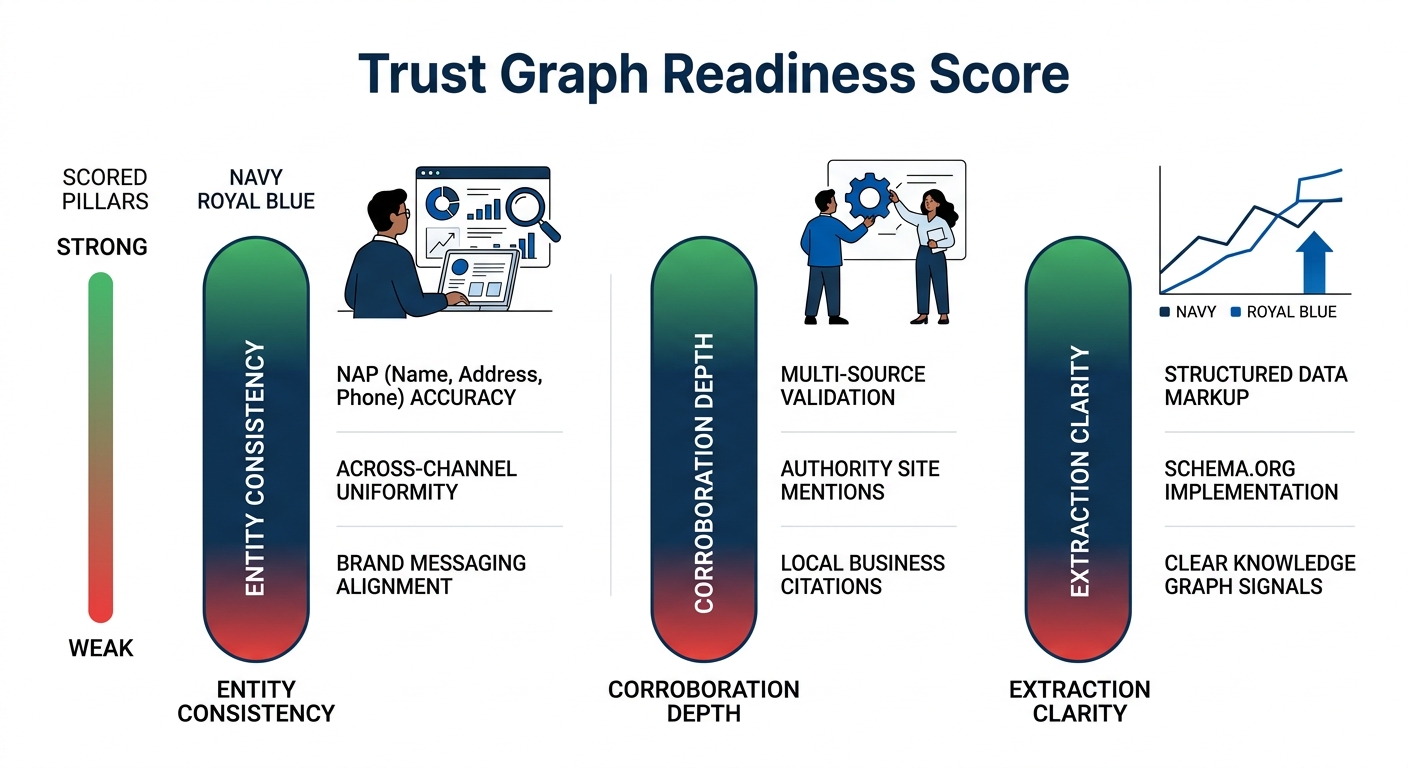
Enterprise teams briefing agencies on AI search discoverability should evaluate content against a framework I’d call the Trust Graph Readiness Score, assessed across three axes: entity consistency (how cleanly your brand resolves to a single knowledge graph node), corroboration depth (how many independent sources confirm your claims), and extraction clarity (how easily an AI can pull a self-contained fact from any section of your content).
| Axis | What It Measures | Weak Signal | Strong Signal |
|---|---|---|---|
| Entity Consistency | Brand resolution across knowledge bases | 4+ name variants; fragmented directory listings | Single canonical entity across 20+ sources |
| Corroboration Depth | Independent third-party confirmation | Self-published content only; no external citations | 5+ independent mentions in trade, press, or research |
| Extraction Clarity | AI parseability of on-page content | Buried answers; unclear header hierarchy | Self-contained facts per section; clean structured data |
Volume Publishing Actively Degrades Trust Graph Density
The conventional enterprise SEO playbook runs on volume. Artisan Creatives’ analysis of high-trust B2B industries describes the typical strategy: “find a keyword with 50,000 monthly searches, write a generic 800-word listicle, build a few backlinks, and celebrate when the traffic graph spikes.”
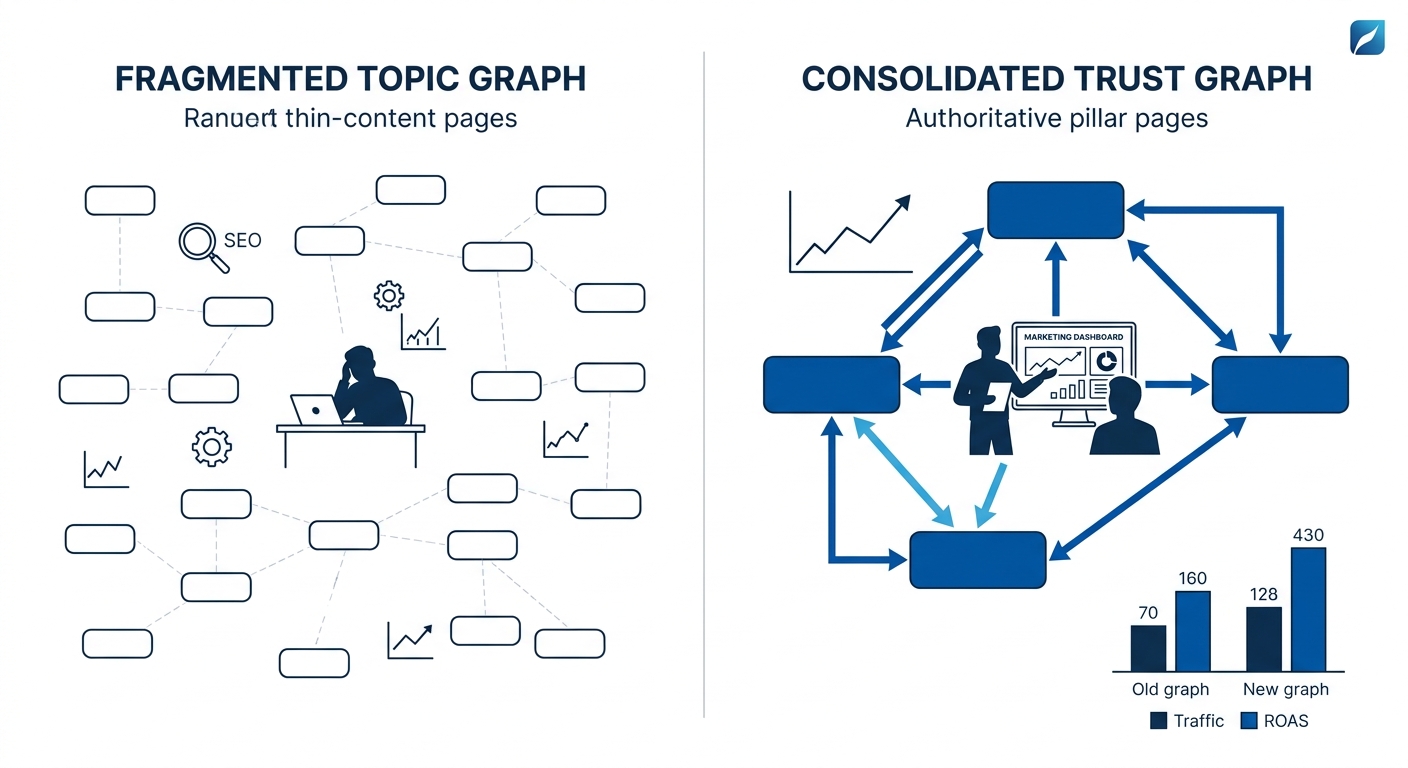
That approach creates a specific problem for trust graph SEO. Every thin page you publish dilutes the semantic coherence of your site’s entity associations. If your brand publishes 40 pages about “digital marketing” and 3 pages about your actual core competency, AI systems interpret your site as a generic information publisher, not a domain authority. We covered this dynamic when examining how high-volume publishing degrades enterprise SEO performance as AI retrieval systems prioritize semantic consolidation over page count.
Every thin page you publish dilutes the semantic coherence of your site’s entity associations. AI systems interpret volume publishers as generic information sources, not domain authorities.
The math works against volume in another way. Enterprise rank tracking platforms now integrate with Google Search Console, BigQuery, and Looker to cross-reference rank data with actual impressions, clicks, and conversion outcomes. When teams running these integrations audit their content portfolios, they consistently find that 60-70% of published URLs generate zero AI citations and minimal organic traffic. These pages aren’t neutral. They actively fragment your site’s topic graph and reduce the semantic signal strength of your best content.
For brands evaluating their content trust architecture, the practical question isn’t “how much content should we produce?” It’s “how many verified, corroborated, extractable pages does our entity need to be the definitive answer for our core topics?” The answer is almost always fewer pages, built with more structured data, more third-party validation, and clearer semantic relationships between them. Teams going through a corporate SEO training program benefit from learning to evaluate content against these criteria before production, not after.
The Claim, Reconsidered
The thesis at the top of this article holds up under each piece of evidence. But it needs a qualifier. Traditional rankings still matter. They drive traffic. They influence brand perception. Pages that rank well have a higher baseline probability of being crawled, indexed, and included in the corpus that AI systems draw from. The qualifier is that rankings alone are no longer sufficient for AI search discoverability.
Enterprise brands operating in the Philippines and across Southeast Asian markets face this shift in a specific way. Zero-click searches captured 68% of U.S. Google queries in early 2026, and similar patterns are emerging in APAC markets as AI Overviews roll out more broadly. The brands that show up in those AI-generated answers will have built what amounts to a trust graph: a web of verified entity data, third-party corroboration, and extractable content that AI systems can confidently cite.
The SEO visibility debugging framework we’ve outlined for enterprise sites addresses the traditional ranking side of this equation. But the trust graph side demands a different audit entirely: mapping your entity’s presence across knowledge bases, measuring corroboration density, and scoring every key page for extraction readiness. Understanding how the broader shift toward AI-powered discovery reshapes search behavior helps frame why both audits matter.
The enterprise authority building challenge for the next several years isn’t choosing between traditional SEO and AI optimization. Both draw from the same underlying architecture: a verified, corroborated, clearly structured entity that search systems of any kind can trust. Brands that build this architecture deliberately will get cited in the answers their buyers actually read. Brands that keep publishing at volume and tracking keyword positions will watch their traffic erode even as their rankings hold steady.