CMOs Flag Multi-Location Marketing Complexity as 61% Report Infrastructure Gaps Blocking ROI Measurement

Sixty-one percent of CMOs at multi-location brands rate local marketing infrastructure as too complex to manage effectively, according to a June 30 survey analysis published by Search Engine Journal. The research, based on data collected by location marketing platform Uberall, found only one in four location marketers can demonstrate measurable impact on sales from local initiatives, a visibility gap that has widened as teams add disconnected AI tools without unified orchestration.
TL;DR: New survey data shows 61% of multi-location CMOs struggle with marketing infrastructure complexity while only 25% can attribute local campaigns to revenue, prompting calls for unified orchestration layers to manage listings, reviews, and local content at scale.
The findings arrive as Philippine enterprise brands, banks with branch networks, retail chains, restaurant groups, real estate developers operating sales centers, confront the operational reality of maintaining local presence across Google Business Profile, Apple Maps, Bing Places, and third-party directories. The gap between complexity and attribution is most acute for organizations running 50-plus locations, where manual auditing of listing consistency, review response, and local content becomes unsustainable, according to the analysis.
AI Tool Proliferation Without Integration Compounds the Problem
Eighty-nine percent of marketing leaders reported that technology investments have not fully delivered expected returns, with integration complexity cited as the primary barrier, the survey shows. The same dataset found 99% of senior marketers want an AI orchestration layer to manage local operations, yet adoption has introduced new fragmentation rather than consolidation.
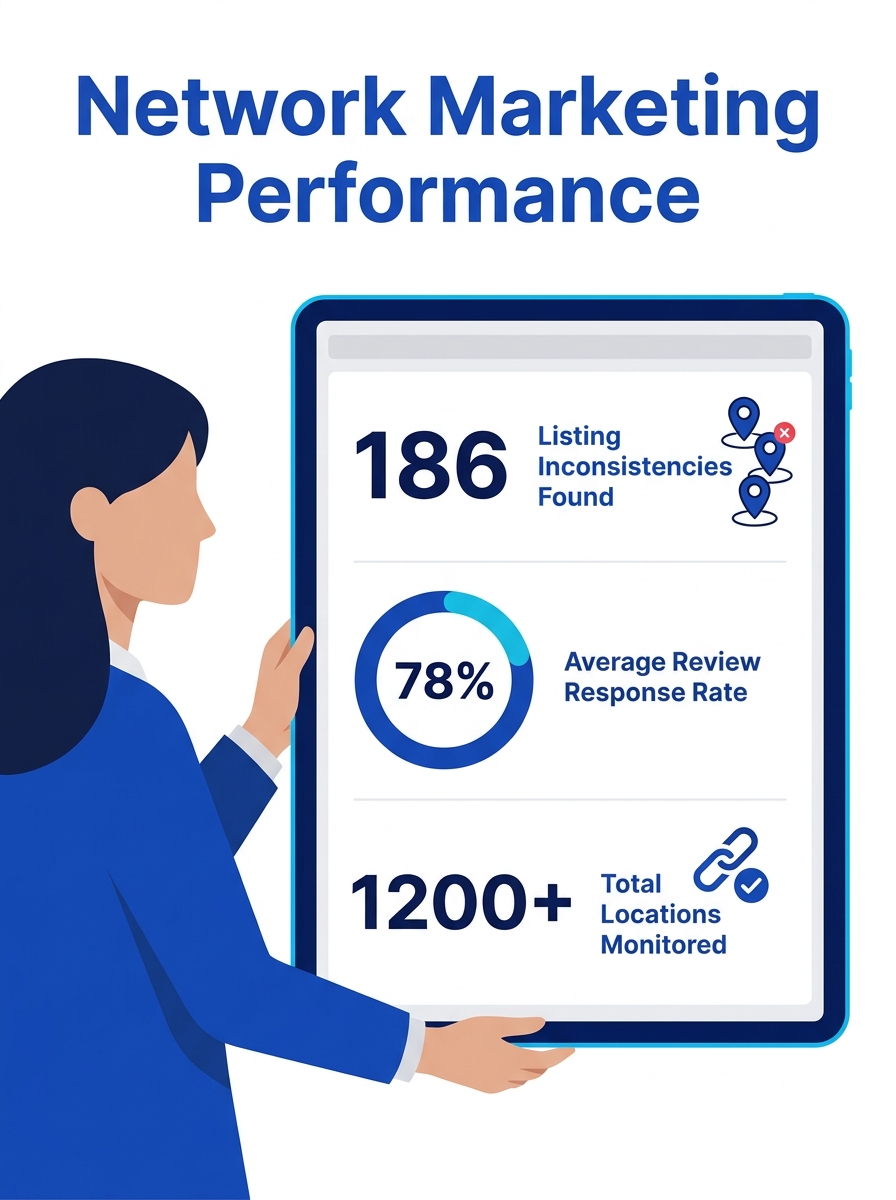
The operational burden breaks down across five disconnected workflows: business listings managed separately per platform, creating data inconsistencies; reviews left unanswered or handled sporadically; local pages disconnected from inventory and social systems; outdated or generic content weakening local search relevance; and website performance issues causing friction for both users and search engine crawlers, according to the report.
Philippine CMOs overseeing agency partners for local SEO programs face a similar diagnostic challenge: determining whether poor local performance stems from incomplete listings data, inadequate review-response velocity, thin local content, or technical site barriers that prevent AI systems from extracting location-specific signals.
Orchestration Layer Concept Reframes the CMO Role
The analysis introduces the “Chief Marketing Orchestrator” framework, positioning the CMO as the executive who governs AI execution rather than prompts it. Under this model, agentic AI handles volume tasks (drafting review responses according to brand guidelines, correcting address formatting across directories, generating missing business descriptions from structured data) while flagging decisions that require human approval before publishing.
Uberall’s recently launched agentic AI product, UB-I, operates on this principle, according to the company. The system prioritizes negative reviews for human oversight, auto-corrects directory-specific formatting requirements to prevent sync failures, and generates location attributes from existing data, tasks that would otherwise require teams to manually audit 50-plus locations daily across multiple platforms.
The framework addresses a coordination gap that intensifies as brands layer point solutions without resolving who owns AI discoverability at brand versus location level, the report states. For APAC enterprises managing operations across markets with varying platform dominance, Google in most territories, Naver in Korea, Baidu in China, the orchestration question extends to which local signals each system prioritizes and how listing management scales without duplicating effort.
Marketing executives evaluating local SEO agency partners can use the orchestration lens to clarify scope: does the agency own listing audits and corrections, or does the brand retain that function and delegate review response? Where does sentiment analysis convert to actionable operations reports? Organizations that answered these questions clearly before procurement reported higher satisfaction with technology ROI, according to the survey findings.
The data also intersects with broader concerns about AI tool measurement that surfaced in separate research earlier this year, which found 70% of marketing leaders lack frameworks to assess returns from AI investments despite dedicating 15% of budgets to such tools.
What This Means for, CMOs
Multi-location brands briefing agency partners on local SEO, paid local campaigns, or review-management programs should expect the agency to document how listing data flows from brand systems to each directory, which approval workflows the team retains, and what dashboards will surface location-level attribution. The 1-in-4 attribution gap the survey reveals typically stems from missing instrumentation, call tracking not deployed, form submissions not tagged by location, foot-traffic measurement not configured, not from campaign underperformance.
Philippine CMOs overseeing branch networks or franchisee-operated locations face an added layer: determining whether local operators have sufficient autonomy to respond to reviews and update hours, or whether brand compliance requires centralized control with local input. The orchestration-layer model works only when approval paths are defined in advance and reflected in the platform configuration the agency implements.
For organizations already running disconnected tools, one vendor for listings, another for reviews, a third for local pages, the survey data suggests consolidation produces measurable lift in both team efficiency and revenue attribution. Before adding another point solution, CMOs should audit what the current stack already handles and whether integration APIs exist to unify reporting. The complexity tax compounds silently until stakeholders ask for local ROI numbers the team cannot produce from fragmented sources.