Live Selling in the Philippines: How Enterprises Can Turn Streams Into Sales
Scroll through TikTok at any hour and you’ll see it: hosts chirping “mine,” “Pa-SSD na!”, “Sold!” shoppers firing questions faster than your CS team can reply, and hundreds of viewers treating a product demo like a mini variety show. Live selling has become the Philippines’ unofficial primetime slot, and it’s not slowing down anytime soon.
Globally, the live shopping market in the US is projected to nearly double to $67.8 billion by 2026, and the Philippines is riding the wave right alongside it. Local e-commerce is projected to reach $17.65 billion to $24.53 billion in 2025. With that kind of momentum, live selling isn’t just an SME playground anymore. It’s becoming a serious channel for enterprises that want deeper engagement, richer product storytelling, and conversions that don’t wait for the end of a 30-day retargeting cycle.
The takeaway? Live selling has matured. And brands that still treat it like a cute experimental add-on are leaving real revenue on the table.
What Live Selling Really Means for Enterprise in 2026
Beyond “pa-mine,” this is product education at scale.
For enterprise teams, live selling isn’t about chaotic comment sections or impulse-driven viewers. It’s a high-touch, high-context way to showcase products in real time, with added advantage of answering objections before they become abandoned carts.
Customers can see textures, sizing, colors, finishes, and use-cases without relying on edited photos or static descriptions. That alone helps reduce return rates, especially for categories like beauty, fashion, and home goods where the “in real life” factor matters.
Think of live selling as your most dynamic product page, one that talks back, adjusts on the fly, and brings human credibility into the buying experience. It’s not entertainment for entertainment’s sake. It’s education disguised as a conversation. And enterprise customers respond to clarity, and not guesswork.
The Bigger Picture: Why Live Selling Matters in the PH E-Commerce Boom
The numbers say it all.
The Philippines is one of the most active digital economies in Southeast Asia, and shoppers here are already conditioned to discover products through videos, creators, and real-time interactions. Shopee and Lazada remain leading platforms for live commerce and TikTok Shop is rapidly cutting in—not to mention that Shopee and Lazada are the leading e-commerce platforms that perform well in AI Overviews. On top of that, 74% of local businesses now consider live selling a key growth driver, especially for reaching new customers.
Pair that with the rise of mobile-first shoppers, faster logistics (talk about next-day delivery), and cultural love for anything interactive, and it becomes obvious why live selling isn’t niche. It’s simply the natural next stage of how Filipinos prefer to shop.
For enterprises, that means meeting customers in the spaces where they already make decisions: not on static catalogs, but in-real time conversations.
Where Should Enterprises Go Live?
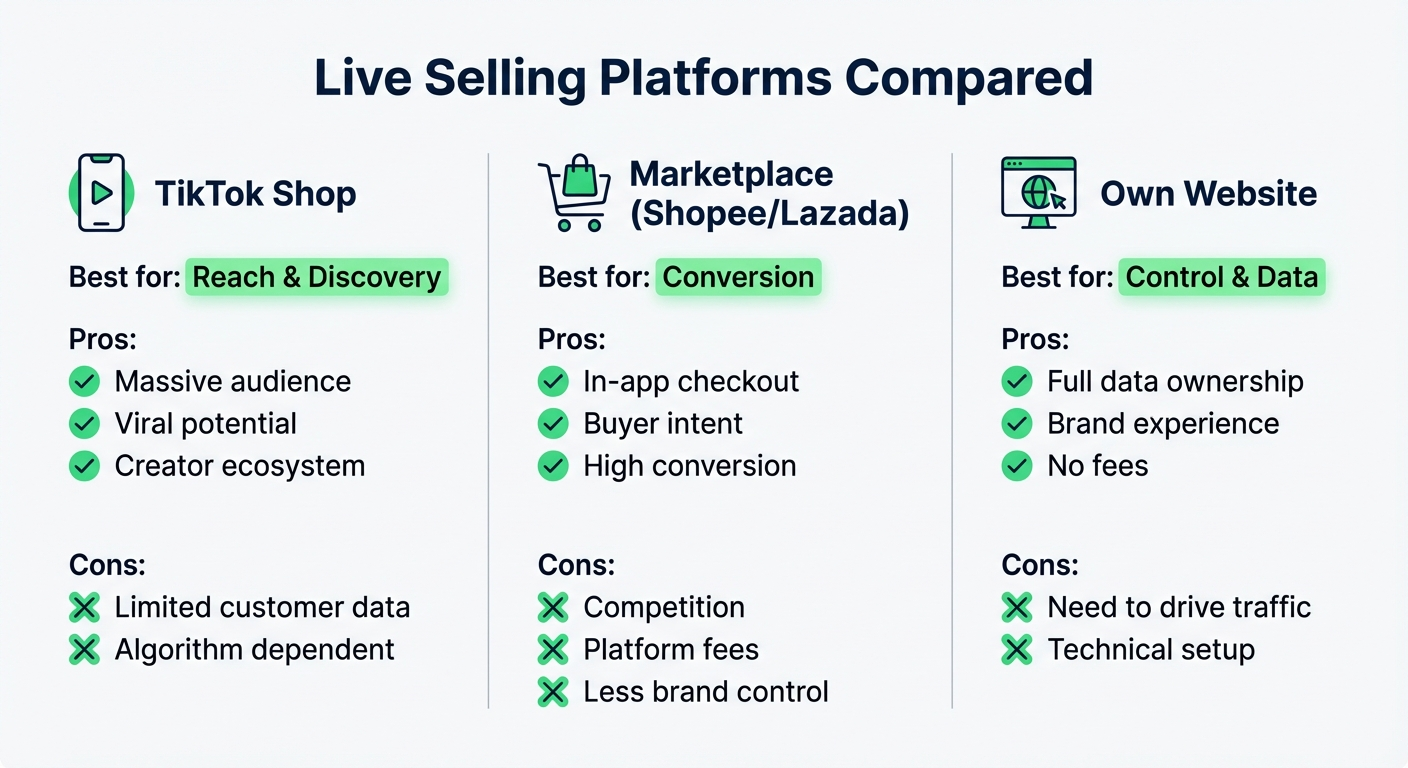
1. TikTok: Reach and Discovery on Steroids
If the goal is to get in front of audiences who don’t know you yet, TikTok is a powerhouse of a platform.
TikTok Shop is especially strong for trend-driven categories—beauty, fashion, lifestyle—where creators can sway entire carts with a single enthusiastic demo. It’s why many brands use TikTok lives as their “top-of-funnel show,” then drive viewers toward purchase through in-app storefront or marketplace listings.
The trade-off, however, using TikTok limits what you can collect in terms of customer data. Great for reach; not always ideal for retention.
2. Marketplaces: Where Browsing Becomes Buying
Shopee Live, LazLive, and TikTok Shop’s native checkout shine because they eliminate friction. Customers don’t have to switch apps, re-enter details, or break the hype, they tap, pay, and continue staying in the stream.
That’s why marketplace live selling consistently delivers higher conversion rates. You’re selling directly inside an environment where shoppers are already primed to buy. One senior APAC product head even noted cases where brands pulled in 4,000+ orders on TikTok Shop Alone, on top of thousands more from Shopee and Lazada combined.
The only downside is that every other brand in your category is right there beside you. Competition is real, fees exist, and differentiation requires both creative hosting and tight product positioning.
3. Your Own Site: Control, Data, and Zero Algorithm Dependence
If reach is the goal, social platforms win.
If conversion is the goal, marketplaces win.
But if you want full control—over branding, customer data, retention flows, and your long-term revenue engine—hosting lives on your own site becomes the smartest move.
With the right integration, you can run high-quality streams without relying on platform algorithms or crowded shopping pages. You also get to build owned lists, study behavior, and reuse live content across your entire ecosystem: ads, landing pages, product pages, even SEO content.
For enterprises, this is where live selling becomes scalable. Not a stunt, not a one-off, but repeatable asset.
How Enterprises Can Make Live Selling Actually Work
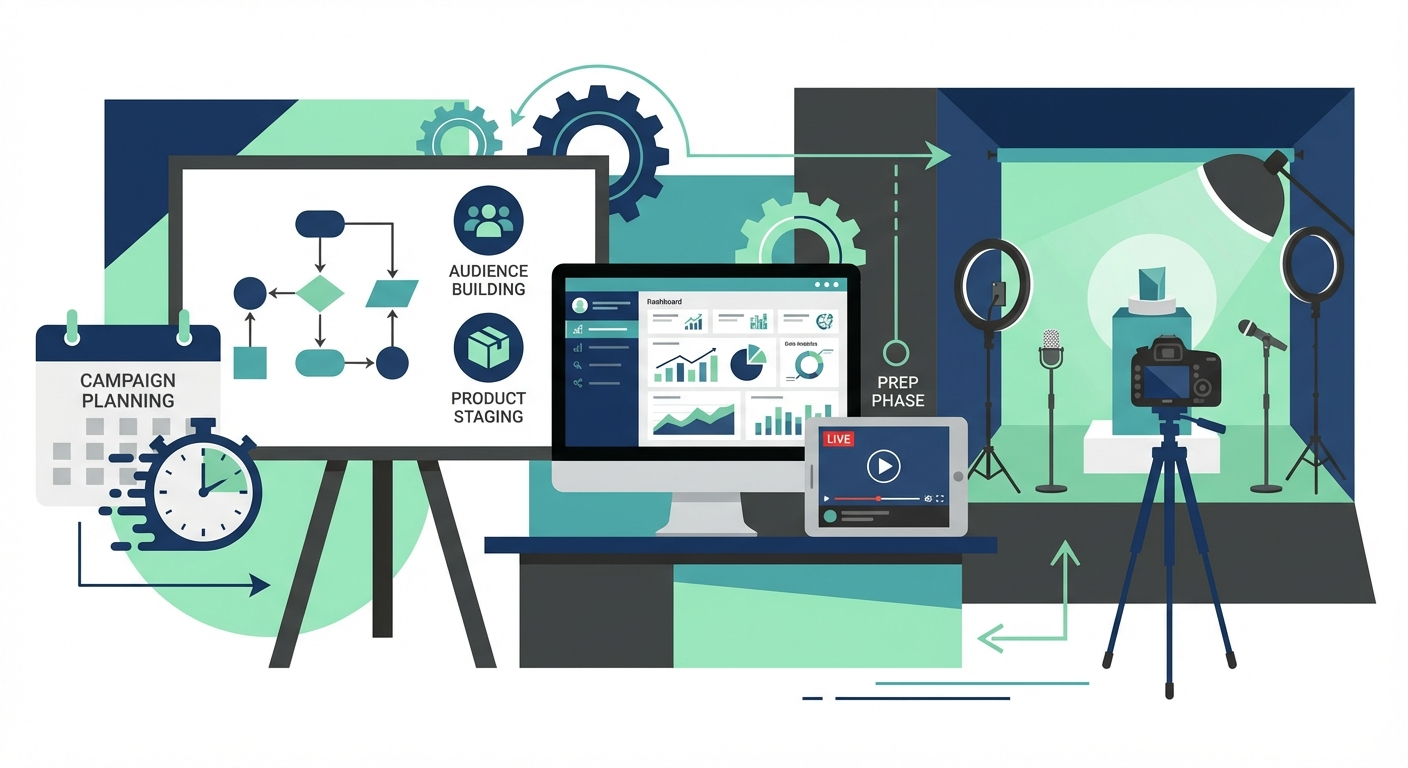
Treat Live Selling like a Campaign, Not a “Spray and Pray” Broadcast
The most successful live events aren’t impulsive “Let’s just go live tonight” or “Bahala na” moments—they’re planned, teased, and plugged into a broader campaign. When brands treat their livestream like a mini product launch, performance skyrocket.
The formula?
Warm the audience. Build curiosity. Go live with intention. Hype creates conversion—but only and only when it’s engineered.
Build Community in the Chat, Not Just the Cart
Filipinos don’t just watch livestreams, they hang out in them. And when you’re an enterprise brand, this is your chance to stop sounding like a corporation and start sounding like a person.
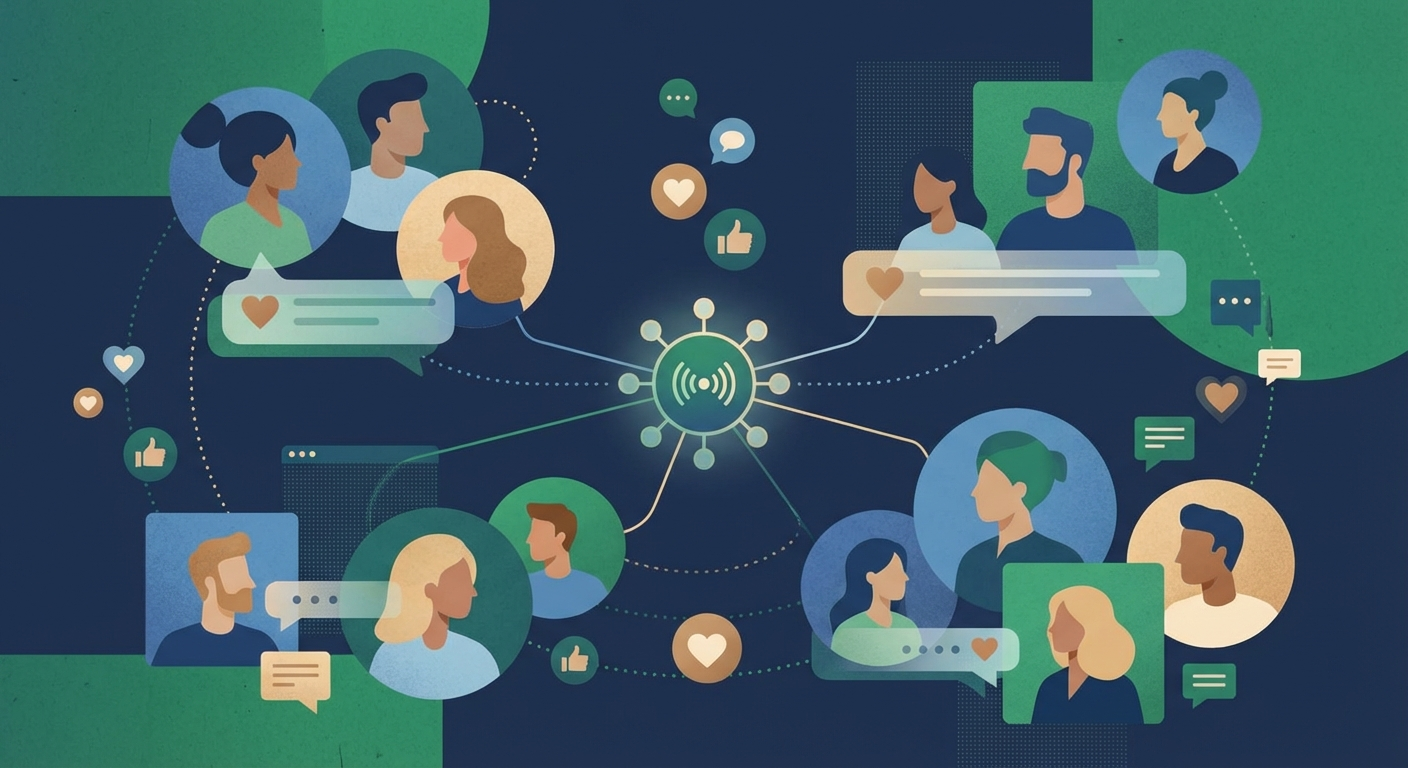
Simple gestures go a long way:
These small cues build community faster than any “brand values” slide deck. When viewers feel seen, they stay longer. When they stay longer, they buy more. It’s customer experience happening live, literally.
Creators Aren’t just Talent, They’re Your Co-Hosts
For enterprise teams, creators can bridge the gap between “brand-safe messaging” and “please don’t bore the viewers.” They bring personality, trust, and an audience that already believes in them.
Creators know how to keep energy high, conversation flowing, and viewers hooked. Let them do what they do best, and let your brand ride the momentum.
Use Pre-event and Post-Event Data to Scale Smarter
The stream is just the start. The real ROI happens before and after the event.
Build anticipation:
Then use what you learn during the live to improve the next one:
Even FAQs can become SEO content product page improvements, or new scripts for the next stream. Enterprises win through iteration, not luck.
The Metrics That Actually Matter
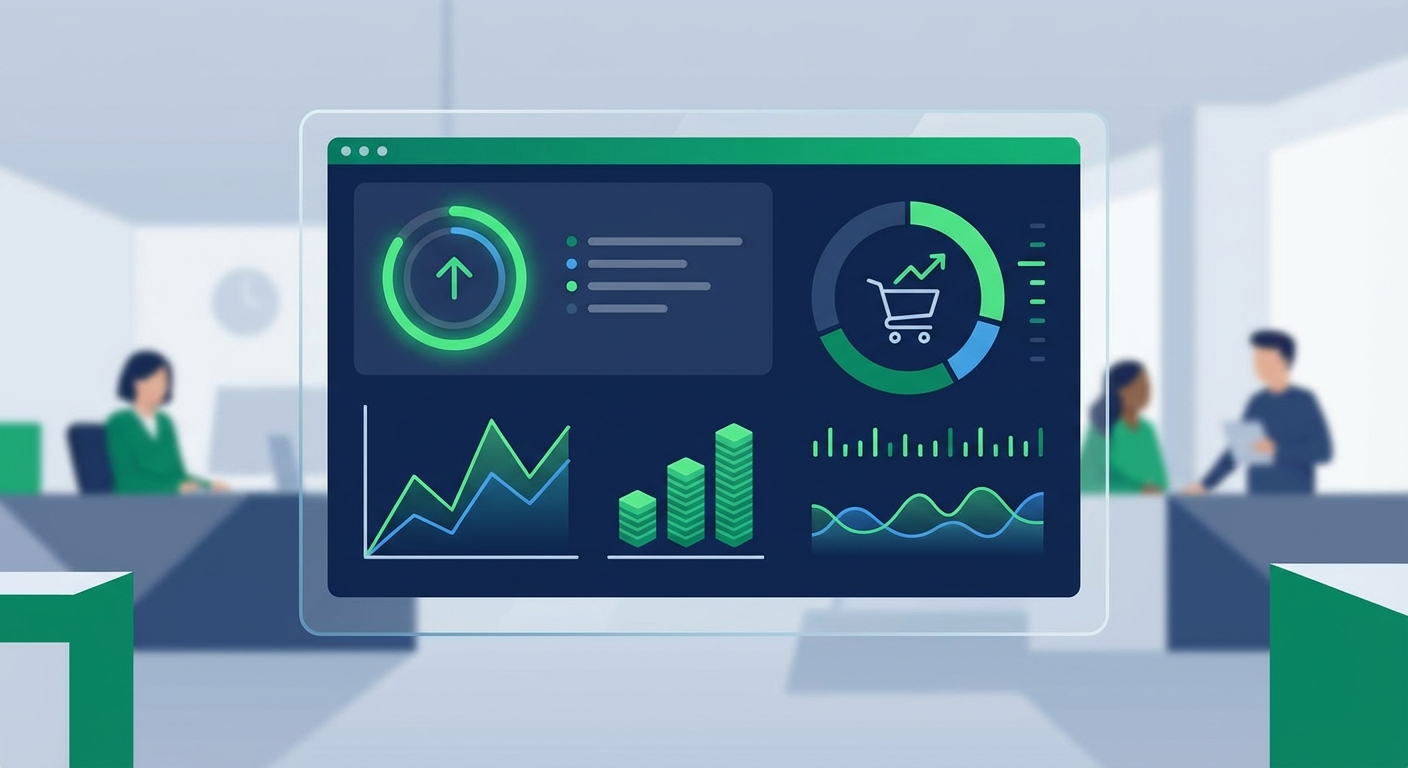
Views are cute, but they don’t tell you if your livestream worked. Enterprise brands need metrics that reflect intent, influence, and revenue, not just popularity.
A few numbers actually decisions:
1. Watch Time
If people aren’t sticking around, the content or pacing is off. Attention is the real currency of live commerce.
2. Conversion Rate (During + After the Stream)
Live selling has a unique “heat window” where excitement drives purchases. Track how long that window lasts and which triggers cause spikes.
3. Add-to-Cart and Drop-Off Moments
When viewers bail right before checkout, that’s friction in your funnel, not customer disinterest.
4. New vs Returning Customers
Great live events expand your audience, not just re-engage your loyalists.
5. Impact on Return Rates
One underrated benefit of live selling: fewer “this is not what I expected” moments. That’s money saved and customer trust earned.
These metrics give you a full picture: who’s watching, who’s buying, and what kind of experience pushes the needle. Everything else, like hearts, random chat hype, is background noise.
Key Takeaways
The Future Belongs to Brands Who Can Sell, Show, and Connect—All at Once
Live selling isn’t a trend you chase; it’s a channel you build. Filipino shoppers are visual, curious, and community-driven, and they gravitate toward brands that feel human enough to talk to them in real time. For enterprises, this is a chance to turn product education into entertainment, and entertainment into measurable revenue.
The brands that win won’t be the loudest ones, they’ll be the ones that show up consistently, host with clarity, collaborate with the right creators, and use data to make every stream smarter than the last.
Live selling is no longer about “pa-mine.” It’s about presence, performance, and the power of real-time connection.