Three Platform Shifts This Week Reshape How Marketing Leaders Should Brief Agency Partners on Search, Creative, and B2B Social Work
New research released June 28 shows zero-click searches captured 68% of U.S. Google queries in early 2026 while Cannes Lions awarded human-driven creative work over AI production and LinkedIn formally launched creator tools for B2B brands, according to SparkToro and industry sources. The three developments converged within days, forcing marketing leaders to reframe how they evaluate agency proposals across search strategy, creative production, and B2B influencer programs.
TL;DR: Zero-click search hit 68%, Cannes Lions 2026 rewarded craft-driven creativity, and LinkedIn opened its Creator Marketplace to B2B brands—three shifts that change how marketing leaders should brief and evaluate agency work across organic search, creative services, and social partnerships.
Zero-Click Search Crosses Two-Thirds Threshold as Traffic Stops Being Primary SEO Metric
SparkToro and Similarweb documented that 68.01% of U.S. Google searches in the first four months of 2026 ended without any click, up from 60.45% in 2024. The 7.5-percentage-point increase represents the fastest two-year acceleration since SparkToro began tracking the metric in 2016, according to the research published June 28.
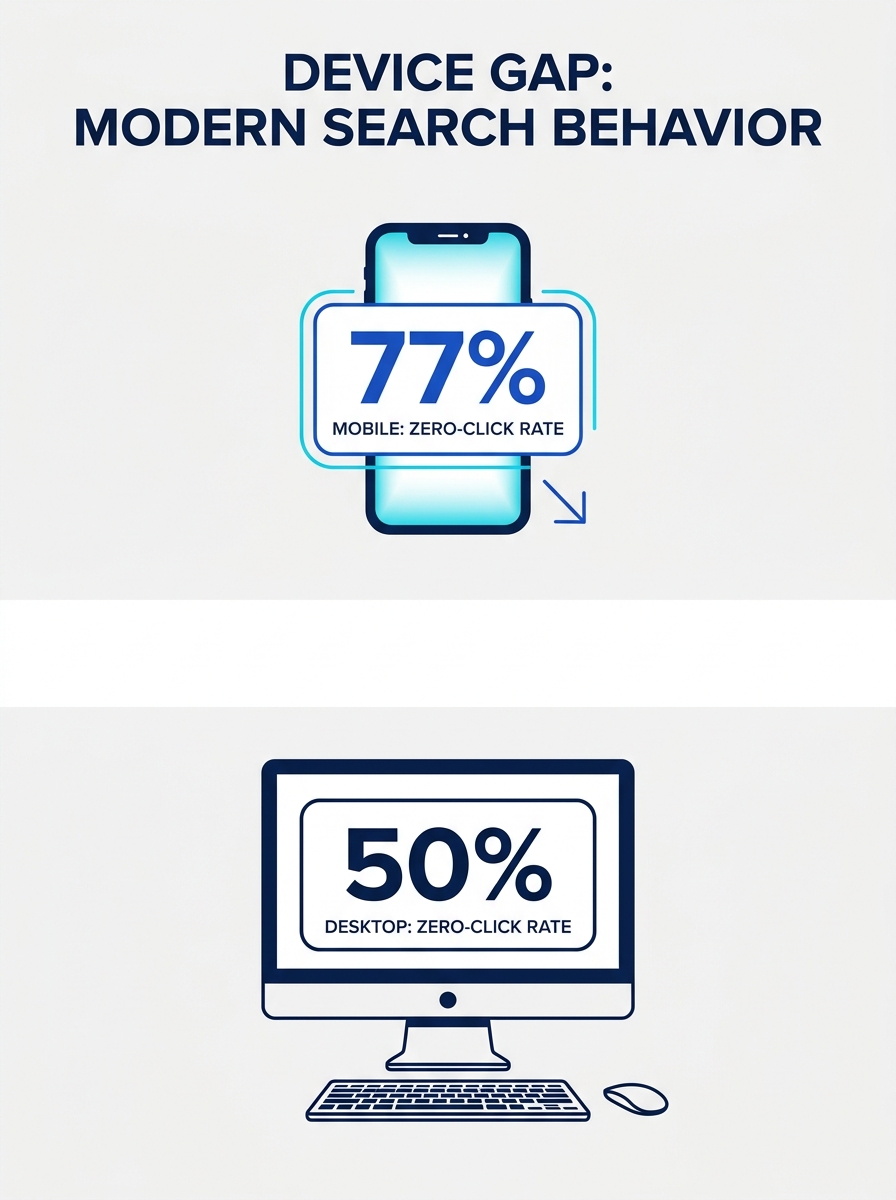
Mobile queries drove the majority of the shift, with zero-click rates reaching 77% on mobile devices compared to approximately 50% on desktop. Featured snippets, knowledge panels, People Also Ask expansions, and AI Overviews accounted for most of the zero-click volume; Google’s AI Mode represented only 0.34% of searches during the measurement period, the data shows.
“Traffic can fall while revenue rises. The two aren’t as linked as they used to be,” SparkToro founder Rand Fishkin said in the published analysis. He recommended marketing teams invest in what he termed “zero-click marketing”—building brand visibility in contexts where no website click occurs, including structured content that AI systems can accurately summarize.
Marketing leaders briefing SEO management programs now face a measurement challenge: traditional traffic KPIs no longer capture whether search strategy is working. Agencies delivering rank-one positions may produce material visibility gains without corresponding traffic lifts, requiring new frameworks for evaluating organic search performance.
Cannes Lions Awards Signal Human Creativity Retains Premium Over AI-Generated Production Scale
The 73rd Cannes Lions International Festival of Creativity, held June 22-26 in France, awarded Grand Prix honors to campaigns emphasizing cultural specificity and craft execution rather than AI-enabled production volume. Mercado Livre won the Outdoor Grand Prix for “Field Barcode,” a 104-meter soccer pitch transformed into a scannable barcode, while Heineken captured the Social and Creator Grand Prix with “Could Have Been a Heineken,” converting WhatsApp voice notes into offline gathering invitations.
AB InBev received the inaugural Creative Brand Lion Grand Prix and was named Creative Marketer of the Year, demonstrating sustained creative output embedded across global operations rather than isolated campaign wins. The new Creative Brand Lions category, introduced in 2026, recognizes organizational systems that produce consistent creative work.
The festival’s jury selections emphasized participatory concepts and culturally grounded ideas over campaigns relying primarily on generative AI tools for production scale. Marketing directors evaluating creative agency rosters should note the pattern: craft-driven work commanding premium attention even as AI tools lower production costs across the industry.
Philippine enterprises briefing creative agencies for 2026-2027 work face a strategic fork—deploy AI to increase output volume at lower cost per asset, or invest in fewer, higher-craft concepts that drive cultural conversation. The Cannes results suggest evaluators should weight creative brief processes and cultural insight depth more heavily than production throughput when comparing agency capabilities.
LinkedIn Formalizes Creator Marketplace for B2B Brand Partnerships
LinkedIn launched its Creator Marketplace platform for B2B brands during the week ending June 28, formalizing influencer partnership tools previously limited to consumer categories on Instagram and TikTok. The platform enables marketing teams to identify, vet, and contract LinkedIn creators based on audience demographics, engagement metrics, and content topic alignment.
The marketplace arrival follows LinkedIn’s 2024-2025 investment in creator monetization features, including newsletter subscriptions and live event ticketing. B2B marketing leaders now possess a direct mechanism to brief creator partnerships without intermediary agencies, though most enterprises will continue routing creator programs through media buying partners for measurement consistency and contract negotiation.
Creator fees, campaign scope definitions, and deliverable formats remain undefined in LinkedIn’s public documentation, requiring marketing teams to establish their own rate frameworks and performance expectations when briefing these programs. Agencies with existing influencer practice areas are extending B2B creator services; brands evaluating whether to build internal creator relations capability or outsource should assess whether their category has sufficient creator supply and whether LinkedIn audience reach justifies dedicated headcount.
The platform shift mirrors broader B2B marketing movement toward thought leadership distribution beyond owned channels. Marketing directors should consider creator partnerships as a complement to, not replacement for, executive-led content programs—LinkedIn creators extend reach but do not substitute for CEO and C-suite visibility in category conversations.
Why This Matters Now
Marketing leaders preparing Q3 and Q4 2026 planning cycles confront three platform shifts that directly affect how they brief and evaluate agency partners. The zero-click search threshold means organic search KPIs need revision—agencies delivering rank improvements without traffic gains may still produce business value if brand visibility and AI citation rates rise. Traffic-per-keyword is no longer the primary success metric; marketing directors should require agencies to report citation frequency in AI-generated answers and feature snippet capture rates alongside traditional rank and traffic data.
The Cannes creative awards reinforce that AI-assisted production does not replace culturally grounded creative concepts. Philippine brands competing in APAC markets should brief creative agencies on cultural insight depth and craft execution quality rather than optimizing solely for asset volume. Lower production costs from AI tools create budget headroom to invest in strategic creative development and testing—the economics favor fewer, better ideas rather than more mediocre executions at scale.
LinkedIn’s Creator Marketplace formalizes B2B influencer partnerships as a standard media channel. Marketing leaders should evaluate whether their category has sufficient creator inventory and whether their agency’s existing influencer capabilities extend to B2B contexts. Most enterprises will route LinkedIn creator programs through agencies for measurement infrastructure and contract terms, but the platform’s direct-access model means brands can pilot small programs internally before committing agency retainer budget to creator services.