What Does Your Google Ad Quality Score Actually Mean?
Your Google Ads Quality Score isn’t just a number—it’s a direct indicator of how well your ads resonate with your audience and how much you’ll pay for every click. A low score means you’re overpaying for underperforming ads. A high score means better ad positions at lower costs.
In this guide, we’ll break down exactly what Quality Score means, how Google calculates it, and proven strategies to improve it—whether you’re managing campaigns in-house or working with a Google Ads agency.
What is Google Ads Quality Score?
Quality Score is Google’s rating of the quality and relevance of your keywords, ads, and landing pages. It’s measured on a scale of 1 to 10, with 10 being the best. This score directly influences two critical factors:
Here’s the key insight: Ad Rank = Quality Score × Maximum Bid. This means a higher Quality Score lets you outrank competitors who bid more than you. An advertiser with a Quality Score of 8 and a ₱50 bid can beat someone with a Quality Score of 4 and a ₱100 bid.
The Three Components of Quality Score
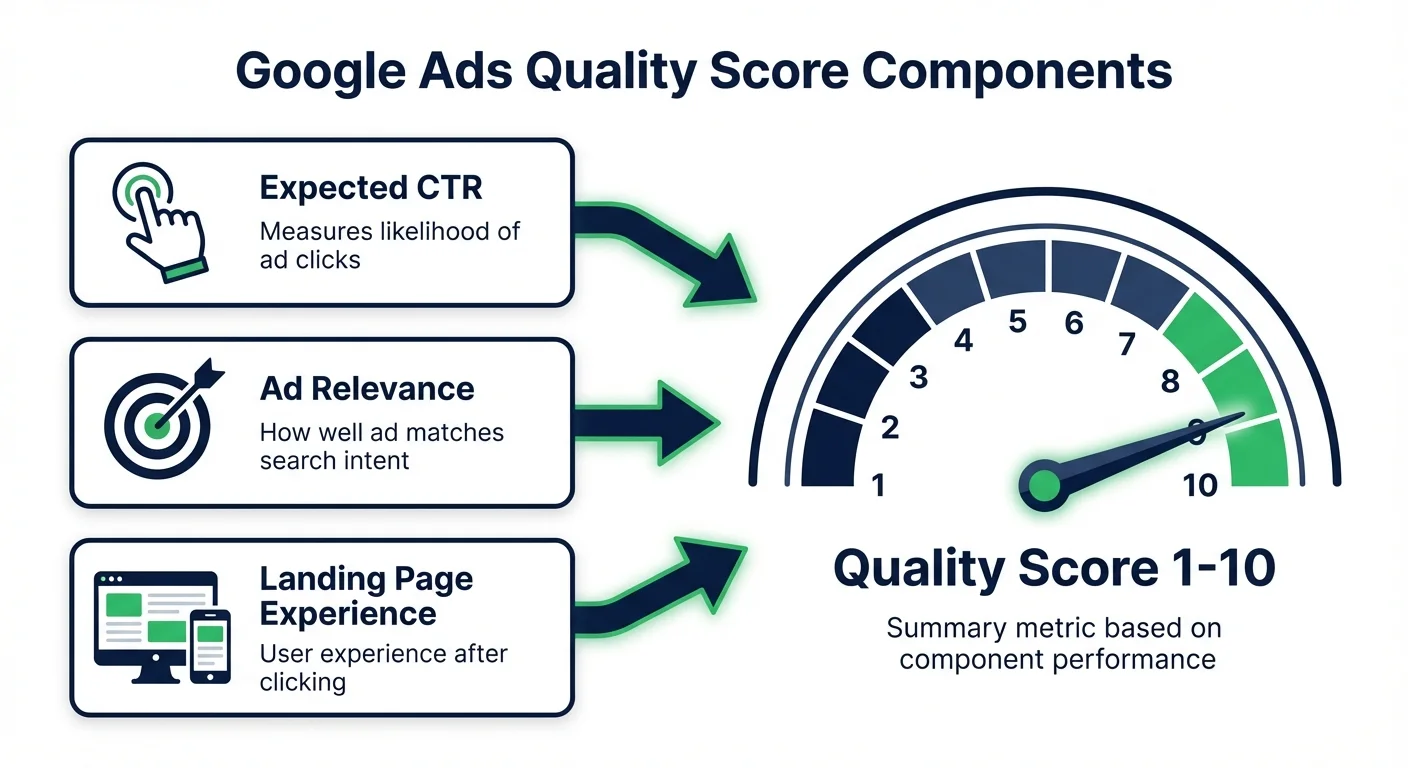
Google calculates Quality Score based on three core components, each rated as “Below Average,” “Average,” or “Above Average”:
1. Expected Click-Through Rate (CTR)
This predicts how likely users are to click your ad when shown. Google compares your historical CTR against other advertisers targeting the same keyword. A high expected CTR signals that your ad copy resonates with searchers.
How to improve:
2. Ad Relevance
This measures how closely your ad matches the intent behind a user’s search. If someone searches “affordable SEO services Manila” and your ad talks about generic marketing, that’s a relevance mismatch.
How to improve:
3. Landing Page Experience
This evaluates how useful and relevant your landing page is to people who click your ad. Google considers factors like page load speed, mobile-friendliness, content relevance, and ease of navigation.
How to improve:
Quality Score Benchmarks: What’s a Good Score?
Not all Quality Scores are created equal. Here’s how to interpret yours:
| Quality Score | Rating | What It Means |
|---|---|---|
| 1-3 | Poor | Major issues with relevance or landing page. Urgent optimization needed. |
| 4-5 | Below Average | Room for improvement. Review all three components. |
| 6 | Average | Acceptable but not competitive. Optimize to reduce costs. |
| 7-8 | Good | Strong performance. Fine-tune for marginal gains. |
| 9-10 | Excellent | Top-tier. Focus on scaling what’s working. |
Pro tip: Branded keywords typically score 8-10, while competitive non-branded keywords often land at 5-7. Don’t compare apples to oranges—benchmark similar keyword types.
10 Proven Tips to Boost Your Quality Score
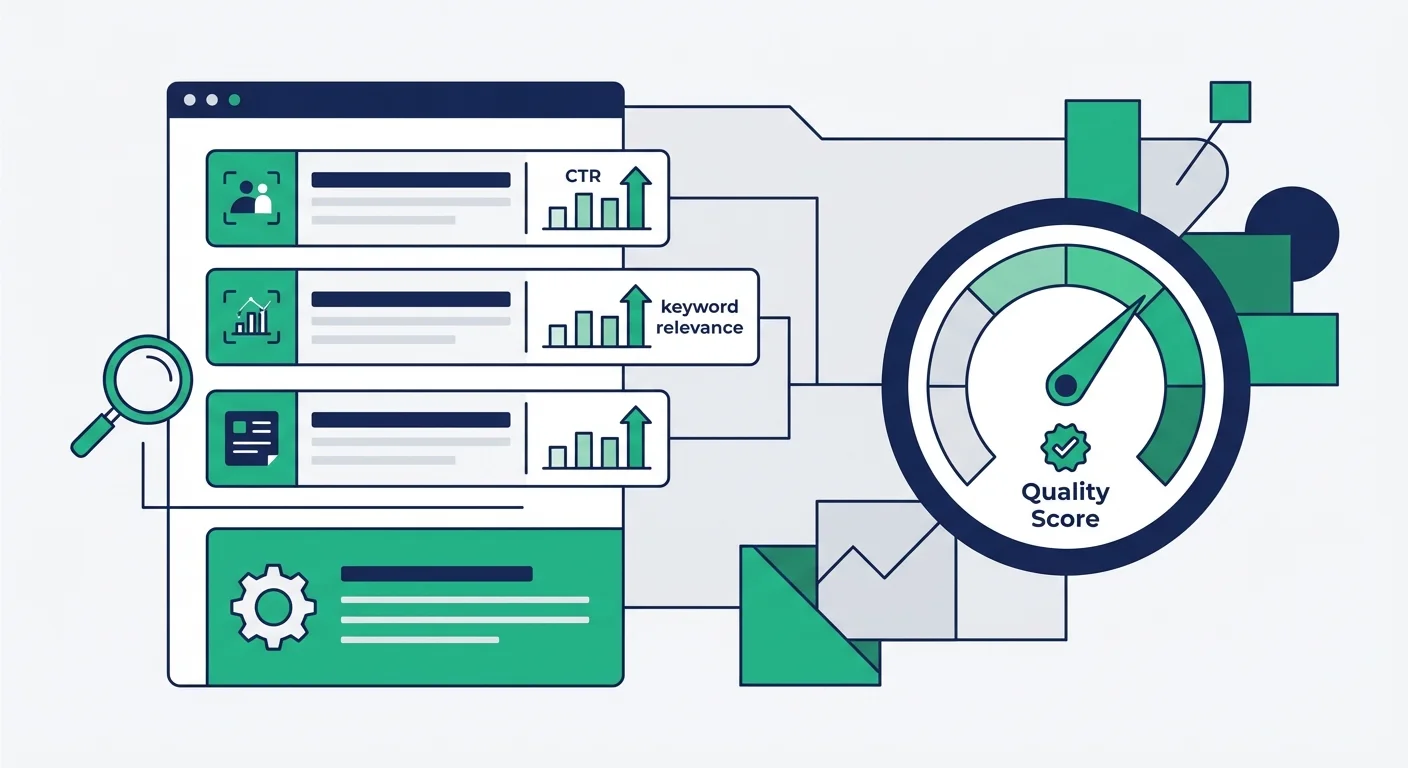
1. Structure Your Account for Relevance
The foundation of a high Quality Score is account structure. Create single keyword ad groups (SKAGs) or tightly themed ad groups where every keyword, ad, and landing page align perfectly. Avoid dumping 50 loosely related keywords into one ad group.
2. Master Keyword Research
Go beyond basic keyword research. Use long-tail keywords that signal high intent, like “hire SEO agency Manila” instead of just “SEO agency.” These typically have lower competition and higher relevance.
3. Use Negative Keywords Aggressively
Negative keywords prevent your ads from showing for irrelevant searches. Review your Search Terms report weekly and add negatives for:
4. Write Ads That Match Search Intent
Your ad copy should feel like a direct answer to the searcher’s query. If someone searches “best digital marketing agency Philippines,” your headline should include those exact words—not generic copy about “marketing solutions.”
5. Leverage All Ad Extensions
Ad extensions increase your ad’s real estate and CTR. Use:
6. Create Dedicated Landing Pages

Don’t send all traffic to your homepage. Build landing pages tailored to each ad group’s keywords. A searcher for “PPC management services” should land on a PPC-specific page—not your general services page.
7. Optimize Landing Page Speed
Page speed directly impacts Quality Score. Use Google’s PageSpeed Insights to identify issues. Target:
8. A/B Test Everything
Never assume you’ve found the perfect ad. Continuously test:
9. Monitor and Pause Low Performers
Low Quality Score keywords drag down your account. If a keyword consistently scores below 4 despite optimization efforts, consider pausing it. The budget is better spent on keywords that work.
10. Use Responsive Search Ads (RSAs) Strategically
RSAs allow Google to test multiple headline and description combinations automatically. Provide 10-15 unique headlines and 4 descriptions that mix and match well. Pin critical elements (like your brand name) to ensure they always appear.
Common Quality Score Mistakes to Avoid
How to Diagnose a Low Quality Score
When a keyword has a low Quality Score, Google shows you which components need attention. In Google Ads, view the columns for “Exp. CTR,” “Ad Relevance,” and “Landing Page Exp.” to identify the culprit:
| If This Is Low… | Focus On… |
|---|---|
| Expected CTR | Ad copy, headlines, CTAs, ad extensions |
| Ad Relevance | Ad group structure, keyword-ad alignment |
| Landing Page Experience | Page speed, content relevance, mobile experience, trust signals |
Key Takeaways
Ready to Improve Your Google Ads Performance?
Optimizing Quality Score isn’t a one-time task—it’s an ongoing process of refinement. If you’re looking for expert help managing and optimizing your campaigns, our Google Ads team can help you achieve better results at lower costs. We also offer conversion rate optimization to ensure the traffic you’re paying for actually converts.
Are you tracking the right KPIs? Make sure your PPC metrics align with real business outcomes.