Google Search Liaison Explains Why Spam Updates Remain Periodic After 26 Years of Continuous Algorithm Refinement

Google’s John Mueller clarified in a recent LinkedIn exchange that most spam-detection systems update continuously and automatically, but the company announces larger algorithmic changes to help site owners and SEO teams interpret significant metric fluctuations, according to Search Engine Journal. The statement responds to a question from SEO consultant Eli Schwartz, who asked why Google still requires periodic spam updates after 26 years of search operations.
TL;DR: Google’s spam systems update automatically and continuously, but the company announces broader changes to provide transparency when SEOs and publishers may see large ranking shifts, balancing visibility with avoiding unnecessary concern over routine algorithmic adjustments.
Multiple Automated Systems Run Continuously
Google operates several distinct spam-detection mechanisms that process queries and evaluate pages without manual intervention, Mueller explained. SpamBrain, the company’s AI-powered spam classifier, continuously analyzes content patterns. Quality-factor algorithms evaluate site-wide signals that distinguish legitimate publishers from manipulative operators. Link-graph algorithms detect inauthentic linking activity across the web’s hyperlink structure.
Each system updates on its own cadence. Most changes deploy automatically without public announcement because they target obvious scaled spam and programmatic content that rarely affects legitimate enterprise SEO services or publisher sites.
Announced Updates Signal Broader Algorithmic Shifts
“We have lots of systems that update continuously (most of them update automatically), but when we make bigger broader changes to the systems, we try to announce them,” Mueller wrote in the LinkedIn thread. The decision to announce rests on whether the change is significant enough that website operators monitoring analytics dashboards will notice unusual ranking or traffic movement.
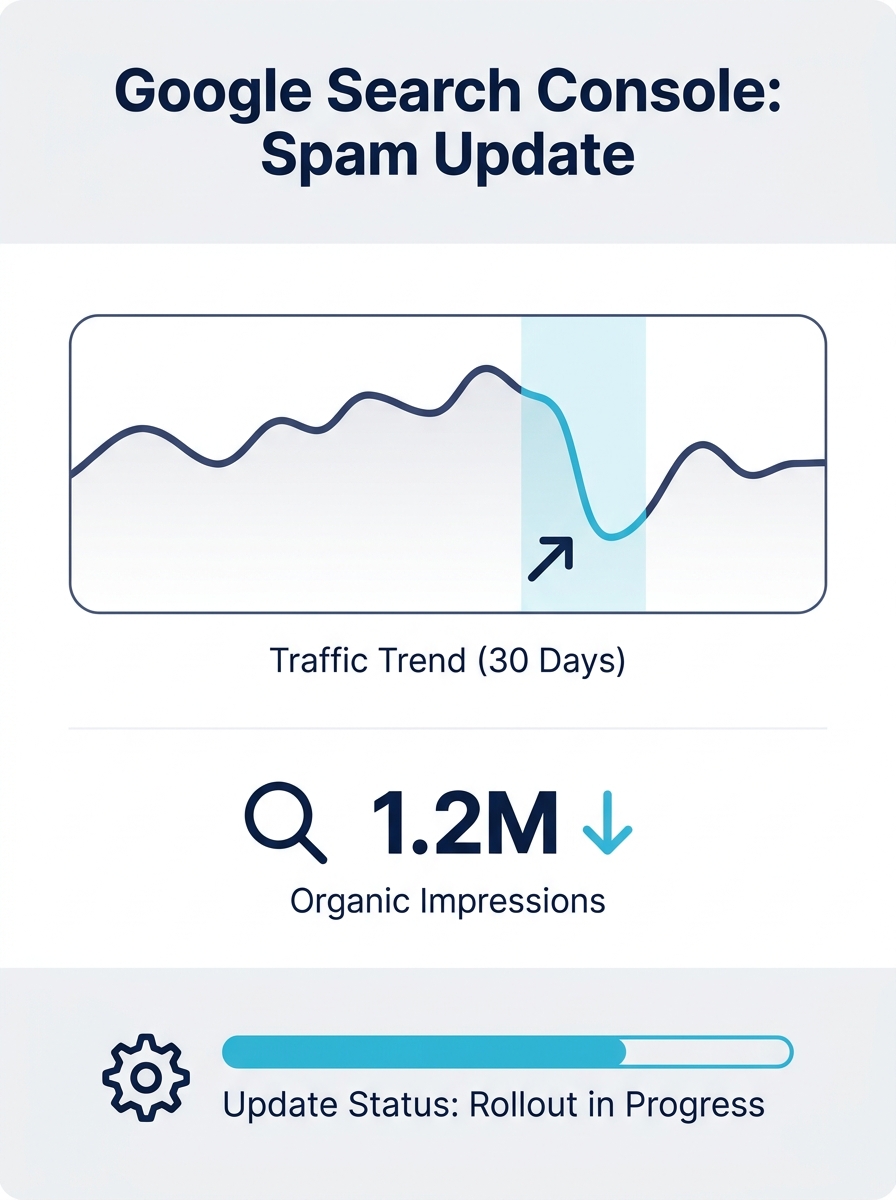
The practice mirrors Google’s approach to core algorithm updates, where the company telegraphs major ranking-factor recalibrations but leaves smaller, continuous improvements undisclosed. Marketing leaders evaluating month-over-month organic performance need to distinguish between routine algorithmic noise and material shifts that warrant strategic response.
Balancing Transparency Against Unnecessary Alarm
Mueller acknowledged the communications challenge: “It’s sometimes hard to find a good balance between giving some transparency and causing unnecessary worries.” Announcing every minor spam-detection improvement would flood the SEO industry with update alerts, training marketing teams to treat routine adjustments as crisis events.
The implication is that Google filters its public update announcements through a materiality threshold. Changes likely to affect a broad swath of legitimate sites—such as new quality signals that might penalize previously acceptable content patterns—merit advance notice. Refinements targeting edge-case manipulation tactics do not.
For marketing leaders briefing agency partners or evaluating performance reports, this means not every ranking fluctuation traces to a named update. Organic search strategy must account for continuous algorithmic evolution alongside the periodic announced recalibrations that dominate industry coverage.
What Happens Next
Marketing leaders managing organic search programs should interpret Google’s spam-update cadence as a transparency protocol rather than a sign of systemic gaps in automated enforcement. The company’s various spam-detection layers operate continuously; announcements flag when those systems receive significant capability upgrades or when Google deploys new ranking factors that may catch legitimate sites in the crossfire.
When Google does announce a spam update, the appropriate response differs from a core update. Spam updates target manipulation patterns—scaled low-quality content, purchased links, cloaking, doorway pages. Sites that see material ranking declines during a spam update rarely recover by improving content quality alone; they need to audit for and remove the specific manipulative techniques the update targeted. Brief agency partners to conduct link audits, content-quality assessments, and technical crawl diagnostics focused on spam vectors, not the broader content-authority signals that drive core-update recovery.
Continuous minor updates, meanwhile, require no immediate action but reinforce the need for sustainable SEO practices. Marketing leaders should expect month-to-month volatility in organic metrics even outside named updates, and structure reporting to distinguish statistically significant shifts from algorithmic noise.